


By Senior Post Reporter
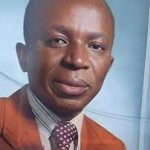
As Zimbabwe commemorates December 22, Unity Day, a date meant to encourage reflection on national cohesion and shared history, questions continue to arise about how the country remembers, records and teaches its liberation struggle. One of the lesser-known but historically significant figures in that struggle is Noel Mukono, a journalist by profession and the first commander of ZANU’s armed wing, whose role has often been overshadowed in mainstream liberation narratives.
For many years, popular history has held that the late Josiah Tongogara commanded the Zimbabwe African National Liberation Army (ZANLA) from its inception. Historical records, however, tell a more complex story. ZANU’s military structure was not founded by Tongogara. It was established, built and led in its formative years by Noel Mukono, long before Tongogara rose to prominence.
In 1964, ZANU convened its first congress in Gweru, a landmark gathering that set the organisation on the path of armed resistance against the Rhodesian regime. The congress elected a leadership that would become central to Zimbabwe’s liberation politics: Ndabaningi Sithole as president, Leopold Takawira as deputy president, Herbert Chitepo as chairman, Robert Mugabe as secretary-general, Enos Nkala as treasurer-general, and Enos Chikowore as youth leader.
Crucially, the congress resolved that peaceful protest had failed and that armed struggle was now inevitable. To operationalise this decision, ZANU created a Department of War. For security reasons, the department was initially disguised under the name “Public Affairs.” Noel Mukono was appointed to head this sensitive portfolio, which was later formally renamed the Department of Defence.
Soon after the congress, the Rhodesian authorities arrested almost the entire ZANU leadership inside the country, threatening to derail the party’s military plans before they had fully taken shape. Two key figures escaped detention: Herbert Chitepo, who was outside Rhodesia at the time, and Noel Mukono, who managed to evade arrest.
From prison, the detained ZANU leaders tasked Chitepo with organising and directing the armed struggle from exile. This decision marked the beginning of ZANU’s external wing and explains why Chitepo is sometimes mistakenly described as the party’s president. In reality, he was the political leader in exile, while Mukono became the architect and operational commander of ZANU’s emerging army.
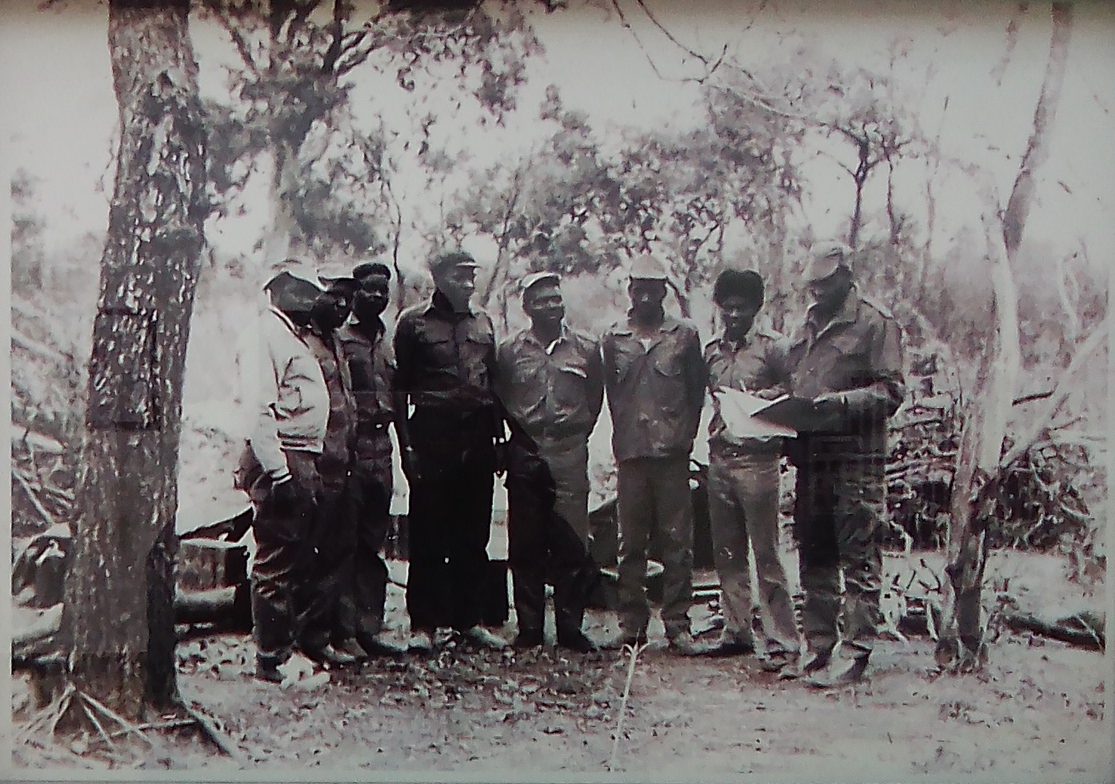
Between 1964 and 1965, Chitepo and Mukono worked closely to establish ZANU’s military capacity outside Rhodesia. Chitepo provided political leadership and international diplomacy, while Mukono focused on military organisation, training and command structures.
Mukono oversaw the dispatch of ZANU’s first group of cadres for military training in Ghana. This pioneering group included Felix Santana, William Ndangana, Bernard Mutuma and Silas Mushonga, among others. These cadres would go on to become ZANLA’s first field commanders, laying the foundation for the guerrilla war that followed.
Throughout the 1960s, Mukono remained firmly in charge of ZANU’s armed wing. Militarily, he served as Chairman of the High Command, making him the overall commander of ZANU’s forces. Politically, he held the post of Secretary for Defence and reported through the Revolutionary Council, and later the Dare reChimurenga, to Herbert Chitepo.
Josiah Tongogara was present at ZANU’s 1964 Gweru congress, but at the time he held no significant political or military influence. His rise began in 1966, when Mukono selected him as part of a 28-member group sent to China for advanced military training. That group included figures such as Justin Chauke and Cletos Chigowe, the latter of whom later became ZANU’s intelligence chief before being replaced by Emmerson Mnangagwa in 1977.
Tongogara’s training and subsequent experience within the structures established by Mukono gradually elevated his standing within ZANU’s military hierarchy. By the early 1970s, internal dynamics within the party were shifting, setting the stage for a major reconfiguration of power.
In 1973, ZANU held a Review Conference in Kafue, Zambia, a meeting that would dramatically alter the leadership of its armed wing. Tongogara was elected Secretary for Defence, a position that automatically made him head of the High Command and commander of the army.
This development effectively removed Mukono from military command. It also marked a significant institutional shift: for the first time, a serving soldier assumed a top political position within ZANU. Previously, the political and military spheres had been more clearly separated.
Mukono’s supporters accused Tongogara of manipulating the election process, allegations Tongogara consistently denied. What followed was a period of deep mistrust and factionalism. Mukono increasingly found himself marginalised, portrayed as out of step with the new political order emerging within the party.
Tongogara later accused Mukono of supporting an armed revolt against his command, an episode widely referred to as the Nhari rebellion. Mukono denied any involvement, but the accusation further weakened his standing at a time when ZANU and its rival, ZAPU, were both experiencing intense internal conflict.
By 1975, ZANU had split into two major factions, one led by Robert Mugabe and the other by Ndabaningi Sithole. The bulk of ZANLA fighters aligned themselves with Mugabe’s faction, although divisions persisted, particularly in the lead-up to the 1976 Geneva Conference.
Solomon Mujuru emerged as a key figure in consolidating Mugabe’s control over the party and its armed wing. Mukono, increasingly sidelined within the military, aligned himself with Sithole’s faction and later became its national chairman.
In 1978 and 1979, Mukono and Sithole participated in Ian Smith’s Internal Settlement, which produced the short-lived and internationally unrecognised state of Zimbabwe-Rhodesia under Prime Minister Abel Muzorewa.
After independence in 1980, Noel Mukono receded from public life. Despite his foundational role in creating and leading ZANU’s armed wing during its formative years, he was never officially celebrated as a national hero. He died in 1991, largely outside the national narrative of liberation.
About The Author


More Stories
Rising Dropouts, Teachers Plunge Zim’s Education Sector into Crisis
Festive Season Expose Growing Risk For Youth, Missing Girls, Alcohol and Drug Abuse
Christmas Comes Early for Sakubva’s Elderly, Thanks to ZSCA