





By Shingirai Vambe
At the 2025 CEO Africa Roundtable, former Deputy Prime Minister Professor Arthur Mutambara delivered one of the most thought-provoking presentations of the summit, a sweeping lecture on geopolitics, global markets, artificial intelligence, and the future of African economic power. His message was clear, urgent, and bold:
Africa must unite, integrate, and strategically position itself if it hopes to rewrite its role in the global order.
Standing before some of the continent’s most influential executives and policymakers, Mutambara argued that Africa’s future hinges on its ability to act as a single geopolitical force. He framed the continent not as a victim of global manipulation, but as a region rich in minerals, talent, and human capital, a region that has the capacity to command influence, build resilient economies, and dismantle Western economic monopolies.
“A fragmented Africa is a weak Africa,” Mutambara said. “But a united Africa is unstoppable, politically, economically, and technologically.”
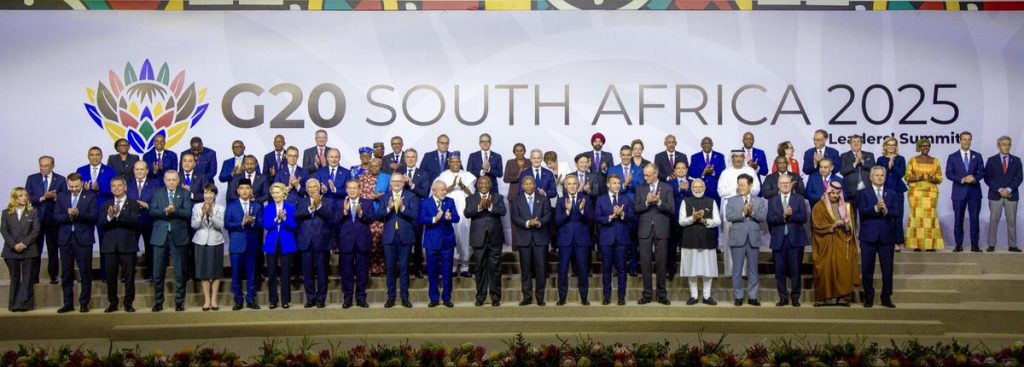
His words carried even greater weight as the G20 Summit in Johannesburg, the first ever held on African soil, unfolded simultaneously, exposing deep fractures in global diplomacy and showcasing Africa’s growing refusal to be sidelined.
The Johannesburg G20 Summit, which concluded today November 23 2025, will be remembered as a historic moment for African assertiveness on the world stage. The event was overshadowed by controversy when US President Donald Trump reportedly attempted to send a junior envoy to represent his administration and assume the G20 chairmanship from President Cyril Ramaphosa, a move widely interpreted as dismissive.
Social media across the continent erupted in solidarity with Ramaphosa, with Africans loudly rejecting any suggestion that the US could dictate terms or undermine South Africa’s hosting of the summit.
The US eventually sent lower-level embassy officials from Pretoria, while US Secretary of State Marco Rubio, expected to lead the delegation, failed to attend. Still, the summit continued, drawing strong participation from global foreign ministers and reinforcing Africa’s growing diplomatic confidence.
Norwegian Foreign Minister Espen Barth Eide criticized the US absence as a troubling signal.
“He missed a good meeting. It reflects reduced US interest in global affairs.”
For Africa, however, the message was the opposite, the continent is stepping into its place, with or without Washington.
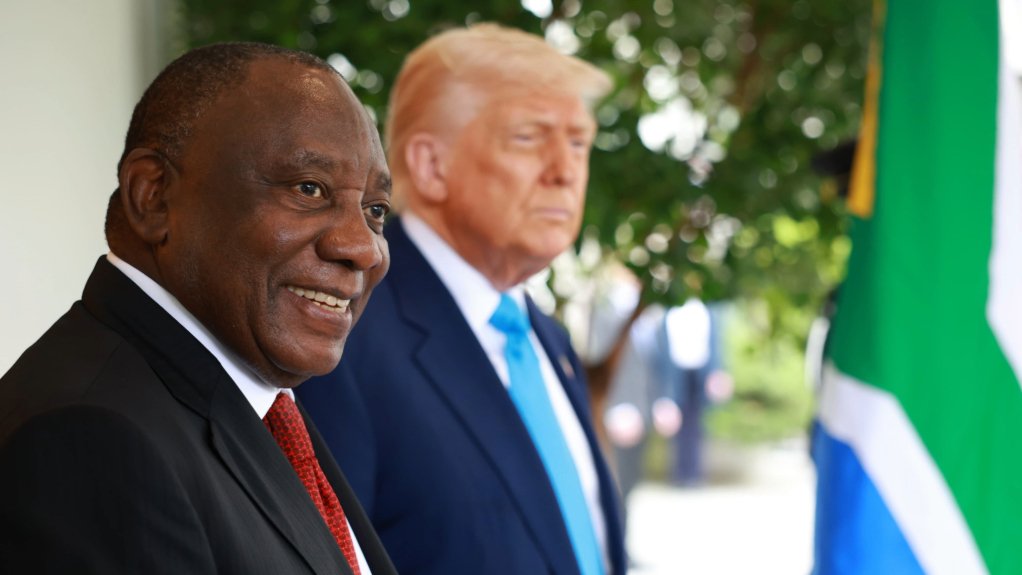
South Africa’s International Relations Minister Ronald Lamola maintained that the summit was a success regardless of the US no-show. He reminded the world that the G20, now including the African Union as a permanent member, remains committed to multilateral cooperation and the principle of collective global responsibility.
During the closing session, Lamola confirmed that G20 foreign ministers had endorsed South Africa’s Presidency priorities, sustainable development, debt restructuring for low-income nations and reforms to global financial governance.
“These discussions were fruitful,” Lamola said. “We look forward to active participation from all delegations.”
President Ramaphosa echoed the sentiment, praising the summit’s ability to reach consensus at a time when the world is dangerously polarized.
“Our shared goals outweigh our differences,” he said. “This summit puts Africa at the heart of global decision-making.”
South Africa will officially hand over the G20 Presidency to the US next week, but under circumstances that reflect Africa’s rising assertiveness rather than submissiveness.
The G20, representing 85% of global GDP and two-thirds of the world’s population, met in Johannesburg under the theme “Solidarity, Equality, Sustainability.” It was a theme deeply rooted in the African philosophy of Ubuntu, “I am because we are.”
Task forces at the summit tackled, economic inequality and industrialization, food security, and artificial intelligence, data governance, and sustainable innovation
Lamola also introduced new initiatives, a review of G20 operations, a cost-of-capital assessment for developing countries, a broadened Compact with Africa 2.0 and a new initiative on critical minerals
These priorities reflect Africa’s intention to pivot from being a supplier of raw materials to a power shaping global economic policy.
Speaking at the CEO Africa Roundtable, Mutambara tied the G20 developments directly to Africa’s potential future. He warned that without unity, strategic collaboration, and technological investment, particularly in AI, Africa risks remaining on the margins of global progress.
He argued that, Africa must build cross-border integration, African states must negotiate collectively, the continent must control the value chains of its minerals, Africa must leverage its youthful, highly skilled population.
“AI will disrupt every sector,” he said. “If Africa is not building and owning AI systems, Africa will simply import inequality.”
Mutambara told CEOs that geopolitical disruptions, global market shifts, and the arrival of the AI revolution offer Africa an unprecedented chance to reposition itself. But this will only happen if the continent speaks with one voice and acts with one strategy.
The timing of Mutambara’s presentation, coinciding with the G20 drama in Johannesburg, seemed almost prophetic.
On one side, global power displayed fragmentation, hesitation, and geopolitical rivalry.
On the other, Africa demonstrated unity, resolve, and a willingness to challenge old hierarchies.
The two events, the CEO Africa Roundtable and the G20 Summit, together send a very clear message.
About The Author



More Stories
When Crime Captures the State, Madlanga Commission Sends Shockwaves Across the Region
Good Start, Grim Outlook
The Voice From Within That Shook Power