




By Evans Jona | National Press Foundation Rare Disease Reporting Fellow (2025–2026)
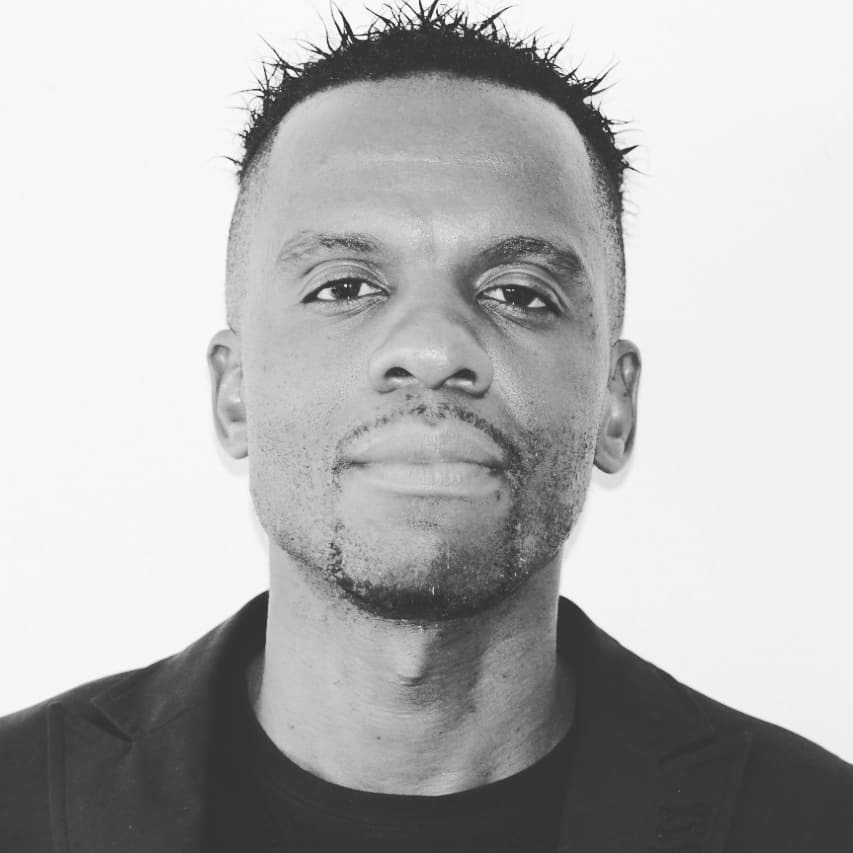
BULAWAYO – When Tinotenda Mudarikwa speaks about childhood, his voice is steady, but the memories he carries are anything but. He was born with anorectal malformation, a rare congenital condition commonly referred to as imperforate anus, a defect in which a baby is born without a normal anal opening. Surgeons had no choice but to bring part of his intestine out through his abdomen, attaching a colostomy bag to collect waste. From that moment, life followed a path few could see, and even fewer understood.
“There is no control,” Mudarikwa says quietly. “It just comes out.”
That single medical reality shaped an entire childhood. Growing up with incontinence meant living in constant fear, fear of smells, of stains, of laughter. Well into his teenage years, Mudarikwa struggled to control when he defecated, a condition that isolated him from peers and pushed him into silence. At Lady Tate Primary School in Kadoma, the classroom was not always a place of learning. Sometimes, it was a place of shame. He remembers one day vividly: a teacher wrote a letter home saying her pupil had diarrhoea. It was break time, and he was asked to go home.
Children looked away. Some laughed. Some chuckled. Others simply wrinkled their noses. “That’s when you know you are different,” he says. “That’s when you start pulling away from people.”
According to global medical data cited by the World Health Organization (WHO), anorectal malformations occur in about one in every 5,000 live births. Using Zimbabwe National Statistics Agency (ZimStat) birth estimates of more than 350,000 births annually, paediatric specialists say at least 60 to 70 Zimbabwean children are likely born with the condition each year, most into families and communities with little understanding of what it means.
But numbers do not capture humiliation. They do not capture being labelled “smelly”. Or being avoided in class. Or being told, as Mudarikwa was, that you are a curse.
“In the community, I was told I was bewitched,” he says. “That I was cursed.”
Those words dug deep. Over time, he began to believe them. Zimbabwe’s cultural landscape, like much of Africa, often interprets rare medical conditions through superstition. For children like Mudarikwa, that interpretation can be more damaging than the condition itself. According to UNICEF Zimbabwe, children with disabilities are twice as likely to experience bullying, exclusion and emotional distress compared to other children.
By 2004, the emotional weight became unbearable. Mudarikwa suffered a severe mental health breakdown, a psychotic episode that forced his mother to make a painful decision: to seek psychiatric help for her son. “She accepted that I was mentally ill,” he says. “And she took me to a psychiatric hospital.” For mental health experts, the link is clear. The WHO Mental Health Atlas (2023) notes that people living with chronic congenital conditions face higher risks of untreated depression and anxiety, particularly in low-income countries where psychosocial support is limited.
Yet, in Zimbabwe, disability conversations remain focused on what can be seen, wheelchairs, crutches, canes. “Disability is not always visible,” Mudarikwa insists. “Some of us look okay. But we are fighting battles you cannot see.”
Globally, rare diseases affect more than 300 million people, according to Rare Diseases International, with over 70 percent of rare conditions presenting in childhood. Despite this, many African countries, Zimbabwe included, have no dedicated rare disease policy. Zimbabwe’s National Disability Policy of 2021 recognises invisible disabilities and commits the State to inclusive healthcare and education. The country is also a signatory to the United Nations Convention on the Rights of Persons with Disabilities. But advocates argue that implementation remains weak, especially for children with rare conditions requiring long-term medical, psychological and educational support.
“Rare diseases fall between the cracks,” says a policy analyst Takudzwa Madondo. “They are not counted, not tracked, and therefore not prioritised.”
For Mudarikwa, silence was no longer an option.
In 2018, he registered the Rare Diseases and Disabilities Africa Foundation, born not from theory or policy papers, but from lived pain. The organisation advocates for awareness, inclusion, data collection and dignity for people living with rare and invisible conditions.
He worries deeply about children growing up today, not just in classrooms, but online.
“What happens to a child with a colostomy bag in a world of social media?” he asks. “In a world of cyberbullying?”
Schools, he argues, are ill-prepared. Many lack private sanitation facilities, counselling services, or basic training for teachers to understand medical incontinence. The result is exclusion, sometimes silent, sometimes cruel.
Mudarikwa believes change must start with mindset. In kombis, in buses, in queues, in schools. “When you hold your nose at someone, when you mock them, you don’t know half of what they are carrying,” he says.
He pauses, then adds: “Those moments stay with a person for life.” Today, Mudarikwa speaks not just for himself, but for children who cannot yet explain why they smell, why they struggle, why they are different. Children who are being born every year with conditions medicine can manage, but society still rejects.
“I believe our mindset can change,” he says. “And when it does, we will stand and speak for every child born like me. For every child living with incontinence. For every child growing up in shame for something they did not choose.”
He was born without an ending, without a normal anatomical closure. But through his voice, he is opening something far more powerful: a conversation Africa can no longer afford to ignore.
About The Author



More Stories
ZSCA Steps Up-New PVO Status Ushers in Year of Empowerment for Zimbabwe’s Seniors
A Life of Pain, A Heart of Hope: Molyn Chima’s Fight Against Sickle Cell in Zimbabwe
Small Bags, Huge Harvests, The Mushroom Venture Transforming New Zororo Sakubva