


Staff Reporter
The petition to the African Union bears the unmistakable imprint of Job Sikhala, a man whose political life has been defined by confrontation with the Zimbabwean state and sustained resistance to the ruling ZANU-PF establishment.
A former Member of Parliament for St Mary’s Constituency, Sikhala is widely regarded as one of Zimbabwe’s longest-serving and most uncompromising opposition figures. From the late 1990s to the present, he has remained a constant presence in the country’s turbulent opposition politics, often paying a heavy personal price for his defiance.
Sikhala rose to national prominence during the formation of the Movement for Democratic Change (MDC) in 1999, where he worked closely alongside the late Morgan Tsvangirai, the founding leader of the party. At a time when the MDC posed the most serious electoral and organisational threat ZANU-PF had faced since independence, Sikhala emerged as one of its most radical and outspoken figures.
Known for his fiery rhetoric and refusal to temper his criticism, Sikhala earned both admiration and controversy. Supporters saw him as fearless and incorruptible; detractors labelled him confrontational and reckless. What is uncontested, however, is that he became one of the most frequently arrested opposition politicians in Zimbabwe’s post-2000 political landscape.
Over the years, Sikhala was arrested, detained, and incarcerated on numerous occasions, often under charges that were later withdrawn or dismissed. Human rights groups and legal observers repeatedly described these arrests as politically motivated, part of a broader strategy to neutralise vocal critics of the state through prolonged legal harassment rather than convictions.
Despite his repeated incarcerations, Sikhala remained defiant. Each release was followed by renewed activism, reinforcing his reputation as a political survivor in a system many opposition figures failed to endure.
In recent years, as Zimbabwe’s opposition fragmented into competing factions and personalities, Sikhala repositioned himself outside formal party structures. The emergence of the National Democratic Working Group (NDWG), which he now leads as Chairman and Chief Facilitator, reflects both necessity and strategy in a political environment where opposition parties have struggled to maintain cohesion.
Critics of the ruling party argue that this fragmentation did not occur by accident. Since the MDC’s formation in 1999, ZANU-PF has been accused of systematically weakening opposition movements through infiltration, legal pressure, selective arrests, and inducements, methods aimed at breaking unity once it became clear that a consolidated opposition posed an existential threat to its dominance.
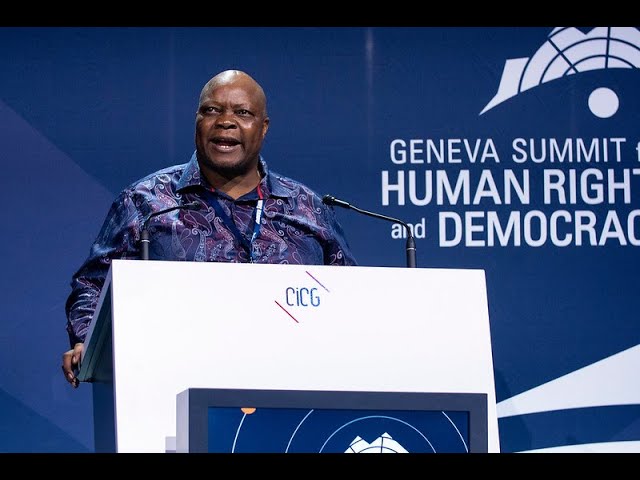
Today, Sikhala operates in a political space defined less by party machinery and more by civic mobilisation and constitutional advocacy. The NDWG’s petition to the African Union is emblematic of this shift, a move away from electoral contestation toward international legal and diplomatic pressure.
To his supporters, Sikhala represents one of the few remaining opposition figures capable of withstanding sustained state pressure. They view him as a symbol of endurance in the face of repression and as a rare politician willing to confront power without compromise.
To his critics, he remains a polarising figure whose confrontational style limits his ability to build broad alliances.
Yet even among those who disagree with his methods, there is a grudging acknowledgment of his resilience. In a political arena littered with fallen or co-opted opposition leaders, Sikhala’s continued presence, despite arrests, imprisonment, and political isolation, has cemented his place as one of the most recognisable faces of resistance to ZANU-PF rule.
At the centre of the NDWG’s petition is Article 30 of the AU Constitutive Act, which bars governments that assume or retain power through unconstitutional means from participating in AU activities. The group argues that Zimbabwe’s current trajectory falls squarely within the definition of unconstitutional change of government as outlined in the Lomé Declaration of 2000.
The Lomé Declaration expanded the AU’s definition of unconstitutional changes of government to include not only military coups and armed rebellions, but also subtler political strategies. These include the manipulation of constitutions to remain in power, refusal to relinquish authority after elections, and other actions that undermine democratic consent.
According to the NDWG, it is this fifth category, constitutional manipulation, that is now unfolding in Zimbabwe.
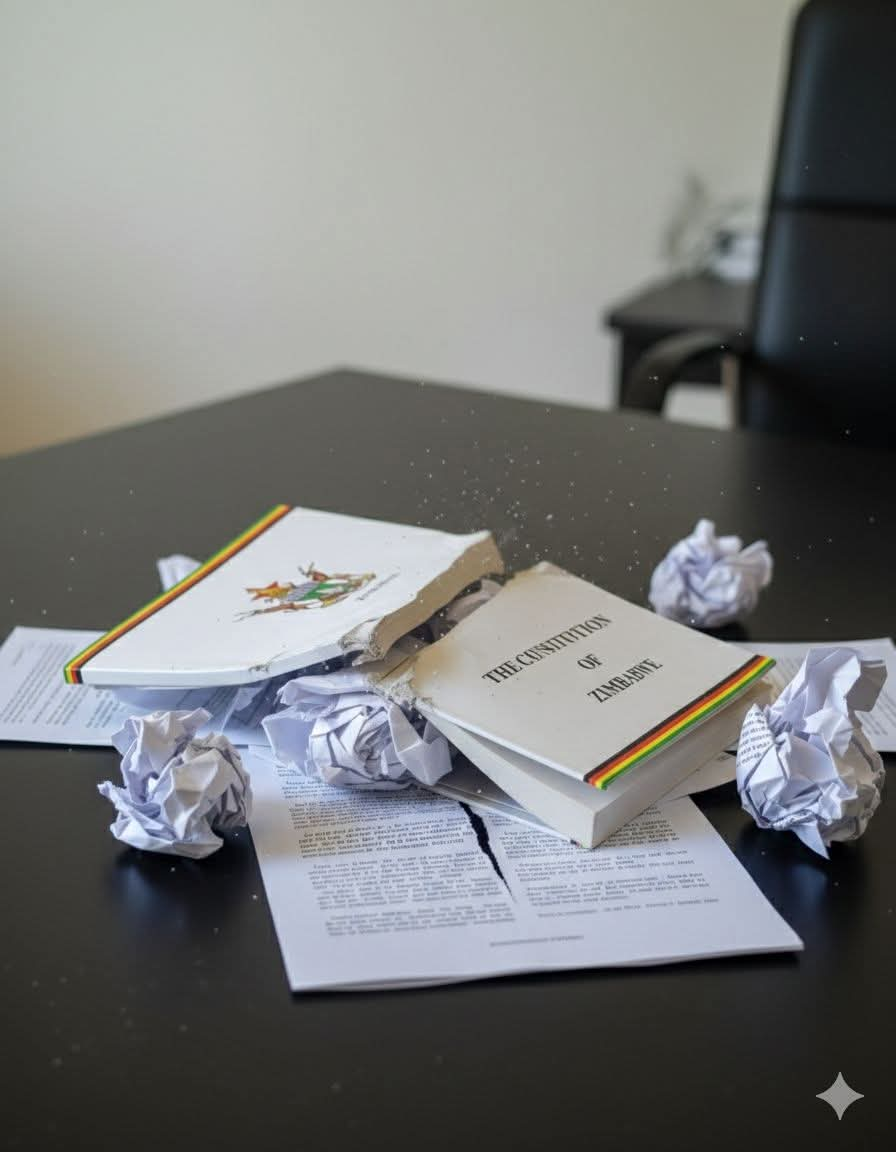
The petition cites the introduction of the Constitutional Amendment Bill, 2026, which seeks to amend Constitution of Zimbabwe Amendment No. 13. The proposed changes would extend the tenure of the current administration beyond its constitutionally mandated end in 2028 to 2030, without holding elections or submitting the matter to a national referendum.
“This is a flagrant violation of both Zimbabwe’s Constitution and the African Union Constitutive Act,” the NDWG argues, insisting that altering term limits without direct public consent amounts to a legislative coup against the will of the people.
The group stresses that Zimbabwe, as a member state of the African Union, is bound under international law to uphold the AU’s charter, protocols, and democratic principles. Any attempt to bypass these obligations, it says, demands immediate regional intervention.
Beyond legal arguments, the NDWG warns of escalating repression on the ground. The petition alleges that citizens opposing the proposed constitutional changes are facing arbitrary arrests, intimidation, and violent crackdowns.
“Peaceful anti-coup campaigners are being severely repressed,” the petition states, adding that human rights violations are increasing as dissent is met with force rather than dialogue.
The organisation cautions that the AU cannot afford silence at a moment when democratic backsliding is occurring through legislative instruments rather than overt force.
Invoking Article 30, the NDWG calls on the African Union to suspend Zimbabwe from participation in AU activities should the proposed constitutional changes proceed.
Article 30 states unequivocally, “Governments which shall come to power through unconstitutional means shall not be allowed to participate in the activities of the Union.”
The NDWG insists that this provision applies not only to governments that seize power through guns and tanks, but also to those that entrench themselves through manipulated laws.
The group says it has also copied its petition to other regional and international bodies, including the United Nations, the Southern African Development Community (SADC), and the European Union, urging them to take note of what it describes as an impending constitutional crisis in Zimbabwe.
As debate intensifies over the proposed amendments, the NDWG’s petition places Zimbabwe’s political future squarely under regional and continental scrutiny, raising the question of whether Africa’s institutions will act decisively against what critics describe as a slow-motion coup carried out through legislation rather than force.
About The Author


More Stories
Global Markets Watch As US And China Restart Critical Trade Talks
Gentle Giant Of The Liberation Struggle, Chiringa Declared A National Hero
War Veterans Petition Parliament Over Controversial Constitutional Amendment