




The Post On Sunday
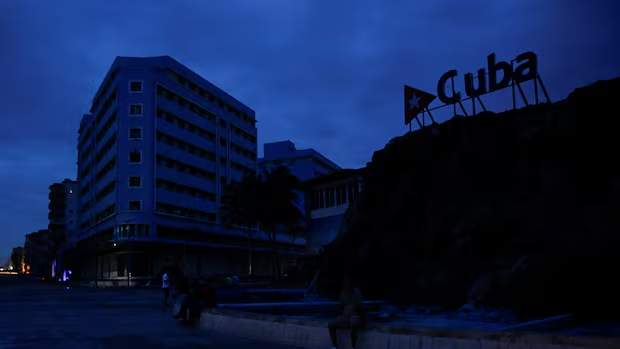
For millions of Cubans, daily life on the Caribbean island has slipped into what many now describe as an unbearable state of survival, marked by prolonged blackouts, acute fuel shortages and deepening economic despair. What was once a fragile balance is rapidly giving way to a humanitarian crisis, as tightening United States sanctions choke off Cuba’s oil lifelines and ripple across every sector of society, from electricity generation and food supply to air travel and family connections abroad.
In the central province of Ciego de Ávila, small business owner Isben Peralta speaks to the media from the darkness of yet another blackout. His voice, crackling over a weak phone signal, carries exhaustion rather than anger.
“For me, any change will be better than what we are living through now,” Peralta says. “What we are experiencing is not humane.”
Peralta runs a modest pizzeria from his home, a rare lifeline in a collapsing economy. He counts himself among the fortunate. Living close to a fuel delivery point, he still receives electricity for a few hours a day. In some cases, that means three uninterrupted hours of power, a luxury by Cuban standards. Elsewhere in his province, residents endure ten to eleven hours without electricity, only to receive a fleeting 30 minutes before the lights go out again.
“We get a bit of power,” he says, “then they take it away for five hours straight.”
The crisis escalated sharply over the weekend when Havana’s José Martí International Airport issued a formal aviation warning, a Notice to Air Missions (NOTAM), alerting airlines that it was nearly out of jet fuel. Within hours, Canada’s major carriers suspended flights to the island, triggering emergency repatriation efforts to ferry stranded tourists home.
Air Canada, WestJet and Air Transat all halted operations, citing unreliable fuel availability through at least mid-March. Montreal-based Air Canada alone moved to evacuate approximately 3,000 passengers using aircraft carrying extra fuel for return journeys or making refuelling stops in third countries.
For Cuba, where tourism remains one of the last functioning arteries of foreign currency, the suspension was a devastating blow.
Fuel shortages are not new to the island. But this time, the trigger is unmistakably geopolitical.
Cuba has long depended on Venezuela for crude oil and refined fuel. That supply abruptly dried up in mid-December after the United States intensified sanctions on Caracas, effectively blocking Venezuelan exports. Washington has since gone further, threatening tariffs against any country that attempts to supply fuel to Cuba, a move that has paralyzed aviation, crippled electricity generation and worsened food shortages.
Former Canadian ambassador to Cuba Mark Entwistle describes the strategy as deliberate economic strangulation.
“The intention is to inflict pain,” he says, “to throttle the economy to a point where the regime collapses.”
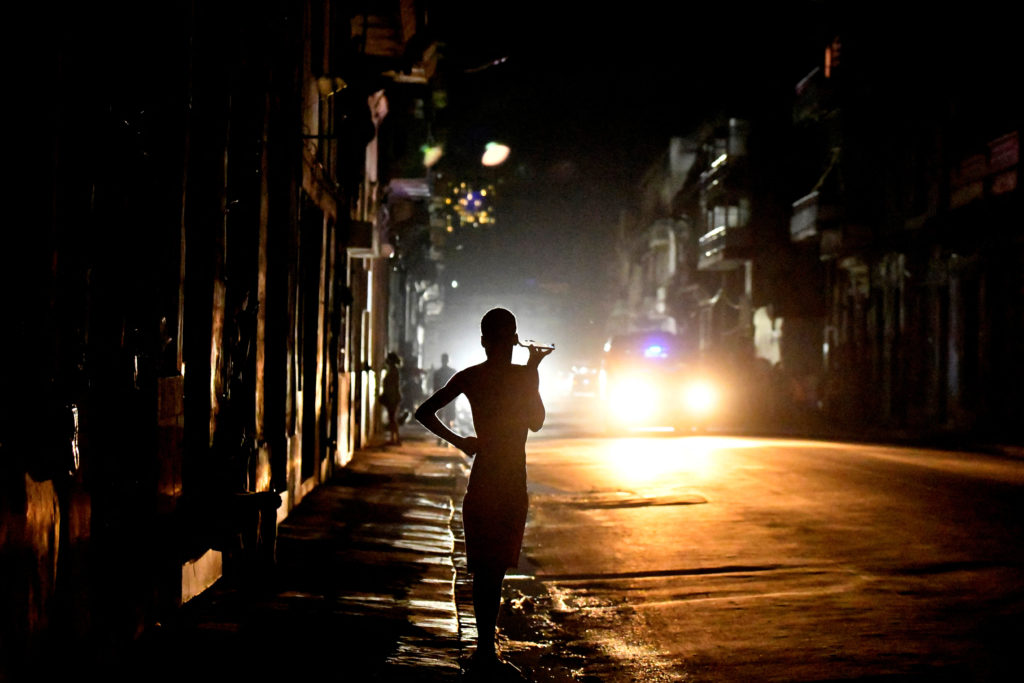
Even before the blockade, Cuba’s electrical grid, aging, underfunded and chronically unreliable, subjected citizens to rolling blackouts. Now, without fuel, outages have become longer, more frequent and more punishing.
The human cost is becoming painfully visible, especially among Cubans in the diaspora.
Luis Escalona, who has lived in Winnipeg since 2015, is now effectively cut off from his family in Holguín, in eastern Cuba. He had planned to return next month to take his elderly mother to hospital, a task that requires not just money, but electricity, fuel and transportation, all of which are now scarce.
“I had arranged everything,” Escalona says. “Now she has to wait. There’s no power, no supplies, no gasoline, and the flights are cancelled.”
His suitcase, already packed with essentials unavailable or unaffordable in Cuba, painkillers, vitamins, hygiene products and mosquito repellent, sits unused.
“It’s very hard waiting days for an update from loved ones,” he says. “When there’s no power, there’s no phone. When there’s no fuel, there’s no work. When there’s no work, there’s no food.”
Despite the severity of the crisis, panic has not yet gripped the streets.
Sean Lulker, a Canadian entrepreneur who splits his time between Toronto and Havana, says Cubans are displaying familiar resilience. Businesses remain open where possible, adapting through solar panels, batteries and stockpiled fuel.
“There’s no chaos,” he says. “But it’s bleak. It’s difficult.”
Even his phone call to reporters cuts out mid-conversation as another power outage sweeps through Havana, a reminder that adaptation has limits.
In smaller towns like Ciego de Ávila, those limits are being reached. Salaries no longer cover basic food costs. Infrastructure is visibly deteriorating. Public services are stretched thin.
“Everything is in very bad condition,” Peralta says quietly.
As airlines reroute through Panama, the Dominican Republic or the Bahamas to refuel, and as tourists reconsider travel plans, the crisis exposes Cuba’s extreme vulnerability to external pressure, and raises uncomfortable questions for other sanction-hit economies around the world.
Analysts warn the humanitarian situation will continue to deteriorate unless fuel flows resume or emergency assistance is allowed to reach the island. Entwistle argues that even the most aggressive sanctions regime should not obstruct humanitarian aid.
“I don’t believe any administration could justify blocking assistance to hungry children,” he says.
For now, Cuba waits, in the dark, on empty roads, beneath silent power lines, caught between geopolitical muscle and the daily struggle to endure. What began as a fuel shortage has become something far deeper, a national test of resilience, with no clear end in sight.
About The Author




More Stories
Can a Divided Opposition Stop Zimbabwe’s Constitutional Rewrite?
A Nation Watches as Fallen War Veteran Geza Returns Amid Term-Limit Controversy
End of the Road for Tongaat Hulett as Business Rescue Fails