




People Ignored, Power Centralised; Zimbabwe’s Constitutional Battle Intensifies
By Shingirai Vambe
Zimbabwe’s fragile constitutional order is once again at the centre of a fierce national debate, as senior government officials openly advance proposals that critics say amount to a calculated abuse of public office, a mutilation of the supreme law, and a blatant disregard for the will of citizens.
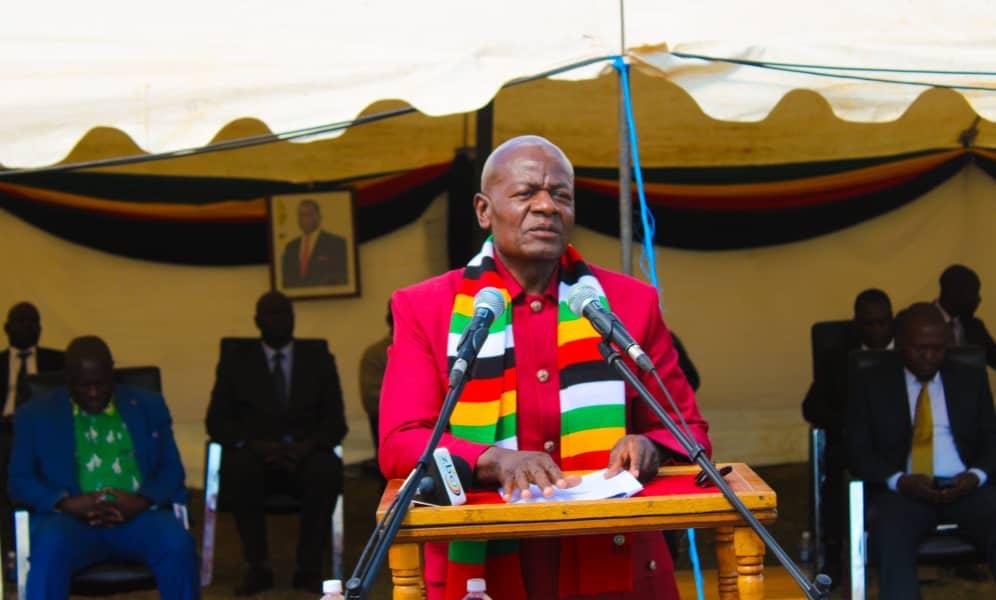
At the heart of the controversy is the government’s renewed push for Constitutional Amendment No. 3, a move that has reignited fears of executive overreach and the erosion of hard-won democratic safeguards enshrined in the 2013 Constitution. The debate has been sharpened by recent remarks made by Local Government and Public Works Minister Daniel Garwe, who used a ruling party rally and by-election campaign platform in Chikomba West to prosecute Zanu PF’s case for sweeping constitutional changes.
Garwe, a known proponent of the controversial “2030 agenda” that seeks to extend President Emmerson Mnangagwa’s stay in power beyond constitutional term limits, told supporters that the 2013 Constitution was a political compromise born out of the 2009 Government of National Unity (GNU) between the late former president Robert Mugabe and opposition leader Morgan Tsvangirai. According to Garwe, that settlement produced a constitution that was “not development-centric” but instead reflected what he described as the ambitions of an opposition he now claims is “non-existent”.
Those assertions have drawn sharp rebuke from constitutional scholars and political actors who were directly involved in the making of the current constitution.
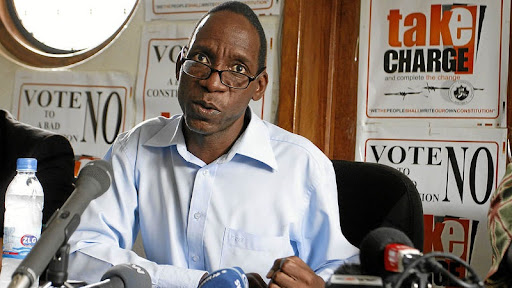
Constitutional lawyer and University of Zimbabwe Faculty of Law lecturer Lovemore Madhuku dismissed Garwe’s remarks as misleading, legally flawed and politically dangerous. Speaking to The Post On Sunday, Madhuku said the minister’s comments were made in a partisan rally environment designed to impose a narrative, not to engage citizens.
“This was not a question-and-answer session where people could express their views. It was a rally. It’s one way,” Madhuku said.
He stressed that the procedure for altering the Constitution is unambiguous. “The issue of amending the constitution is very simple, it is by way of a referendum,” he said, underscoring that no amount of political rhetoric can substitute the direct consent of the people.
Garwe’s remarks in Chikomba West laid bare the ruling party’s current posture. Addressing supporters ahead of a by-election, the Mashonaland East provincial chairperson framed Amendment No. 3 as the “logical next phase” of Zimbabwe’s political evolution under Mnangagwa’s leadership. He characterised the 2013 Constitution as “a marriage of convenience between Zanu PF and MDC,” arguing that partnerships built on divergent belief systems could not deliver growth or development.
Drawing on a business analogy, Garwe claimed that the constitutional framework was shaped under pressure from the opposition, particularly on issues such as elections and the role of traditional leaders, matters he said were advanced by parties that understood that “the strength and power of Zanu PF lie in the shoulders of our traditional leaders”.
“The political terrain has fundamentally shifted,” Garwe declared. “There is no political party other than Zanu PF to talk about meaningfully in this country. We cannot continue moving forward with that type of constitution, hence the amendment number three.”
He insisted that the proposed changes were not about elections or politics but about “development, development and development”, linking the amendment drive to the transition from stabilisation programmes to successive National Development Strategies.
Yet critics argue that this narrative is both selective and dishonest.
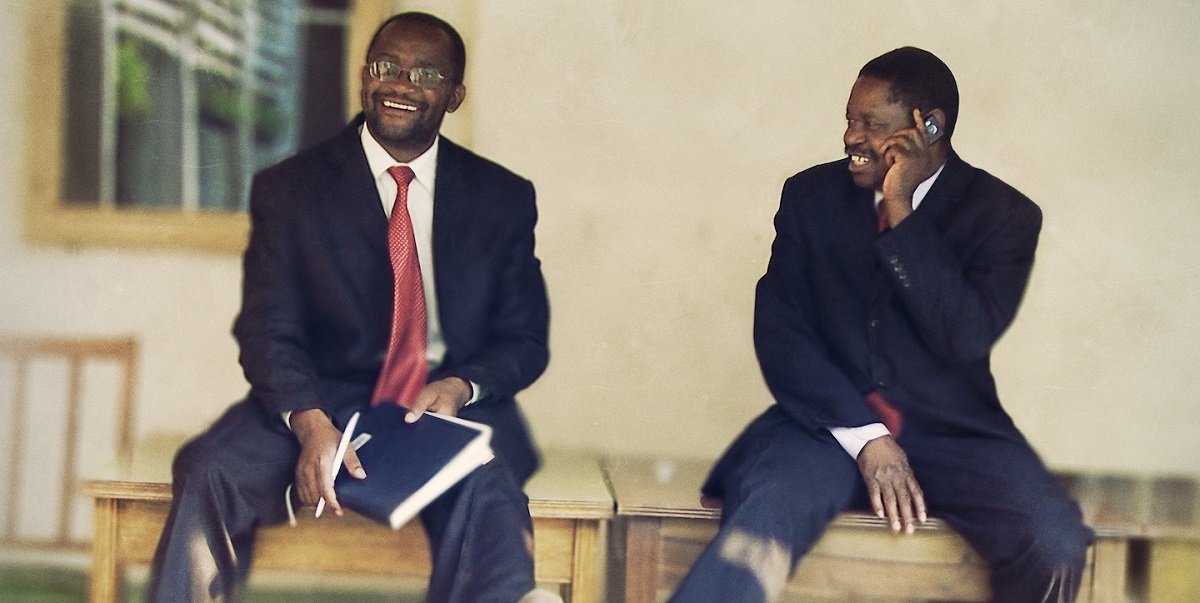
One of the legal experts who participated in the drafting of the 2013 Constitution, Movement for Democratic Change (MDC) leader Douglas Mwonzora, told The Post On Sunday that the minister’s account deliberately erases the central role played by ordinary Zimbabweans in shaping the supreme law. Far from being an elite pact stitched together in smoke-filled rooms, the constitution emerged from an extensive national outreach programme in which citizens across the political divide articulated their demands.
Chief among those demands was a clear and unambiguous presidential term limit, two terms of five years each.
That position was endorsed overwhelmingly in the March 2013 referendum, where Zimbabweans voted to adopt the Constitution. For critics of Amendment No. 3, that referendum represents an unbroken line of popular sovereignty that the current amendment drive seeks to sever.
“The utterances by the minister are very misleading and outright false,” Mwonzora said. “Zimbabweans did not trade away their right to elect a president, and at no stage in this country’s history have they consented to the extension of presidential terms outside a referendum.”
The concern, analysts say, is not merely legal but moral and political. The use of state resources, ministerial platforms and ruling party rallies to advance constitutional changes that directly benefit the incumbent leadership is seen as a textbook abuse of office. It reflects a broader pattern in which citizen voices are marginalised while power is consolidated at the centre and Parliament mum to defend the rights of the people it is bound to protect and stand with in such perilous times.
Madhuku warned that attempts to amend term limits through Parliament alone would amount to a constitutional coup. “If you want to change the fundamentals of the constitution, you go back to the people,” he said. “Anything else is illegitimate.”
Opposition figures are adamant that Zanu PF is acutely aware of the risks of subjecting the proposed amendments to a national vote.
“Minister Garwe knows that if this issue is put to a referendum, Zimbabweans will reject it overwhelmingly,” said an MDC official. “That is why there is such resistance to letting the people decide.”
As Zanu PF intensifies its public offensive in defence of Amendment No. 3, the fault lines in Zimbabwe’s governance architecture are becoming more pronounced. On one side is a ruling party arguing that uninterrupted leadership is essential for development. On the other are constitutionalists and citizens who see the amendment drive as a naked attempt to entrench power, hollow out democratic checks and balances, and silence the very people in whose name the Constitution was written.
About The Author



More Stories
Can a Divided Opposition Stop Zimbabwe’s Constitutional Rewrite?
A Nation Watches as Fallen War Veteran Geza Returns Amid Term-Limit Controversy
Veteran Opposition Figure Job Sikhala Takes Zimbabwe’s Case to the AU