





By Steve Ephraem
The room is filled with crazy people. A group of football fans is cheering the skilful play beamed on the television. Then, in an instant, the screen goes black. The room is plunged into darkness, and the collective groan is one of familiar frustration. Another power blackout has struck.
This scene is a nightly reality for many across Zimbabwe, where load-shedding has become a routine disruption. Load-shedding occurs when the national power company intentionally cuts electricity in certain areas to prevent the entire grid from collapsing under excessive demand.
This reliance on overburdened national grids, which predominantly generate power from fossil fuels, is a chronic issue not just for Zimbabwe but for much of Southern Africa. In the search for stable solutions, the Zimbabwe Energy Regulatory Authority (ZERA) is championing a shift towards green energy, with a particular focus on mini-grids.
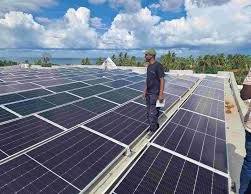
A mini-grid is a small, localised power system that harnesses solar energy to generate electricity. It comprises solar panels that capture sunlight, a charge controller that manages the power flowing into batteries for storage, and an inverter that converts the stored energy into usable electricity. A final component, a transformer, adjusts the voltage for safe travel through local wires, empowering a community entirely independently from the main national grid.

During a Media Engagement Workshop in Mutare on September 29, 2025, ZERA’s Research and Energy Efficiency Engineer, Victor Sibanda, presented a talk titled “Mini Grids – Improving energy access.” He outlined that green energy carries the significant added advantage of conserving the environment.
“Solar energy is clean with zero emissions. It also reduces the need for cutting down trees for firewood, thus preserving local ecosystems and reducing soil erosion,” he said.
In this era of climate change, ZERA’s emphasis on green and smart energy is essential worldwide.
Engineer Sibanda pointed to tangible successes in Manicaland Province, where mini-grids have transformed daily life for the communities of Hakwata, Nyafaru, Himalaya, and Chipendeke. These localised systems now supply reliable power to both residential and business properties. In Hakwata alone, the mini-grid is powering 108 households, bringing light, opportunity, and a respite from the darkness of load-shedding to the remote community.




More Stories
Retrenchment Axe Hangs Over TelOne
Zimbabwe’s Export Engine Fires Up
Zimbabwe Power Supply Improves as Energy Sector Turns Corner