





Post Senior Business Reporter
Bulawayo — Government has warned mining companies that disregard environmental, social, and governance (ESG) standards, saying that penalties will be imposed on those who do not mine responsibly.
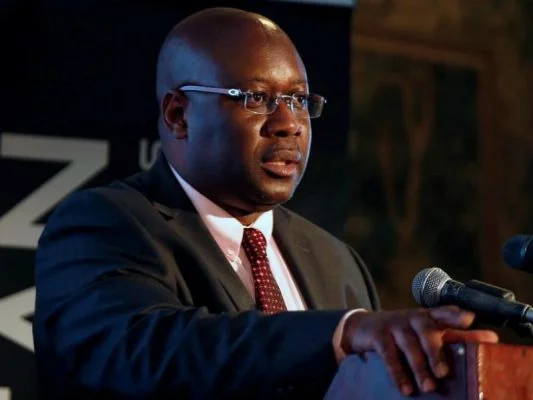
This was said by Mines and Mining Development Minister Winston Chitando while delivering his keynote address at the just ended 2025 edition of Mining, Engineering and Transport Expo(Mine Entra) held at the Zimbabwe International Conference and Exhibition Smart City(ZICES) in the second largest city.
This year`s event ran under the theme : “Beyond Extraction: Sustaining the Future of Mining.”
The expo brought together players from the mining, engineering, transport and construction sectors to network, forge partnerships and discuss key challenges affecting their operations.
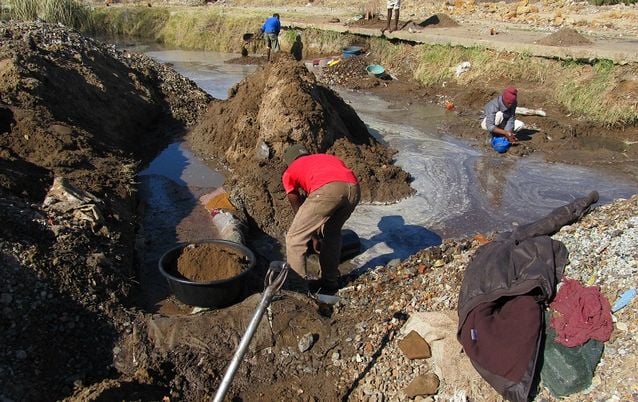
“There is no space, and there will not be space for players who can’t follow the ethos and principles of responsible mining. You should mine responsibly, “ Minister Chitando said.
He revealed that phase two of the Responsible Mining Initiative would be launched soon, marking a new era in the regulatory landscape.
“It will now go beyond the laws introduced, but also to ensure that everybody mines in a responsible manner. There will be penalties for those who don’t follow ethos and principles of responsible mining,” he added.
Chitando expanded the scope of responsibility to include local procurement and industrial synergies, calling on mining companies to source locally-produced equipment and supplies, including Personal Protective Equipment (PPE).
“There is no need to import PPE, there are PPEs being showcased here. We would like to see mining companies practicing responsible sourcing,” he advised.
He explained that responsible mining also includes integration between upstream and downstream players, from local input suppliers to industrial processors , in a bid to deepen local content and reduce external dependence.
Chitando pointed to recent investments and special economic zones as proof that Zimbabwe’s value-addition agenda is gaining momentum.
“There are various initiatives in the platinum and lithium sectors. By early next year, we will have production of lithium sulphate. We also have the Palm River Energy Metallurgical Special Economic Zone and the Zhongi Heli Energy 5 Miles Industrial Park in Hwange.
“The mining industry is growing, playing a key role in the development of our economy, and goes further in playing an important role in the development of our cities,” said the minister.
Speaking on the same event, Vice President Constantino Chiwenga outlined a decisive shift toward sustainable mining practices, beneficiation, and industrial integration.
He called for ethical mining, national ownership of mineral wealth, and bold industrial transformation.
“To the miners who are here today and those who are not, you are the custodians of our mineral wealth. Handle it with integrity. It is not yours; it is for the people of this country. It is for future generations,” he said.
The Vice President stressed that mining should not only bring in revenue but drive industrialization, create jobs, and build sustainable communities.
“The era of raw mineral exports must give way to beneficiation and value addition. Mining must drive industrialization, support downstream sectors, and create a legacy of prosperity, “he said.
He further said there is a need for closer collaboration between mining companies and research institutions, including the adoption of AI, geospatial mapping, and automation.
“We need to build a fully integrated mining value chain that feeds into manufacturing, energy, and export competitiveness,” he said.
Since its inception in 1995, Mine Entra has evolved into Zimbabwe’s premier platform for dialogue, innovation, and partnerships in mining and related sectors.
The 2025 edition is widely seen as a turning point for the sector, laying the groundwork for Vision 2030 and the transition from National Development Strategy(NDS1) to NDS2.


More Stories
AHF calls for African countries to unite against debt crisis
Pensioners Left Waiting As Billions Sit In Zimbabwe’s Pension Funds
Tax, Trust and Financial Literacy- Zimbabwe’s Long Struggle With the Obligations of a Modern Economy