





By Shingirai Vambe
Harare-As 2025 draws to an end, Zimbabwe’s corporate sector is already shifting its gaze toward the opportunities and uncertainties of 2026. With global markets in constant flux, geopolitical tensions reshaping trade routes, and Africa’s own economic prospects evolving, serious business leaders are wasting no time preparing for a year that promises both challenges and breakthroughs.
Fresh from the high-level deliberations held during the CEO Africa Roundtable (CEOART) Annual Conference in Victoria Falls in October 2025, the organisation has convened its traditional year-end annual banquet, an evening designed not only for celebration but for deep strategic reflection. Held at the prestigious Golden Conifer in Harare on 28 November 2025, this year’s banquet carries the theme: “Celebrating Resilience, Excellence, and Strategic Foresight.”
For CEOART, this gathering is far more than a ceremonial close to the business calendar; it is a collective pause, an opportunity for corporate executives, policymakers, and thought leaders to reconnect, realign, and reimagine the road ahead as the nation works toward the national Vision 2030 goals.
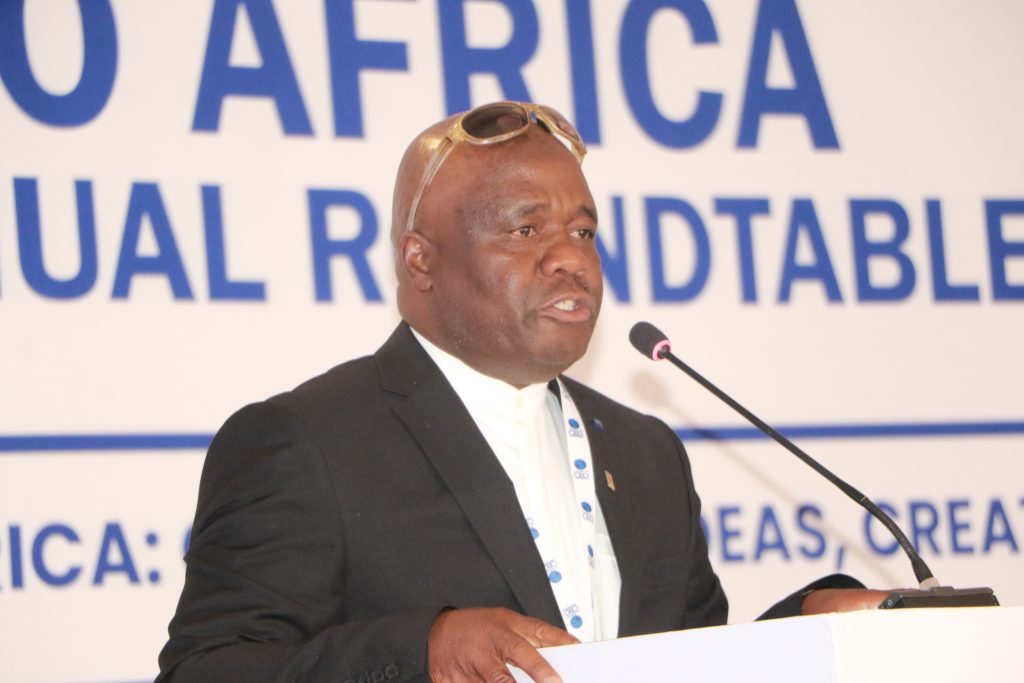
Speaking to The Post on Sunday, CEO Africa Roundtable Chairman Oswell Binha emphasized the significance of organising such strategic gatherings at a time when Zimbabwe is pursuing an ambitious transformation agenda.
“We want to become an upper middle-income economy by 2030,” Binha said. “But how do we reach that goal if we don’t prepare the leaders steering the companies that drive Zimbabwe’s economy? How do we ensure alignment with national policy frameworks if we don’t meet, network, and engage?”
He stressed that the resolutions adopted at the Victoria Falls conference must not remain theoretical.
“The 2026 target,” he added, “is total growth, growth of private sector enterprises, growth in public sector efficiencies, and growth in collaboration across the economic ecosystem. Ministries such as Finance and the Reserve Bank of Zimbabwe must continue engaging with industry players to address concerns and support the country’s economic momentum.”
Since its inception, the CEO Africa Roundtable has become a respected platform bringing together Africa’s key decision-makers. Its influence spans corporate boardrooms, public policy consultations, and economic development discussions.
By fostering collaboration, ethical leadership, and strategic foresight, CEOART has positioned itself as a driver of Africa’s long-term economic transformation.
The Annual Banquet is therefore not merely a social event; it is a culmination of these efforts.
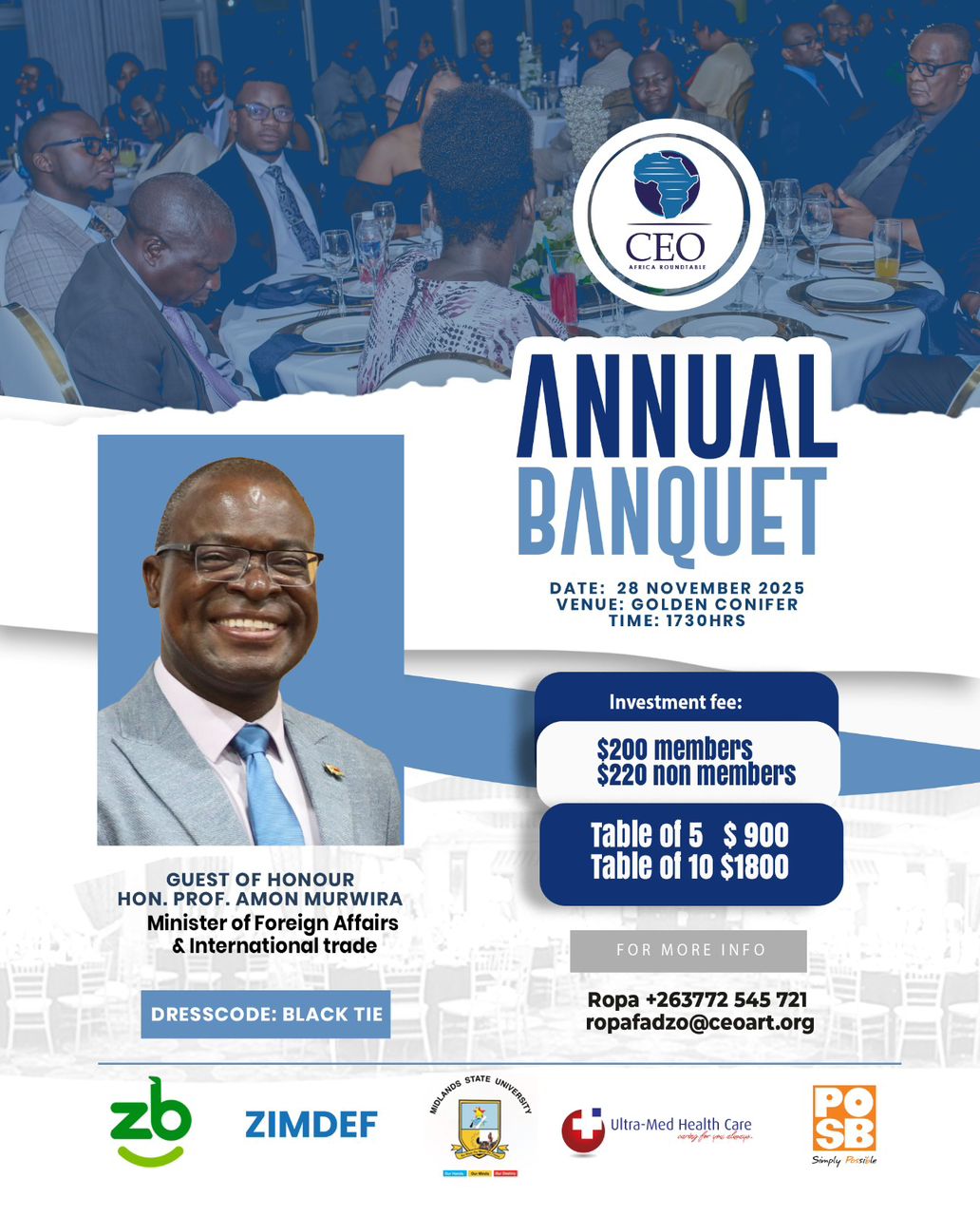
The banquet provides space for the CEOART community to honouring business achievements, innovation, and resilience demonstrated throughout 2025, by allowing members to distill lessons from a year shaped by inflationary pressures, currency shifts, regional developments, and global market changes, building networks that are essential for business continuity, investment expansion, and cross-sector partnerships and reinforcing a commitment to ethical, transformative leadership that positions Africa as a competitive global player.
CEO ART Chief Executive, Kipson Gundani told this publication that, the event’s key objectives include recognising leadership excellence among CEOs across sectors, creating an interactive platform for knowledge exchange, inspiring future-oriented strategies through keynote addresses from leading business icons and economists, and presenting the prestigious CEO Africa Roundtable Recognition Award.
The banquet is expected to yield several meaningful outcomes that will shape the business landscape in the coming year. For many attendees, the event offers a deeper appreciation of the leadership, innovation, and resilience that have kept corporations afloat during a demanding 2025. It also serves as a moment for CEOs and executives to reaffirm their commitment to the 2026 strategic agenda, ensuring that the goals set during the Victoria Falls conference are carried forward with purpose and unity.
Beyond celebration, the evening is designed to produce practical value. Key discussions and reflections are expected to generate documented insights that will guide financial planning, operational strategies, and policy engagement in the new year. The banquet also enhances the visibility of CEO Africa Roundtable and its partners, reinforcing their roles as central players in shaping Zimbabwe’s and the region’s economic direction.
Bringing together a wide and influential mix of stakeholders, the banquet stands as one of the country’s most important convenings of leadership. It draws chief executives and senior corporate figures from across sectors, alongside government ministers, policymakers, development partners, and major financial institutions. Representatives from academia, the diplomatic community, and the media add further depth to the dialogue.
This diversity reflects the Roundtable’s unique position as a bridge, linking the energy and innovation of the private sector with the policy frameworks and national priorities of the public sector. Through this convergence, CEOART continues to drive conversations that matter, inspiring collaboration, accountability, and long-term economic transformation.
The CEO Africa Roundtable Annual Banquet 2025 is not simply a celebration of the year gone by, it is a reaffirmation of commitment, resilience, and ambition.
As the country charts the path toward Vision 2030, the event provides a critical moment for Zimbabwe’s foremost minds to reflect on past lessons, celebrate present successes, and prepare for future opportunities.
In a world where economic conditions shift rapidly, CEOART’s year-end gathering offers something invaluable clarity of purpose and unity of leadership.
The insights and partnerships forged at Golden Conifer are expected to guide the business community into 2026 with renewed confidence and strategic focus.



More Stories
AHF calls for African countries to unite against debt crisis
Pensioners Left Waiting As Billions Sit In Zimbabwe’s Pension Funds
Tax, Trust and Financial Literacy- Zimbabwe’s Long Struggle With the Obligations of a Modern Economy