





From Poverty to Privilege by Association….
By Shingirai Vambe
Since 2017, Zimbabwe has witnessed the emergence of a new political-economic culture, one in which proximity to the ruling ZANU-PF party has increasingly become the gateway to opportunity, protection, and privilege. A growing number of individuals and organisations have aligned themselves with the political establishment, hoping to access contracts, exemptions, and economic advantages otherwise out of reach for ordinary citizens.
This environment has produced an explosion of associations branded with the initials “ED,” adopted from President Emmerson Dambudzo Mnangagwa. What began as a small mobilisation network has evolved into a sprawling ecosystem of groups presenting themselves as loyal defenders and promoters of the President’s agenda.
Across the country, these formations have multiplied, Women for ED, Journalists for ED, Pastors for ED, Mahwindi for ED, and dozens more, each positioning itself as a conduit to influence, resources, or political recognition. To many observers, the rise of the 4ED movement reflects a deeper shift in Zimbabwe’s patronage politics, where access to economic opportunities is increasingly ring-fenced for a select political elite, while those seeking rapid financial elevation or lucrative tenders must declare allegiance to the country’s leadership structure.
This culture has also been reinforced by public displays of benevolence from well-connected business figures. In recent years, businessman Wicknell Chivayo has risen to prominence for gifting cars, cash, and financial incentives to artists, churches, influencers, and political supporters, gestures that critics argue symbolise the consolidation of a patronage economy.
A recent investigative story published by The Standard rekindled debate around these practices, prompting the ruling party to issue directives reportedly centralising the power to give gifts under the office of the President. According to the report, only Mnangagwa may now distribute such gifts, an indication of how politically sensitive the issue has become as the nation edges closer to the targets set under the 2030 agenda.
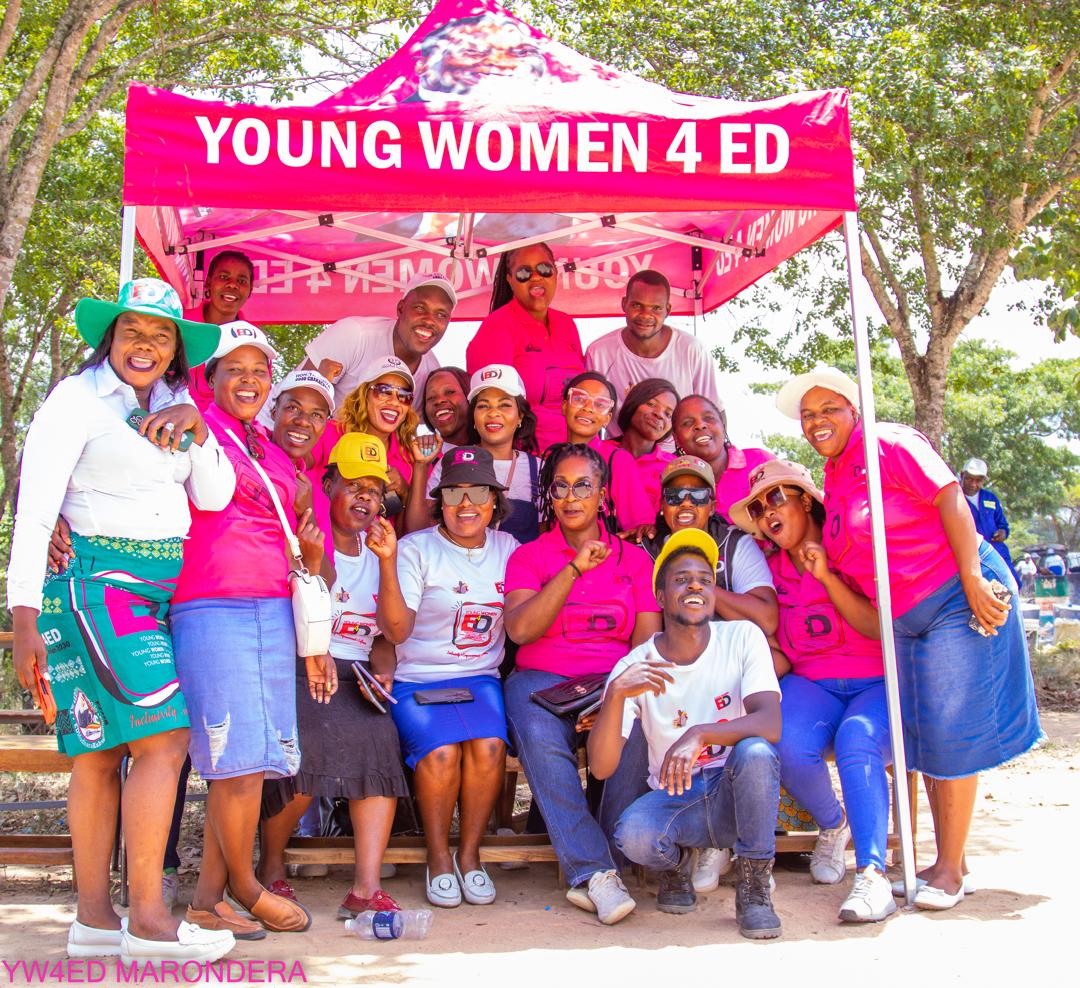
These developments were indirectly referenced at the CEO Africa Roundtable in Victoria Falls, where economist Dr. Gift Mugano offered a sharp critique of the current economic climate. Reflecting on the proliferation of 4ED-aligned groups, Mugano remarked that Zimbabwe’s economy had entered a strange phase, one in which almost everything appeared to be branded “for ED.” The symbolism, he argued, pointed to underlying distortions in state–market relations and raised questions about transparency, policy consistency, and the inclusivity of economic opportunities.
Mugano’s concerns came after a presentation by Reserve Bank of Zimbabwe Deputy Governor Jesimen Chipika, who defended the government’s planned transition toward a mono-currency system. Responding to the proposal, Mugano cautioned that Zimbabwe’s citizens carry deep scars from past monetary failures, and that confidence, not policy slogans, should guide macroeconomic reform.
“Zimbabweans lack confidence,” he told the gathering. “Our experience and our past continue to shape how we respond, how we think, and how we navigate our macro-economic environment.”
The economist added that he would fully support the return to a mono-currency system only if the local currency could meet real-world transactional needs: buying fuel, purchasing airline tickets, securing accommodation, and paying for essential services without the need to revert to the U.S. dollar.
Until such practical realities align with policy ambition, Mugano warned, the public would remain skeptical.
Tthe intersection of politics, patronage, and economic reform continues to shape national discourse. For many citizens, the rise of 4ED formations is both a symptom and a symbol of deeper structural issues, reflecting a society where access, influence, and economic survival increasingly depend on one’s proximity to political power.



More Stories
AHF calls for African countries to unite against debt crisis
Pensioners Left Waiting As Billions Sit In Zimbabwe’s Pension Funds
Tax, Trust and Financial Literacy- Zimbabwe’s Long Struggle With the Obligations of a Modern Economy