





The Post On Sunday
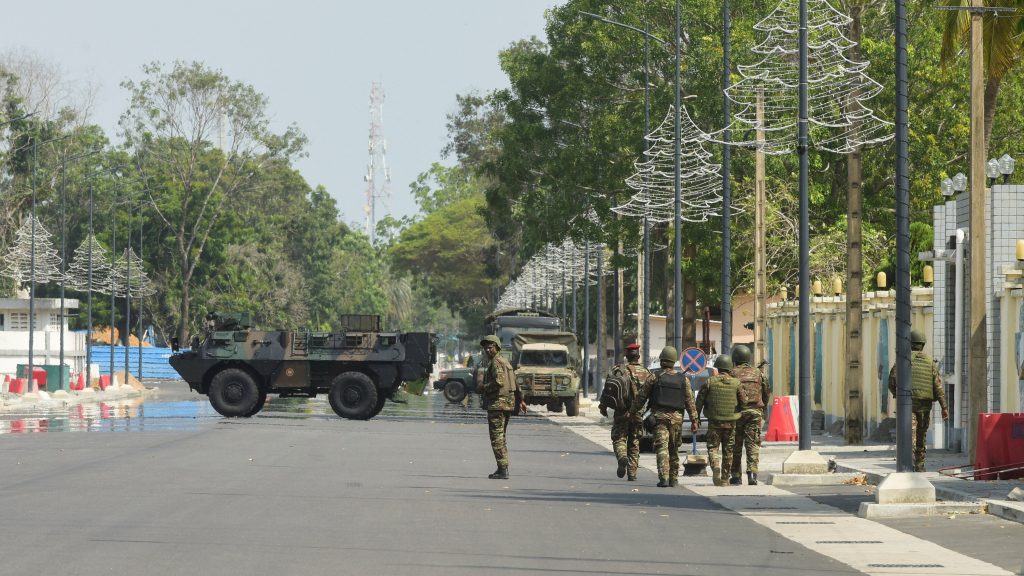
West Africa awoke to fresh tensions this week after Nigeria launched a swift and decisive military operation inside neighboring Benin, intervening to protect President Patrice Talon’s government from an attempted coup. The dramatic episode, which unfolded overnight, marked one of the most forceful regional responses to an insurrection in recent years, signaling a potential shift in how West African states confront the growing wave of coups destabilizing the region.
According to a statement from Nigerian President Bola Tinubu’s office, the Nigerian Air Force deployed fighter jets while ground forces crossed into Benin to help neutralize a faction of soldiers who had seized strategic positions, including the national television station and a military camp. Tinubu, who also currently chairs the Economic Community of West African States (ECOWAS), authorized the mission after Benin’s government formally requested assistance. Nigerian troops, the statement noted, were sent strictly for “missions approved” by the Beninese authorities.

ECOWAS itself responded with unusual speed and unity. In a separate communique, the bloc confirmed that its standby force, comprising personnel from Ghana, Ivory Coast, Sierra Leone and Nigeria, had been mobilized in support of Benin’s loyalist forces. Their coordinated action stood in sharp contrast to the bloc’s recent hesitancy in responding to military takeovers across the region, including last month’s dramatic events in Guinea-Bissau, where mutinous soldiers clashed with loyalists with minimal regional intervention.
Had the Benin coup succeeded, it would have marked the 10th successful military takeover in West and Central Africa since 2020, adding to a troubling pattern of constitutional disruptions stretching from the Atlantic coast to the Red Sea. Although Talon’s government moved quickly to reassert control, analysts warned that the incident underscores deeper fragilities that could shake investor confidence.
“This kind of instability sends worrying signals,” said Léopold Adjakpa, Executive Director of the Private Investors Council in Benin, in a phone interview. “Even a failed attempt like this introduces uncertainty, and that uncertainty can slow economic activity and weaken the country’s investment appeal.”
The financial markets reacted immediately. Benin, which has approximately $2.5 billion in foreign-currency bonds outstanding, saw yields rise sharply. The return on its $750 million eurobond maturing in 2038 jumped 26 basis points to 7.88% by early morning trading in London. The country earlier this year issued $500 million in dollar bonds, the first sovereign African issuance of 2025, attracting investor demand seven times the offer. The attempted coup, Adjakpa warned, may now complicate Benin’s efforts to maintain such strong market enthusiasm.
Benin’s economy is tightly linked to that of Nigeria, with the port of Cotonou serving as a major transshipment hub for West Africa’s largest market. Any political instability risks disrupting regional trade flows and undermining confidence in the corridor’s long-term stability.
President Talon appeared on national television shortly after order was restored, assuring citizens that the situation was “totally under control.” He said mop-up operations were underway to “clean up the last pockets of resistance from the mutineers” and that security forces were working to locate any civilians or officials who may have been detained by the insurgents during their brief occupation.
Authorities confirmed that at least 14 suspected coup plotters have been arrested, with security operations ongoing to track down others who may have fled during the counter-assault.
The failed insurrection has left Benin, and the wider region, grappling with a familiar question: whether the tide of coups that has swept across West Africa can truly be stemmed, and whether regional leaders have the political will to prevent the next one before it ignites.




More Stories
AHF calls for African countries to unite against debt crisis
Zimbabwe’s Second Bid to Remove Vendors from Harare Streets Triggers Fresh Livelihoods, Law and Order Clash
Traffickers exploiting job seekers and vulnerable Zimbabweans, official warns