





By Shingirai Vambe
As official narratives continue to highlight economic growth, peace-building and improved governance under President Emmerson Mnangagwa and the ruling ZANU PF party, events unfolding on the country’s borders tell a more complex and troubling story, one in which desperation, survival and forced migration remain defining realities for thousands of Zimbabweans.
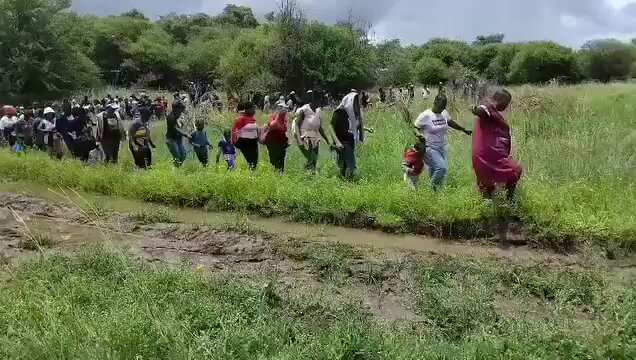
On December 31, authorities intercepted and arrested more than 1 000 undocumented migrants attempting to cross into South Africa, a group that included children under the age of five. The incident, which occurred at one of the country’s busiest informal crossing points, cast fresh light on the depth of economic hardship driving families to take dangerous and illegal routes in search of livelihoods beyond Zimbabwe’s borders.
For years, senior government officials and ruling party sympathisers have dismissed the persistent outflow of citizens as exaggerated, unpatriotic or the result of what they describe as “puppetry” by critics of the State. Yet the latest arrests, involving women carrying infants and toddlers, have once again exposed the human cost behind the migration debate.
The majority of those intercepted were women, many travelling alone or with young children, reinforcing long-standing patterns that show women bearing the brunt of economic collapse and unemployment at home. For many families, migration is no longer a choice but a strategy of survival.
Zimbabweans working in South Africa are often employed in low-paying, physically demanding and informal jobs, including construction, domestic work, farm labour and security. Despite the risks of exploitation, arrest and deportation, many say the returns, however modest, outweigh the realities of joblessness and soaring living costs back home.
“I know it’s not easy in South Africa, but half a loaf is better than nothing,” said Talent Muchena, a resident of Mutare who was preparing to leave for South Africa on January 2. Muchena told The Post On Sunday that he has previously worked as a builder across the border and plans to return despite the uncertainty.
“Most of us are doing dirty jobs, jobs people don’t want, but at least you can send something home. Here in Zimbabwe, everything is expensive and there are no jobs,” he said.
Muchena’s experience mirrors that of thousands of others who cross the Limpopo River each year, often without documentation, relying on informal networks and risking their lives to escape poverty.
For Rutendo Joseph of Macheke, migration has been a long and difficult journey for her family. She told this publication that her husband has worked in South Africa for several years, navigating a life marked by fear, instability and exploitation.
“It hasn’t been easy. There are many challenges, especially because he went without documents,” she said. “But despite everything, it has helped us survive. If he was here, we wouldn’t manage.”
Analysts say the continued migration of working-age citizens, and now entire families, reflects deep structural problems within Zimbabwe’s economy, including unemployment, currency instability, high inflation and declining public services. While government figures point to macroeconomic improvements, many ordinary citizens say those gains have yet to translate into meaningful changes at household level.
The presence of young children among those arrested on December 31 has also raised serious humanitarian and child-protection concerns, highlighting the lengths to which families are willing to go in the absence of social safety nets.



More Stories
Fix The Economy, Not Just The Buildings
Mahlangu Cleared as Conflict-of-Interest Claims Fall Away
Retrenchment Axe Hangs Over TelOne