





Farmers count losses despite early rains….
By Shingirai Vambe
For the first time in nearly a decade, hope swept across Zimbabwe’s countryside as steady rains fell consistently for close to 18 days. After years marked by erratic rainfall, prolonged dry spells, and repeated crop failures, the sustained downpour felt like a long-awaited turning point. Dams began to fill, dry riverbeds stirred back to life, and across farming communities there was renewed optimism that the country might finally be headed toward a productive agricultural season.
From communal lands to large-scale commercial farms, farmers moved with urgency and excitement. Fields were cleared and prepared, seed was planted, and tractors rolled day and night as expectations of a bumper harvest began to take root. For many rural households, the rains symbolised far more than water for crops. They represented relief from hunger, improved household incomes, repayment of debts accumulated during previous poor seasons, and a rare chance to rebuild after years of loss.
But the optimism proved short-lived.
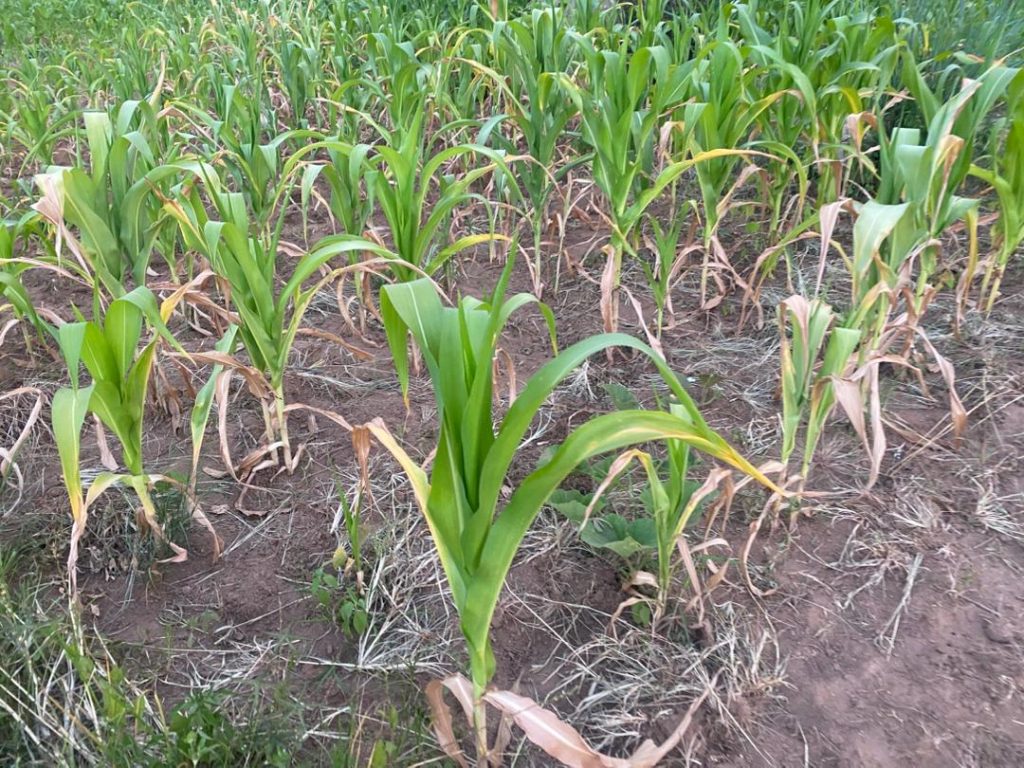
Within weeks, warning signs began to emerge, first from tobacco growers, who raised alarm over unusual stress patterns affecting their crops. Leaves began to curl and discolor, showing signs of disease and nutrient imbalance. Farmers attributed the damage to excessive moisture followed by sudden dry spells that interrupted normal plant development. Soon after, maize crops, Zimbabwe’s staple food, started telling a similar story. Once vibrant green fields turned patchy, with leaves fading to pale yellow, a clear signal of plant stress and declining health.
What had been widely anticipated as a bumper harvest is now, for many farmers, shaping into a season of counting losses. In several communal farming areas, reports have already emerged of crops drying up prematurely, long before reaching maturity. For smallholder farmers, the impact is especially devastating. Most are uninsured, and without access to irrigation infrastructure, they are left fully exposed to the increasingly unpredictable climate.
“Without irrigation systems, farming in Zimbabwe remains a gamble,” said Rusape dairy and tobacco farmer, Stanger.
one where livelihoods are staked almost entirely on rainfall patterns that no longer follow predictable cycles. While some commercial farmers are cushioned by irrigation equipment, agronomic support, and access to inputs, the majority of rural farmers depend solely on rain-fed agriculture, leaving them acutely vulnerable to sudden weather shifts.

Agricultural experts have long warned that climate variability, characterised by intense rainfall over short periods followed by prolonged dry spells, poses a serious threat to national food security. This season appears to be confirming those fears. Despite a promising start, the uneven distribution of rainfall has undermined crop development in many areas, raising the spectre of food shortages for thousands of households.
The worst affected small holder farmers are tobacco farmers, who had planted their crops on contract, they may fail to reap any leaf if the dry spell continues, while the contractor’s only choice is to wait for the little and come back the next season until all he/she had invested is recovered
As the season unfolds, concern is growing that the early promise of adequate rains may mask a deeper agricultural crisis. With crops failing in some regions and limited recovery options available, many Zimbabweans are once again pinning their hopes on relief programmes, government intervention, and favourable late-season rains to salvage what remains.
Efforts by The Post On Sunday to obtain comment from the Ministry of Lands, Agriculture and Rural Resettlement regarding the country’s preparedness in the event of another dry spell or drought were unsuccessful. The lack of immediate official communication has only heightened anxiety among farmers already facing uncertainty in the fields.
However, Deputy Minister for Lands, Agriculture, Water, Climate and Rural Resettlement and Member of the National Assembly for Muzvezve, Vangelis Haritatos, told this publication that the first round of the national crops, livestock and fisheries assessment is nearing completion.
“Wait for the First Round of our Crops Livestock and Fisheries Assessment to be made public this week after Cabinet.,” Haritatos said, raising cautious expectations that clearer data on the season’s outlook will soon be available.
Zimbabwe’s farmers wait anxiously, scanning the skies and monitoring their fields.
What began as a season of renewed optimism has become a sobering reminder of the fragility of rain-fed farming in a changing climate. For many, the pressing question is no longer how big the harvest will be, but whether there will be a harvest at all.




More Stories
Retrenchment Axe Hangs Over TelOne
Marital Feud Escalates Into Gun Drama in Rusape
Zimbabwe’s Export Engine Fires Up