



The Post On Sunday
While some political factions in parts of the West quietly celebrated what they described as the elimination of a long-standing adversary, the reported killing of Iran’s Supreme Leader, Ayatollah Ali Khamenei, in a joint American-Israeli strike has sent shockwaves far beyond Tehran. The ripple effects are already being felt in global markets, in regional airspace, and in the fragile balance of Middle Eastern geopolitics.
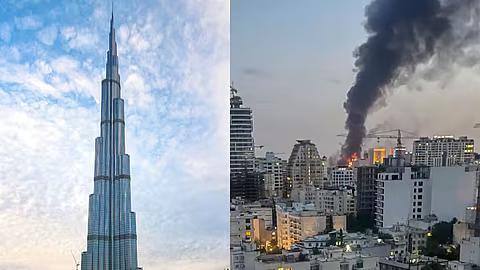
Dubai — gradually transformed over the past three decades into one of the world’s most strategic trading and transit hubs — has found itself at the centre of the fallout. For hours following Iran’s retaliatory strikes, no planes were reported entering or leaving Dubai International Airport, one of the busiest aviation gateways on the planet. The sudden paralysis of air traffic underscored how deeply interconnected global commerce has become — and how quickly conflict in one region can disrupt the arteries of world trade.
The escalation began with coordinated air raids on Tehran, which US President Donald Trump described as a decisive operation targeting Iran’s leadership. Writing on his Truth Social platform, Trump declared: “Khamenei, one of the most evil people in history, is dead,” framing the strike as both justice and strategic necessity. Satellite images later showed extensive damage to Khamenei’s compound, with blackened buildings, debris, and smoke columns visible from above.
Iranian state media initially denied the Supreme Leader’s death, insisting he remained “steadfast and firm in commanding the field.” However, in a somber televised address, a tearful presenter later confirmed his passing, announcing that the nation would observe 40 days of mourning.
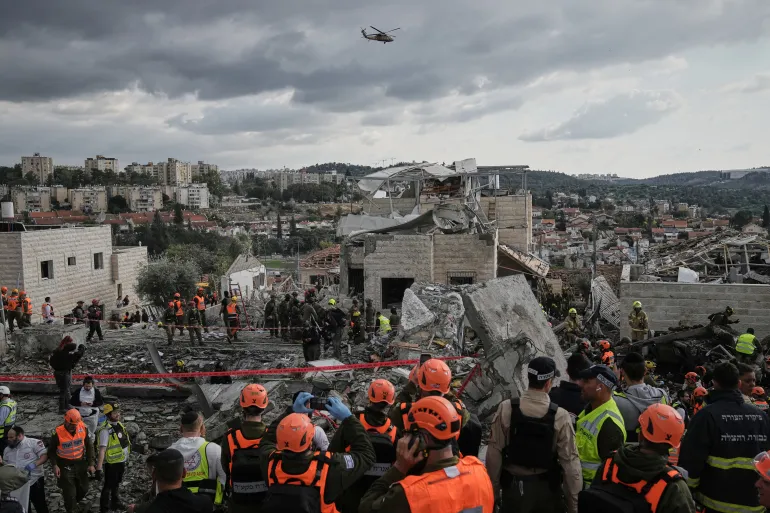
The Israeli Defense Forces said approximately 200 fighter jets carried out what was described as the largest military flyover in the history of the Israeli Air Force, striking around 500 targets across Iran. Explosions were reported not only in Tehran but also in Karaj, Isfahan, Qom and Kermanshah. Iranian authorities reported hundreds of casualties nationwide, though it remained unclear how many were civilians or military personnel. One particularly devastating strike reportedly hit a girls’ school in Minab, causing mass casualties and triggering international outrage.
In response, Iran launched a barrage of missile and drone attacks across the Middle East. Strikes were reported in countries hosting US military bases or allied with Washington. An explosion was reported at a luxury hotel in Dubai, while US naval installations in Bahrain and Qatar were allegedly targeted. Kuwait, Iraq and Jordan also reported attacks, and Israel confirmed at least one fatality following missile strikes in the Tel Aviv area.
The crisis quickly spilled into the global economic arena. Iranian media indicated that Tehran would move to close the strategic Strait of Hormuz — the narrow waterway between the Persian Gulf and the Gulf of Oman through which roughly one-fifth of the world’s oil and gas supplies transit. Even the suggestion of such a closure is enough to rattle energy markets.
Oil prices began climbing almost immediately, as traders factored in the risk of prolonged disruption. Any sustained interruption in Hormuz would inevitably trigger sharp increases in global fuel prices, with cascading effects on transport, manufacturing and food supply chains worldwide. Inflationary pressures, already straining many economies, would likely intensify.
Africa, often perceived as geographically distant from Middle Eastern conflicts, will not be spared. The continent’s economies are deeply exposed to fluctuations in oil prices and global commodity markets. Both formal and informal trade routes — including gold and mineral exports — are tied to international supply chains that depend heavily on Gulf stability. Rising fuel costs alone could dramatically inflate the prices of goods and services across African capitals, worsening cost-of-living crises already gripping many nations.
Diplomatic reactions have been swift and divided. Iran’s foreign minister accused the United States and Israel of launching a war that was “wholly unprovoked, illegal, and illegitimate.” The United Nations Secretary-General and several world leaders, from Brazil to China, condemned the strikes, while Britain, France and Germany issued a joint appeal urging Iran to refrain from further retaliation and abandon its weapons programs. The UN Security Council convened an emergency session as fears of a broader regional war intensified.
The tragedy is compounded by timing. The strikes came after three rounds of talks between the US and Iran aimed at curbing Tehran’s nuclear activities. Mediators had indicated that “substantial progress” had been made and that a deal was within reach. President Trump, however, expressed dissatisfaction with the pace of negotiations and reportedly authorized the operation amid concerns that diplomacy was stalling.
For Washington and Tel Aviv, the elimination of Khamenei is viewed as a strategic opening — perhaps even a transformative moment for Iran’s internal politics. Trump described it as “the single greatest chance for the Iranian people to take back their country.” Yet such optimism stands in stark contrast to the grim reality unfolding across the region: escalating military exchanges, civilian casualties, and a global economy bracing for impact.
What is clear is that this is no longer merely a Middle Eastern conflict. With Dubai’s airspace halted, oil routes threatened, and markets trembling, the crisis has become a global one. From energy prices in Europe to fuel pumps in Africa, from stock exchanges in Asia to food prices in developing economies, the consequences of this escalation will be widely felt.
About The Author




More Stories
Global Markets Watch As US And China Restart Critical Trade Talks
Zimbabwe Bets on US$4 Billion Energy Projects to Power Economic Growth
Geopolitical Flashpoint, How a US-Iran Clash Could Rock Global Markets