






By Shingirai Vambe
Across the developing world, nations are racing to join the digital revolution, chasing the promise of Artificial Intelligence (AI) and technology-driven economies. The global chorus urging adaptation has grown louder, yet beneath the noise lies confusion and inequality, especially in Africa, where enthusiasm often outpaces understanding. While developed nations like the United States and China dictate the pace and direction of the AI revolution, many developing countries are left to follow without a clear sense of purpose or ownership.
The recent meeting between U.S. and Chinese leaders, Donald Trump and Xi Jinping, brought the geopolitics of AI and global economics into sharp focus. Among their key discussion points was Africa, a continent rich in rare minerals essential for AI technologies, batteries, and renewable energy systems. China currently holds reserves of nearly 90% of the world’s rare minerals, giving it unprecedented leverage in the global tech race. The irony is clear, while the superpowers strategize over Africa’s natural resources, the continent’s own leaders are still grappling with how to position themselves within this rapidly evolving digital economy.
“The introduction of trade tariffs and the banning of exportation of rare earth minerals described as rare earths deal should make Africa unite and build a powerful system complementing AI,” said Professor Arthur Mutambara.
In Zimbabwe, the government and institutions are echoing the global call to “adapt or perish,” urging sectors to embrace AI integration. Yet, the question remains, adapt to what, and at what cost? At the recent Voluntary Media Council of Zimbabwe (VMCZ) Annual Indaba, held under the theme “Ethical Journalism & Media Sustainability in the Age of AI,” experts, scholars, and journalists gathered to unpack the implications of this technological wave.
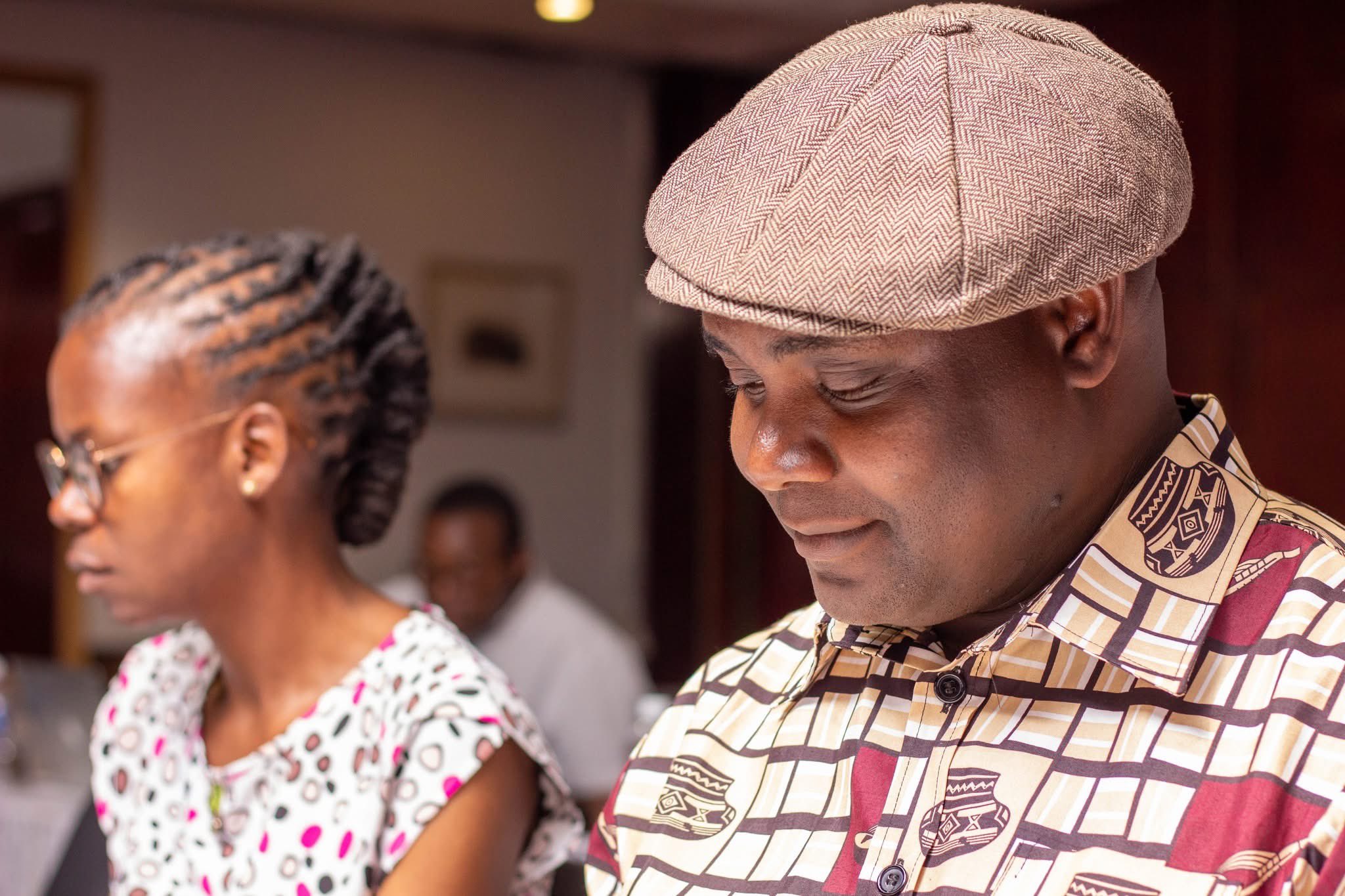
Media analyst and lecturer Alexander Rusero reminded delegates that AI, while powerful, must remain a tool, not a replacement, for human creativity. “It is up to us to tame AI,” he said. “But the moment we imagine a scenario where AI replaces human creativity, we are losing the plot. AI does not have the capacity to do that.” He likened AI to a tiger, one can either run from it or learn to ride it. In his analogy, Africa must ride the tiger, control and guide technology rather than being devoured by it.
Rusero criticized Zimbabwe’s fragmented journalism training system, describing it as chaotic and disconnected from industry needs. He argued that journalism schools and training institutions across the country, such as Harare Polytechnic, National University of Science and Technology (NUST), Great Zimbabwe University (GZU), Africa University (AU), and COSSA, operate in silos, lacking coordination, standardization, and alignment with real-world demands. “Industry should inform training,” he said, “but in Zimbabwe, trainers and practitioners operate on different islands.”
Curriculum design, he observed, has become more political than practical. Programs are created with self-preservation in mind, with departments protecting their own relevance rather than preparing students for future media realities. Rusero stressed the need for curricula that are forward-looking, designed not just for current trends but for emerging technologies like robotics, machine learning, and AI-driven storytelling.
His remarks echoed those of Professor Arthur Mutambara, lecturer in robotics at the university in South Africa, who recently told delegates at the CEO Africa Roundtable that AI is not new, it has existed for years, but Africa has been too distracted by politics to notice. “We are always given political problems to solve instead of developmental ones,” Mutambara said.
“The government has introduced this policy, but who was actually involved in drafting it?” Mutambara asked. “We have tech experts in Zimbabwe, people like Strive Masiyiwa and James Manyika, who is currently Google’s Senior Vice President for Technology and Society, were they consulted?” asked Mutambara.
A closer look at Zimbabwe’s journalism institutions reveals disparities. Harare Polytechnic, the oldest media training school established in 1919, has tried to update its curriculum to include media literacy and digital journalism. Africa University has gone further, introducing modules on AI ethics, critical thinking, and problem-solving, supported by a state-of-the-art AI-enabled media studio. Meanwhile, private institutions like COSSA lag behind, offering little to no AI integration in their programs.
Rusero warned that the current approach to AI adoption in Zimbabwe is largely superficial, a form of sloganeering without substance. “We are reacting to trends instead of anticipating them,” he noted. “Our curricula should not be reactive but proactive.” He urged universities to create a deliberate and localized AI strategy that empowers journalists to tell African stories using African ethics and values.
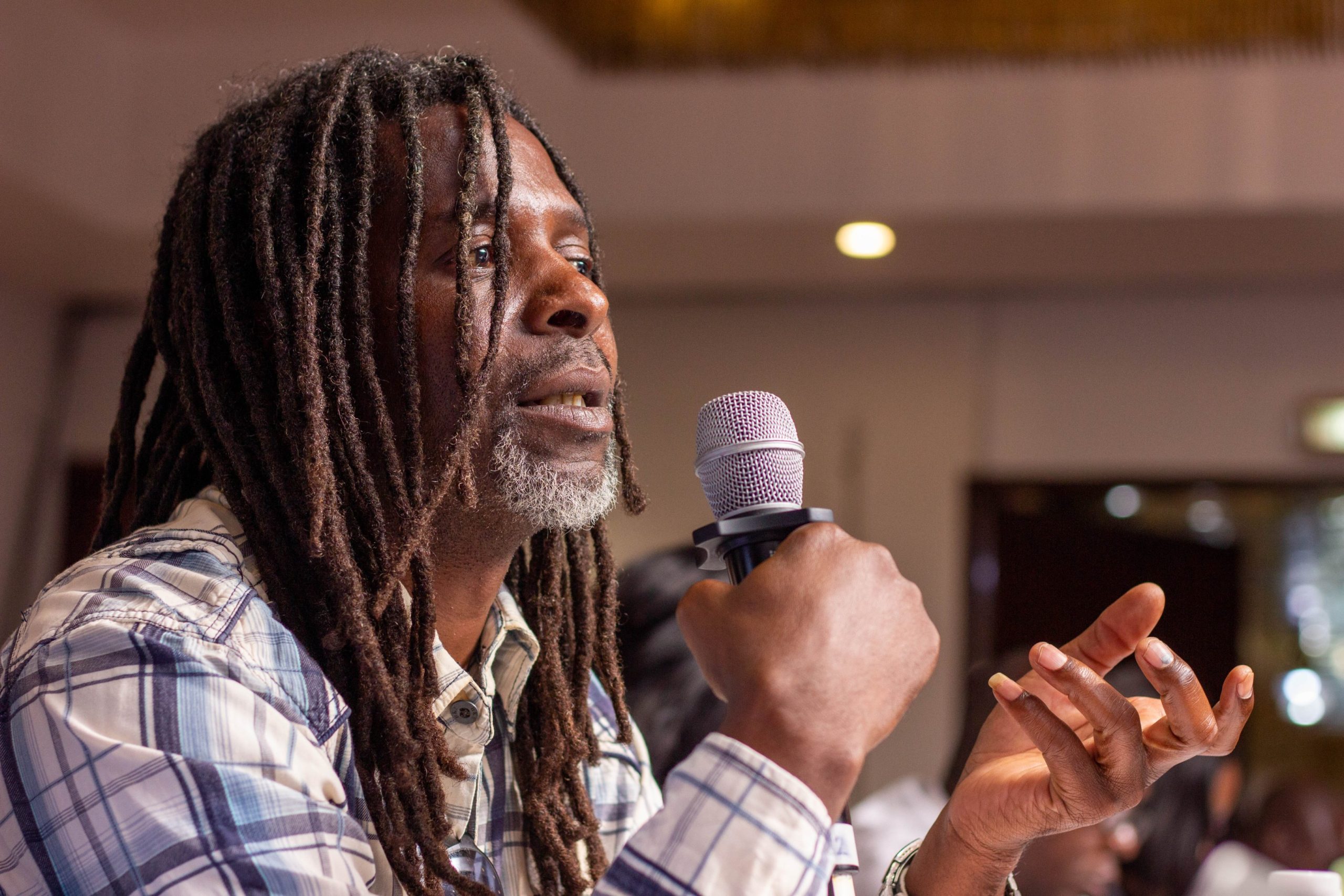
This vision calls for a balance between technology and creativity. While AI can aid in data analysis, verification, and investigative reporting, Rusero emphasized that it must never replace human intuition and storytelling. He cautioned against “digital dependence” a situation where Africa becomes reliant on foreign AI systems it neither created nor controls. “When we rely on something we do not own, we risk a shutdown. We risk collapse,” he warned.
The session also highlighted the lack of coordination between journalism schools, industry bodies, and policymakers. Unlike the Law Society of Zimbabwe, which regulates the legal profession, journalism has no single authoritative body to oversee training standards. Rusero proposed that organizations like the Media Alliance of Zimbabwe (MAZ) play a stronger role in setting curriculum expectations and bridging the gap between education and industry.
The challenges are compounded by resource shortages. Trainers lack funding, equipment, and institutional support. Civil society and government assistance remain minimal. Yet, Rusero believes progress is still possible through collaboration, knowledge exchange, and creative partnerships, not necessarily large budgets. “It’s not always about money,” he said. “Sometimes it’s about cooperation and shared purpose.”
Ultimately, both Rusero and Mutambara agree, Africa’s approach to AI must be holistic, inclusive, and visionary. It cannot be confined to computer science departments or ICT ministries, it must permeate every faculty, from arts to economics to journalism. Just as Zimbabwe once successfully mainstreamed the fight against HIV/AIDS through collective effort, AI integration must follow a similar national model.
For Africa, the challenge is not just technological, it is philosophical it must decide whether to remain a passive consumer of AI technologies or to become an active shaper of its digital destiny.
The tiger is here, will Africa ride it, or be devoured by it?



More Stories
Retrenchment Axe Hangs Over TelOne
Marital Feud Escalates Into Gun Drama in Rusape
AHF calls for African countries to unite against debt crisis