





The Post On Sunday
Africa’s political landscape is once again burning with discontent. The southern region, long touted as a pillar of peace and democratic progress, finds itself caught in a new storm. After Cameroon and Madagascar’s disputed electoral episodes, Tanzania has now joined the list of nations stumbling through the ruins of flawed democracy. What was meant to be a celebration of civic duty and leadership renewal has instead descended into turmoil, marked by arrests, abductions, and violent uprisings.
In the weeks leading up to the polls, Tanzanians watched as the political space narrowed to a single lane. Opposition voices were silenced, their gatherings banned, and their leaders persecuted under trumped-up charges. The most shocking blow came when the main opposition leader was arrested and charged with treason, a clear message to all who dared to challenge the ruling establishment. With rivals eliminated or intimidated, President Samia Suluhu Hassan emerged as the sole candidate in what should have been a fiercely contested presidential race.
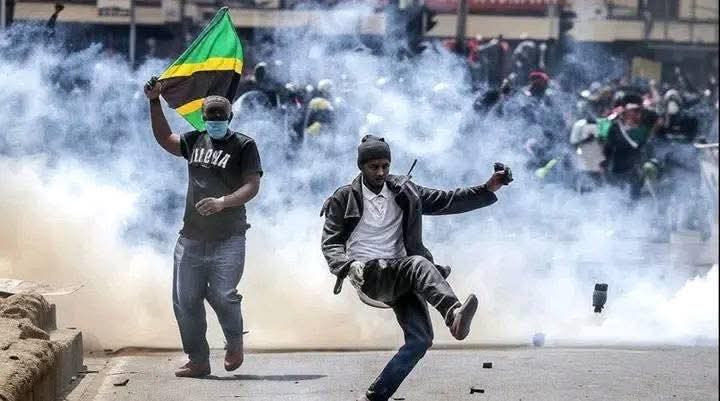
Yet, the citizens did not bow quietly. On the very day they were meant to cast their votes, frustration erupted into fury. What began as sporadic protests in Dar es Salaam and Arusha quickly spread across the country. Young people, emboldened and frustrated, poured into the streets, this time not only with placards but with unprecedented support from sections of the police and military who refused to turn their guns on civilians. Their unity sent shockwaves through the ruling elite, echoing a collective rejection of autocracy.
Reports from across Tanzania painted scenes of chaos and defiance. Properties belonging to Samia Suluhu Hassan allies and supporters were torched. Known celebrities who openly endorsed her campaign were targeted, their homes attacked by mobs who accused them of betraying the people. Ballot boxes were snatched from polling stations, their contents strewn across streets in anger. In many districts, polling stations were deserted by mid-morning as citizens abandoned the ballot in favor of the barricade.
For many Tanzanians, this uprising is not just about one election, it is about years of betrayal and unfulfilled promises. Sisulu’s ascent to power had once been celebrated as a symbol of continuity after the sudden death of former President John Magufuli, a leader many believed was building a new Tanzania rooted in self-reliance and accountability. But whispers of conspiracy have grown louder, with some alleging that Samia Suluhu Hassan rise was engineered by powerful external forces. Conspiracy theories even suggest foul play in Magufuli’s death, tying Suluhu political survival to shadowy interests.
The comparisons with Zimbabwe’s ruling party, ZANU PF, have become impossible to ignore. Many accuse Suluhu of “drinking from the ZANU PF cup”, adopting the same authoritarian strategies that have kept Zimbabwe’s ruling elites entrenched for decades. Leaked images showing Sisulu alongside Wicknell Chivhayo, a convicted businessman and known associate of ZANU PF’s inner circle, have fueled suspicions of electoral manipulation. Critics claim that the alliance may have extended beyond mere friendship, possibly influencing this election, as it may not be an isolated case, with previous reports indicating the printing and distribution of ballot papers, reportedly involving connections to South Africa.
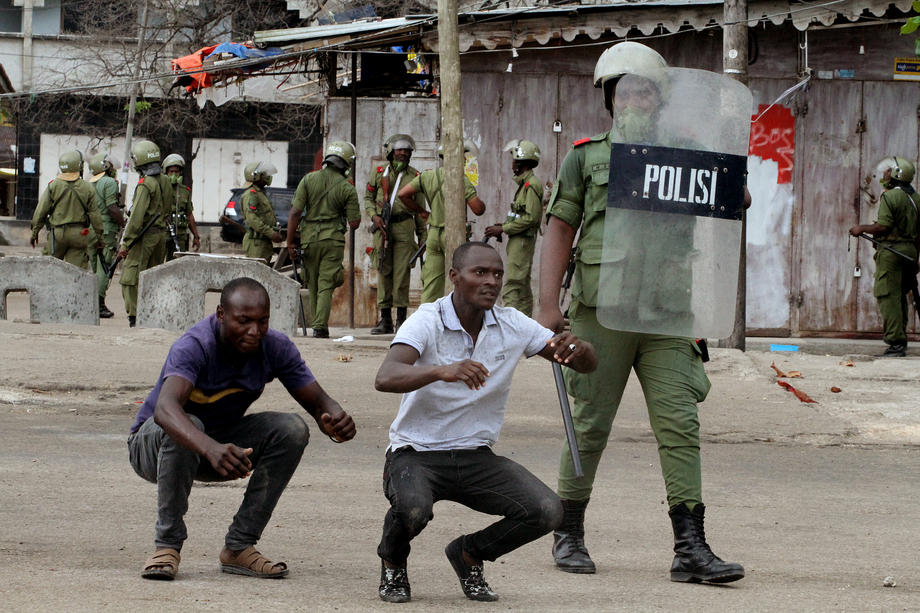
As Tanzania’s streets remain tense, the government has imposed curfews, the citizens ignored, even after the police commissioner issued threatening warnings, the protests persist and its over 24 hours and counting.
The nation has been in open revolt, its youth, once the hope of a democratic renaissance, now forced to fight for the very right to vote. The dream of a free and fair election has gone up in smoke, replaced by scenes of destruction, anger, and disillusionment.
The incasserated opposition leader, Tundu Lissu, while in the dock, said no reforms no elections. His senior official, John Heche was arrested twice in one week, while attempting to attend the treason trial of party leader Lissu.
In a statement, Chadema alleged that the government planned to “arrest senior party leaders and detain them until after the elections”, which will take place on 29 October.
Tanzania’s crisis has become a mirror of a regional pattern, where democracy exists only in theory, and elections are but carefully staged performances. From Harare to Dodoma, citizens are awakening to a shared realization; that true democracy in Africa remains under siege, hijacked by leaders who mistake power for ownership and the people’s patience for weakness.
Interestingly, under the circumstances, without internet for more than 48 hours, protesters went to Mawasiliano Towers in Dar es Salaam, where the Tanzania Communications Regulatory Authority (TCRA) offices are demanding networks to be restored. meanwhile, the Tanzania’s Electoral Elections Commission, announced the results of the election with Suluhu declared the winner with 85.4% against other participants.
Majority of Tanzanians have been reported to have crossed the border to Kenya, fleeing from the angry mob for their own safety. this morning thousands are said to be walking to the country’s State House to demand nullification of the election.
In solidarity, Kenyans are being barred to cross to Tanzania to help their fellow brothers and sisters, while shared on X, Zimbabwe made bullets are said to have been used by he Police and army firing live rounds against citizens in yesterday protest.
Unconfirmed reports claim Suluhu has fled the country to Kenya as the protest continue in Tanzania.
Mwanwhile, down South, a few days ago, SAPEs Trust premises in Harare were petrol-bombed, sending shockwaves through citizens and opposition activists. The attack occurred ahead of a scheduled meeting meant to discuss ZANU PF’s alleged bid to amend the constitution and extend President Emmerson Mnangagwa’s rule until 2030, bypassing the 2028 elections. Many believe the assault was an attempt to intimidate dissenting voices and suppress dialogue on constitutional democracy. The action is seen as a mirror to what Zimbabwe citizens should expect ahead of the 2028 polls.


More Stories
Zimbabwe’s Export Engine Fires Up
Southern Africa Rethinks Energy Security as Zimbabwe Pushes Regional Power Integration
AHF calls for African countries to unite against debt crisis