




The Post On Sunday
The death of firebrand liberation war veteran and former ZANU PF Central Committee member Blessed Runesu “Bombshell” Geza has triggered an outpouring of reflection, grief, and uncomfortable introspection across Zimbabwe’s political landscape. For some, the news arrived as a shock. For others, it was the tragic conclusion to a story long marked by isolation, defiance, and repeated betrayal.
Geza did not die a celebrated national hero, he lost properties, freedom and everyone suspected to have close links suffered the same fate, including Journalists.
He died a bitter and broken man, living in self-imposed exile after daring to challenge a system in which caution, fear, and silence had become the dominant survival instincts. In a political culture where restraint is rewarded and dissent punished, Geza chose confrontation. When many calculated risk, he embraced it. When others retreated into safety, he stepped forward, alone.
His defiance was not born in opposition politics, but from within the liberation movement itself. That distinction mattered. Emerging unexpectedly as a voice of dissent from inside ZANU PF and the war veterans’ fraternity, Geza rattled the corridors of power through blunt, unfiltered social media broadcasts that openly called for a change of government in Zimbabwe. He accused President Emmerson Dambudzo Mnangagwa of presiding over national decay, characterised, in his words, by corruption, nepotism, state capture, and betrayal of the ideals of the liberation struggle.
These were not the accusations of a political outsider. They were the words of an insider, one who knew the system intimately, understood its internal logic, and had once helped to shape it. That, more than anything, made his voice dangerous.
Geza appeared to believe that his comrades-in-arms, fellow war veterans and party loyalists, would rally behind him. After all, his political journey had been rooted in the shared ethos of Gutsaruzhinji, the prosperity of the masses, and Nziradzemasoja, the sacred bond between the people and those who liberated them. From the liberation struggle through independence in 1980, Geza placed unwavering trust in his fellow comrades, believing the new Zimbabwe would serve the many, not the few.
Instead, he watched as that vision slowly eroded.
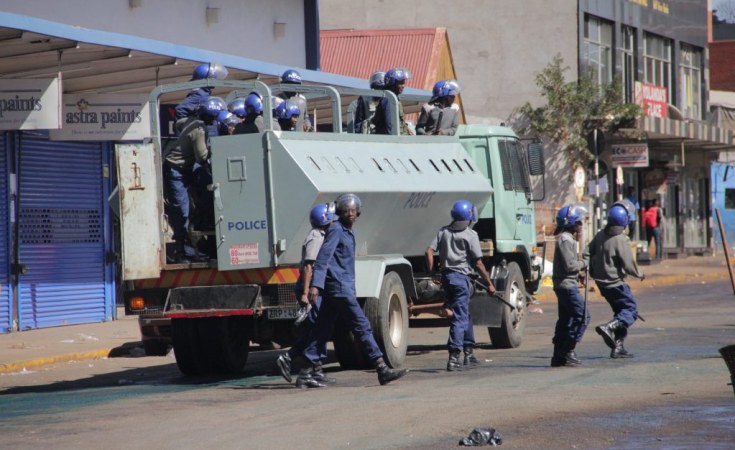
Over decades, loyalty gave way to elitism, meritocracy was replaced by nepotism, and national service was subordinated to cronyism. Yet even as disillusionment deepened, Geza remained committed to reform from within. When factional battles threatened to tear ZANU PF apart, and the G40 faction rose to prominence, Geza emerged as one of the key architects of the 2017 political transition. He helped map the pathway that ended Robert Mugabe’s long rule and ushered in Mnangagwa’s presidency.
He did so not out of malice, but out of hope, hope that the new leadership would restore revolutionary values and realign the country with the promises of the liberation struggle. That hope, many now argue, proved tragically misplaced.
What followed was Geza’s final rupture with the system he had helped sustain. As the presidency moved to amend the Constitution in ways he believed entrenched power rather than democracy, Geza drew a line. He cast himself as a defender of constitutionalism, insisting that the laws of the land were not political conveniences but sacred commitments to the people.
It was in this final battle that Geza felt the deepest betrayal. Not only did his former comrades retreat into silence, but the opposition he believed would seize the moment failed to rise. Citizens he sought to protect watched from a distance. Some quietly distanced themselves. Others, it is widely believed, actively worked against him. In the end, Geza stood alone.
That loneliness, observers note, is not unique to him. It is a recurring feature of Zimbabwean politics. Courage is applauded after the fact, never in real time. Those who challenge power are abandoned first, mourned later, and sanitised in death. Liberation credentials offer no protection once one becomes inconvenient.
Cast out, isolated, and hunted, Geza joined a long list of liberation fighters consumed by the very system they helped build. His exile was not merely geographical; it was political and emotional, a punishment reserved for those who refuse to recite the approved script.
Whether one agreed with his methods or his messaging is, as many commentators argue, beside the point. What cannot be disputed is that Geza broke a sacred taboo; he spoke openly, publicly, and relentlessly against a leadership that tolerates no dissent from within its own ranks. In doing so, he exposed a harsh truth about Zimbabwe’s ruling elite, that loyalty is transactional, principles are disposable, and power demands submission, not integrity.
Geza will not be remembered kindly by those who wield power today. Already, he is dismissed in some quarters as reckless, bitter, or misguided. Yet history has a way of rearranging its judgments. Those condemned in their lifetime often emerge as symbols of conscience in retrospect.
In his final message, Geza left behind neither bitterness nor regret, but a mandate. He declared that he would continue to fight from the grave, calling on the living to defend the Constitution in real time. His story stands as a painful reminder of the cost of integrity in Zimbabwean politics, and of how easily sacrifice is overshadowed by political greed.
Perhaps the greatest tragedy of Blessed Runesu “Bombshell” Geza is not that he died in exile, but that his warnings were ignored while he lived. As the nation reflects on his passing, one question lingers uncomfortably, will Zimbabwe honour his legacy by confronting the truths he raised, or will it betray him once again, this time in memory?
One of the liberation war hero, CDE Rugare Eleck Ngidi Gumbo spoke to the Post On Sunday, sending his condolence message to the Geza family and for bombshell to get the final sendoff he deserve.



More Stories
AHF calls for African countries to unite against debt crisis
Pensioners Left Waiting As Billions Sit In Zimbabwe’s Pension Funds
Tax, Trust and Financial Literacy- Zimbabwe’s Long Struggle With the Obligations of a Modern Economy