




By Staff Reporter
Zimbabwe’s increasingly heated debate over constitutional reform has taken a new turn as political actors from both the ruling party and opposition movements prepare for a nationwide battle over the controversial Constitutional Amendment Bill No. 3, a proposal that critics say could fundamentally alter the country’s democratic framework.
The ruling party, ZANU-PF, through its Harare provincial leadership, has indicated plans to engage citizens in consultations regarding the proposed amendments. Goodwills Masimirembwa acknowledged that the party intends to interact with communities and stakeholders to explain its position on the bill and gather feedback.
However, the consultation process has already sparked controversy, with opposition figures accusing authorities of selectively applying the law to suppress dissenting voices.
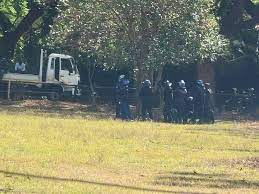
Several opposition leaders claim their attempts to hold public meetings and civic engagements around the constitutional amendment have been blocked by police. Among those reportedly affected are Lovemore Madhuku and Tendai Biti, who have both sought to convene discussions with citizens on the implications of the proposed amendments.
According to opposition groups, these gatherings were either denied clearance or disrupted before they could take place, raising concerns about whether all political players will be allowed equal space in the national conversation.
Critics argue that the pattern reflects a broader contradiction in the way Zimbabwe’s Constitution is treated in political practice.
“The Constitution is invoked when it favours the executive, but when it comes to citizens exercising their democratic rights, it suddenly becomes secondary,” said Vince Musewe, reflecting a widely held sentiment among opposition activists.
The controversy surrounding Amendment Bill No. 3 has drawn particularly strong criticism from Douglas Mwonzora, a former legislator and leader of the Movement for Democratic Change. Mwonzora was also part of the team that drafted Zimbabwe’s current constitution, adopted in 2013 after years of negotiations and a national referendum.
Speaking on the proposed amendment, Mwonzora did not mince his words, describing the initiative as misguided and detached from the interests of ordinary citizens.
“The amendment of the Constitution is nonsense,” Mwonzora said. “It will not be for the citizens and it will definitely not come from the citizens.”
He accused the government, alongside Justice Minister Ziyambi Ziyambi, of attempting to manipulate the constitutional framework to serve political interests rather than national priorities.
At the centre of the controversy is the belief among critics that the proposed amendment could pave the way for the extension of terms for elected officials, including President Emmerson Dambudzo Mnangagwa, Members of Parliament and local councillors.
The current mandate of these office holders, who were elected in the 2023 harmonised elections, is expected to end in 2028. However, opposition voices fear that constitutional changes could delay or alter the scheduled electoral cycle.
Against this backdrop, opposition leaders, civic activists and war veterans have begun mobilising around the defence of Zimbabwe’s constitutional order.
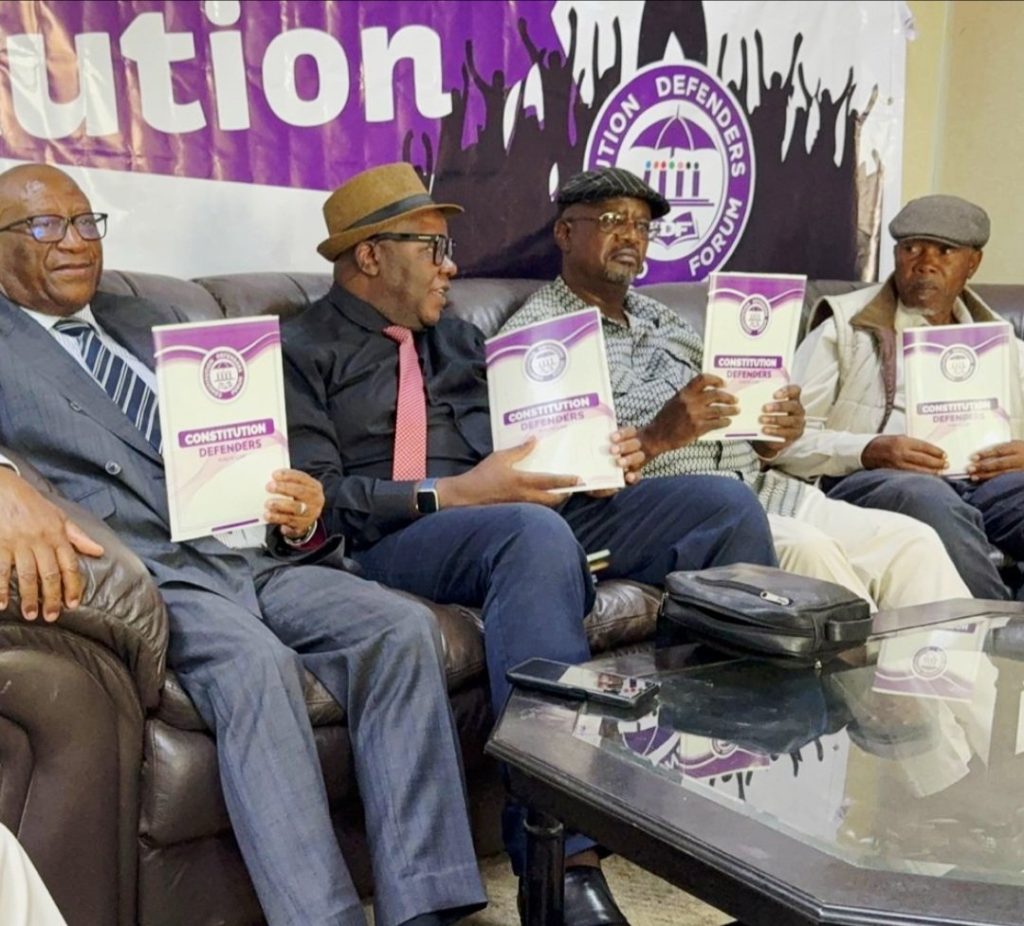
In an emergency meeting held in Harare, opposition figures and liberation war veterans officially launched a new coalition known as the Constitution Defenders Forum (CDF).
The forum says it was created in response to what it describes as the systematic closing of democratic space in Zimbabwe.
Organisers had initially planned a large public rally to unveil the movement, hoping to attract thousands of citizens in what they envisioned as a historic moment for constitutional activism. However, according to a statement released by the group’s communications desk, authorities refused permission for the gathering.
As a result, the launch was scaled down and conducted indoors at a private office.
“This was never our intention,” the statement said. “Our members and supporters have been robbed of what should have been a historic public moment, but this intimidation will not distract us from the mission ahead.”
The CDF describes itself as a broad alliance dedicated to defending Zimbabwe’s Constitution, democratic freedoms and the dignity of citizens.
A photograph released after the launch shows members holding copies of the Constitution alongside the CDF’s founding charter, symbolising their commitment to upholding constitutional governance.
Among the prominent figures present at the meeting were civic and political leaders including Abednico Bhebhe, David Chimhini, Jefferson Chitando and Peter Marange, as well as several respected veterans of Zimbabwe’s liberation struggle.
The full leadership structure of the forum is expected to be announced in the coming weeks.
However, the launch itself was not without controversy. Observers noted the absence of female representation at the meeting, a situation organisers attributed to disruptions allegedly carried out by police ahead of the event.
“Our women members were attacked and disrupted before the event,” the CDF statement said, describing the incident as “an unfortunate but telling reflection of the intolerance being directed at this democratic initiative.”
According to the organisation, the obstacles have continued even after the launch. The CDF claims that police have also denied permission for two town hall meetings scheduled to take place in Bulawayo this coming weekend, despite the group having formally notified authorities as required by law.
The forum says the repeated denials raise troubling questions about the state of democratic freedoms in Zimbabwe.
“Why does the State fear a peaceful constitutional movement?” the statement asked. “If a movement dedicated to protecting the Constitution is treated as a threat, then the crisis facing our nation is deeper than many imagined.”
Despite the challenges, the newly formed coalition says it remains determined to continue its campaign.
In a defiant tone, the organisation declared that the struggle to defend Zimbabwe’s Constitution has only just begun.
“It is now game on,” the statement said. “No amount of intimidation, denial of venues, or police interference will stop the growing national demand to defend the Constitution and restore democratic order.”
As debate over Constitutional Amendment Bill No. 3 intensifies, Zimbabwe now finds itself at a critical crossroads — one where the interpretation, protection and future of the country’s founding legal framework may become the central battleground of its political future.


More Stories
Marital Feud Escalates Into Gun Drama in Rusape
AHF calls for African countries to unite against debt crisis
Pensioners Left Waiting As Billions Sit In Zimbabwe’s Pension Funds