


Staff Reporter
Zimbabwe’s Constitutional Amendment Bill No. 3 has once again thrust the country into political turbulence, exposing what critics describe as the entrenched capture of key state institutions by the governing party. From Parliament to the courts and the police, the unfolding events surrounding the proposed amendment paint a picture of a democracy under strain, one where dissent is increasingly policed rather than debated.
Since Justice Minister Ziyambi Ziyambi announced the government’s intention to amend the Constitution, a move that reportedly received Cabinet approval, political temperatures have steadily risen. Civil society organizations, opposition parties and concerned citizens have questioned both the timing and substance of the proposed changes. For many, the push to alter the supreme law of the land signals not reform, but regression.
Observers argue that the current developments eerily echo sentiments expressed by former President Robert Mugabe in his final days after the coup, when he suggested that certain excesses, including arrests, torture and the persecution of opposition figures, were carried out without his direct knowledge or approval. Today, similar accusations are resurfacing, with critics alleging that security forces are once again playing an outsized role in political processes.
As pressure mounts on the government to justify the necessity of Constitutional Amendment No. 3, resistance from citizens has been met with what some describe as heavy-handed tactics. The arrest and disruption of political meetings have become increasingly common.
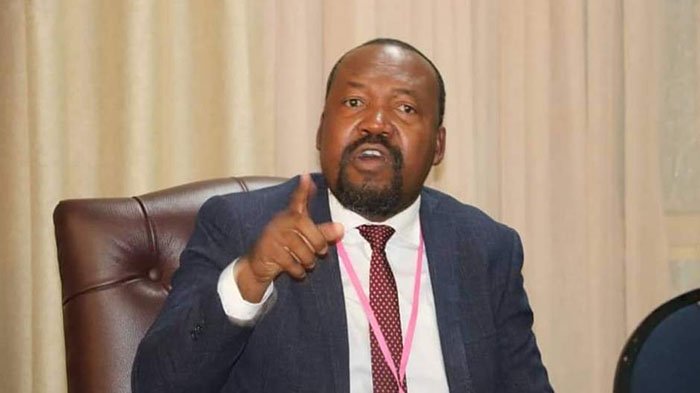
Last week, Hwange Central Member of Parliament Daniel Molokele was briefly detained by police while chairing a Constituency Development Fund (CDF) Project Implementation Committee meeting in Hwange. Witnesses reported that officers dressed in civilian clothing arrived at the venue mid-morning and escorted the legislator into a white twin-cab vehicle before transporting him to Hwange Police Station.
Speaking shortly after his release, Molokele said the police disrupted what he maintained was a routine CDF meeting, not a political rally.
“Police in Hwange arrested me. They disrupted a CDF project implementation committee meeting. I tried to explain that this was not a public meeting, but they told me they were under strict orders to stop it,” he said.
Molokele insisted that there is no legal requirement for a CDF committee to seek police clearance, emphasizing that clearance is only sought for public gatherings. After several hours of questioning, he was released without charge.
“I clarified the purpose of the meeting. The police said they had received information suggesting a different agenda,” he said.
Efforts to obtain Parliament’s official position on the matter drew attention to broader institutional questions surrounding the arrest of a sitting legislator while carrying out constituency duties.
The Clerk of Parliament was asked to clarify the circumstances under which Hwange Central MP Daniel Molokele was detained during a Constituency Development Fund (CDF) Project Implementation Committee meeting. Questions were also raised regarding whether Parliament had been formally notified of the police action prior to the arrest and whether established protocols governing the treatment of Members of Parliament were observed.
Further inquiries sought to establish Parliament’s official stance on the arrest of a legislator performing constituency-related responsibilities, particularly in light of constitutional provisions that safeguard the independence of Parliament and protect lawmakers in the execution of their duties.
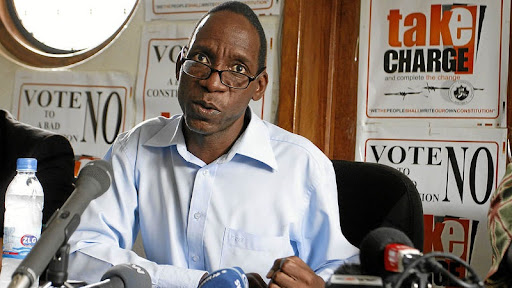
Parliament was also asked whether there are plans to investigate the conduct of the police in the incident, and what institutional support, if any, is being extended to Molokele following his brief detention.
The Clerk of Parliament did not respond by time of going to publish.
Molokele’s detention followed closely on the heels of another disturbing incident. A member of Professor Lovemore Madhuku’s political party was reportedly abducted, tortured and later dumped in Highlands, Harare. The incident sent shockwaves through opposition ranks and intensified concerns about escalating political intimidation.
In a related development, Professor Madhuku himself was reportedly confronted by police at his offices in Harare. Authorities later confirmed in a press statement that the meeting he was holding had not been sanctioned. Critics argue that such justifications are increasingly being used to stifle political organization and silence dissenting voices.
The pattern, according to political analyst Jealousy Mawarire, suggests a broader strategy, to create an atmosphere of uncertainty and fear around political mobilization at a time when the Constitution, the bedrock of Zimbabwe’s democracy, is under review. The involvement of security agents in what are ostensibly administrative or parliamentary processes raises uncomfortable questions about institutional independence.
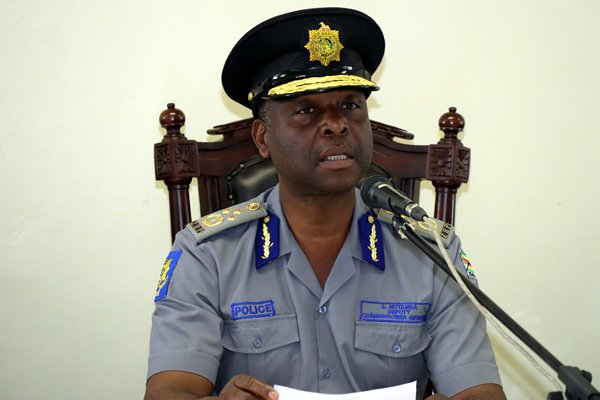
At the heart of the debate lies a fundamental issue, who owns the Constitution? For many Zimbabweans, it is a social contract forged through public consultation and national consensus. Any attempt to amend it without broad-based agreement is therefore seen not merely as legislative business, but as a direct challenge to democratic principles.
Prof Madhuku, representing a group of war veterans, approached the Constitutional Court against the amendment Bill number 3.
Former Harare East MP and Finance Minister, Tendai Biti’s offices were surrounded by the police on February 16, 2026.
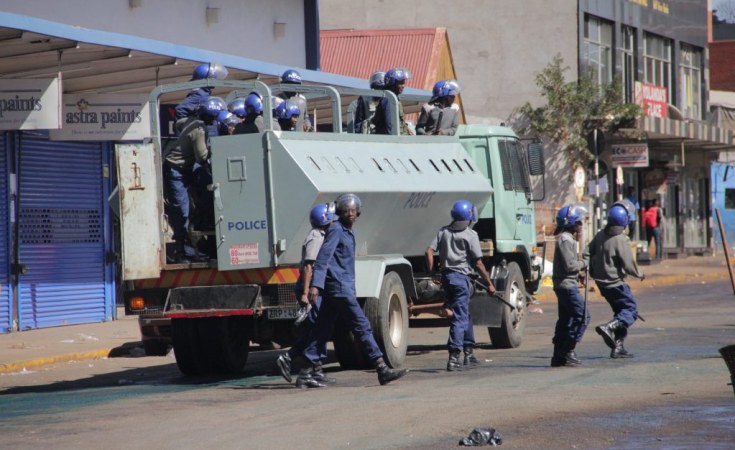
Zimbabwe Republic Police (ZRP) officers, including those with police dogs, surrounded and barricaded the law offices of former Finance Minister and opposition leader Tendai Biti in Milton Park, Harare.
As tensions rise, the space for open political engagement appears to be narrowing. The arrest of lawmakers during committee meetings, the reported abduction of party members, and the policing of private gatherings contribute to a perception that constitutional reform is being pursued in an increasingly securitized environment.
Senator Jameson Timba told the Post On Sunday that, “Zimbabwe’s democratic credentials are once again under intense scrutiny. The coming weeks will test not only the resilience of its institutions, but also the government’s commitment to upholding the freedoms enshrined in the very Constitution it seeks to amend.”
About The Author


More Stories
Gentle Giant Of The Liberation Struggle, Chiringa Declared A National Hero
War Veterans Petition Parliament Over Controversial Constitutional Amendment
Children Pay the Price as School Oversight System Collapses