



Workers unpaid since October, district offices without power and school inspections halted….
By Shingirai Vambe
The suspension of the Better Schools Programme Zimbabwe (BSPZ) has continued to raise fresh concerns within the education sector, with officials and employees warning that the paralysis of the programme is beginning to affect school monitoring and administrative oversight across several districts.
Originally established as a complementary support mechanism within Zimbabwe’s education system, BSPZ was designed to strengthen supervision, coordination and development programmes in schools through modest contributions collected from learners. However, the programme’s suspension has left district and provincial structures struggling to function, with workers facing months of unpaid salaries and offices operating under severe resource constraints.
Investigations by The Post On Sunday indicate that employees attached to the programme have not received their salaries since October last year, leaving many in financial distress and uncertain about their future. Some offices, particularly at district level, have reportedly gone for months without electricity and water supplies, effectively bringing operations to a standstill.
The situation has persisted for nearly seven months, a development labour experts say runs contrary to basic employment standards and labour practices. As frustration grows among affected employees, some have reportedly approached the Ministry of Labour and Social Welfare seeking intervention.
Officials within the Ministry of Primary and Secondary Education (MoPSE), however, say the programme remains under suspension while authorities work on what they describe as a process of administrative regularisation.
But the challenges surrounding BSPZ have also revived debate about the broader structure of education financing in Zimbabwe, particularly the role played by School Development Committees (SDCs).
The current developments have drawn comparisons with the SDC system, which over the years has effectively transferred significant financial responsibilities for school development projects to parents and guardians.
Through SDCs, parents have been expected to contribute towards a wide range of infrastructure projects including the construction of classrooms, purchase of school buses and vehicles, and the financing of various institutional developments. In some instances, schools have reportedly sent children home for failing to pay project-related levies.
Education stakeholders argue that the arrangement has gradually shifted what was historically considered a government responsibility onto parents.
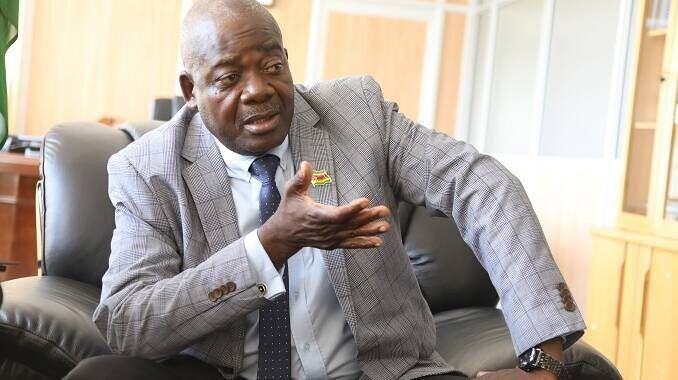
Responding to these concerns, MoPSE Director of Communications Tawungana Ndoro told The Post On Sunday that such initiatives are not imposed by the government but are agreements between schools and parents.
“These initiatives are arrangements between parents and the schools themselves,” Ndoro said. “Parents are not forced.”
Before its suspension, BSPZ collected a small levy from learners to support its operations. Primary school pupils contributed US$0.25 per term while secondary school students paid US$0.35.
According to ministry officials, the funds were intended to support administrative activities such as workshops, school supervision, inspections and the construction of offices used by education inspectors. These inspectors, though working within the education system, are formally employed by the Public Service Commission.
In practice, BSPZ functioned as a logistical backbone for district and provincial monitoring structures within the education ministry, enabling inspectors to travel to schools, conduct supervision and address operational challenges.
However, the suspension of the programme has left many of these functions largely inactive.
Several BSPZ offices are now reportedly operating under extremely difficult conditions, with some closing indefinitely due to lack of electricity, water and operational funding.
As a result, education inspectors and administrative officers in some districts have found themselves idle, unable to carry out routine inspections or respond to issues arising in schools.
An officer stationed in Rusape described the situation using a metaphor that captures the depth of the crisis.
“The train has derailed,” the officer said. “And the wagon that already had mechanical faults has now derailed even further.”
According to the officer, the suspension of monitoring and supervisory activities has left schools operating with minimal oversight, potentially exposing learners to various forms of administrative and disciplinary challenges.
“With monitoring of schools suspended, it is the children who ultimately suffer from some of the behaviours of teachers and school authorities,” the officer said.
Meanwhile, Ndoro maintained that the government continues to support ministry staff despite the programme’s suspension.
“The Government is funding its staff without struggle,” he said.
However, accounts from officials working in different districts appear to paint a more complex picture.
An education officer based in Marondera told The Post On Sunday that operational challenges affecting BSPZ structures have been building up for several years.
“Most of the cars are grounded. There has been no travelling or subsistence allowances for officials since around 2022,” the officer said.
The officer added that the situation worsened after BSPZ workers stopped receiving their salaries in October 2025.
In some cases, the financial strain has reportedly led to legal disputes, with some BSPZ offices facing lawsuits from workers over unpaid wages.
Information obtained from the provincial office in Manicaland indicates that BSPZ previously operated under a structured financial management system.
Schools would remit the collected levies into BSPZ accounts, after which the funds were used to support operational activities such as inspections, training workshops and administrative functions. At the end of each financial year, the accounts were subjected to formal auditing procedures, a process the Ministry of Primary and Secondary Education has confirmed.
Despite this framework, the suspension of the programme has effectively halted these operations, leaving the future of the BSPZ structure uncertain.
Education analysts, Mr Masuku, warn that the collapse of such administrative support mechanisms could have broader implications for the quality of education delivery, particularly in rural districts where monitoring systems play a critical role in maintaining standards.
Over the years, Zimbabwe’s education sector has faced increasing financial pressure, with both government and communities struggling to sustain infrastructure development, staff support systems and operational oversight.
However, some have taken the BSPZ system and structure as prone to abuse, which has led Zimbabwe Anti-corruption Commission arresting some officers in Masvingo Province.
The consequences, observers say, are now becoming visible at many schools across the country, where declining standards, limited supervision and resource shortages are gradually undermining the once-strong reputation of Zimbabwe’s education system.
District education offices remain in limbo, their staff unpaid, their vehicles grounded and their mandate to supervise schools largely suspended, as authorities work through what they describe as a process of restructuring and regularization within the ministry.


More Stories
Retrenchment Axe Hangs Over TelOne
Marital Feud Escalates Into Gun Drama in Rusape
Zimbabwe’s Export Engine Fires Up