




Fuel Hike Sparks Outrage as Cost of Living Set to Rise…
By Shingirai Vambe
Zimbabweans went to bed with rising anxiety and woke up to even greater uncertainty following the announcement of a sharp increase in fuel prices, a development many initially dismissed as misinformation circulating on social media.
However, those fears were quickly confirmed when the Zimbabwe Energy Regulatory Authority (ZERA) verified to The Post On Sunday that the new prices were indeed official, triggering widespread concern across the country.
The confirmation sent shockwaves through households and businesses already struggling under mounting economic pressure, with citizens expressing frustration over yet another cost burden in an economy where disposable incomes remain critically low.
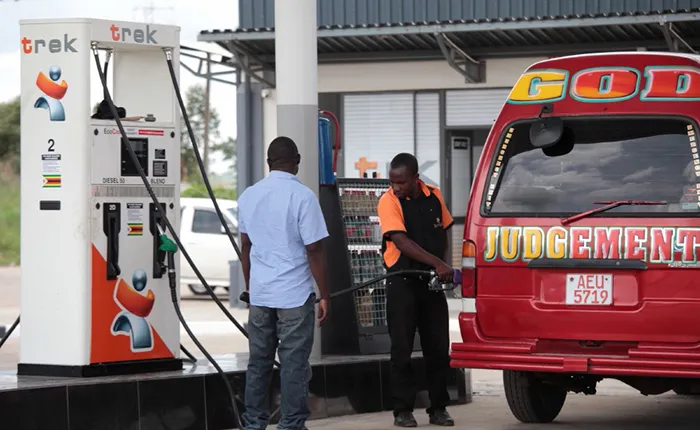
The latest fuel price hike has left many Zimbabweans feeling both disgruntled and helpless, as transport costs, a key driver of the broader economy, are expected to surge in response.
Fuel remains the backbone of Zimbabwe’s economic activity, influencing everything from food prices and manufacturing costs to service delivery and logistics. As such, any significant adjustment in fuel prices inevitably ripples across all sectors of the economy.
Economists warn that the increase could distort market dynamics and may even necessitate a supplementary national budget, as both government and businesses scramble to adjust to the new cost realities.

The development has also reignited debate over Zimbabwe’s fuel pricing structure, with citizens questioning why local fuel prices are estimated to be as much as 35 percent higher than those in neighbouring countries.
This disparity has once again placed the spotlight on government-imposed taxes and levies, which form a significant component of the final pump price.
Former Finance Minister Tendai Biti has previously criticised the country’s tax regime, arguing that it disproportionately burdens ordinary citizens while stifling economic growth.
More recently, Finance Minister Mthuli Ncube announced additional tax measures in his national budget presentation, further intensifying concerns about the cumulative impact of taxation on households, the banking sector and businesses.
In response to growing public outcry, the Ministry of Energy and Power Development moved to clarify the situation, attributing the price increases largely to global factors.
Ministry spokesperson Webester Mukwati said the surge in fuel prices is directly linked to rising international oil prices driven by escalating geopolitical tensions in the Middle East.
“The recent increase in fuel prices in Zimbabwe is attributed to the sharp rise in international oil prices as a result of escalating geopolitical tensions in the Middle East,” Mukwati explained.
He noted that Zimbabwe, like many other countries, relies heavily on imports of refined petroleum products, much of which is sourced from the Middle East.
As a result, disruptions in that region have had a direct impact on local pricing.
According to the Ministry, Free on Board (FOB) prices for diesel rose by 28.7 percent, while petrol increased by 15.6 percent between March 4 and March 18, 2026, increases that have inevitably filtered through to the domestic market.
Despite public criticism, the government maintains that taxes and levies remain a necessary tool for funding infrastructure development and public services.
Mukwati argued that while taxation contributes to higher fuel costs, authorities have made deliberate efforts to cushion consumers by limiting further increases.
“Taxes are a necessary source of revenue for government, but measures have been taken to keep fuel prices lower than they would otherwise be by reducing certain charges,” he said.
However, this position has done little to calm public anger, with many Zimbabweans arguing that the tax burden remains excessive in comparison to regional standards.
The price hikes have also triggered panic buying in some areas, with citizens reportedly purchasing fuel in bulk amid fears of further increases or potential shortages.
Authorities, however, have moved to reassure the public that there is no immediate threat to fuel availability.
The Ministry confirmed that Zimbabwe currently holds more than three months’ worth of fuel reserves, with continuous shipments arriving through regional supply routes.
“Fuel supplies are secure, and there is no need for panic buying,” Mukwati said, warning that hoarding fuel poses serious safety risks.
Looking ahead, the government acknowledged that the volatile situation in the Middle East makes it difficult to predict future price movements.
Fuel prices, officials say, will continue to be reviewed in line with global market trends, although authorities insist they will implement measures to cushion key sectors and consumers where possible.
Meanwhile, the price of liquefied petroleum gas (LPG) has remained relatively stable, with only a marginal increase recorded in March, a stark contrast to the sharp escalation in petrol and diesel costs.
For many Zimbabweans, however, the reassurances offer little comfort.
The fuel price hike has once again exposed the country’s vulnerability to external shocks, as well as the deep structural challenges within its economy.
As transport costs rise and inflationary pressures mount, citizens are bracing for a ripple effect that will touch every aspect of daily life, from the cost of basic commodities to the price of public services.



More Stories
Retrenchment Axe Hangs Over TelOne
Marital Feud Escalates Into Gun Drama in Rusape
Zimbabwe’s Export Engine Fires Up