






By Shingirai Vambe
Zimbabwe’s long economic history has exposed a much deeper national challenge than the recurring crises of inflation, currency instability, declining purchasing power and unemployment. Beneath these familiar problems lies another issue that is rarely discussed with the seriousness it deserves, the country’s relationship with money, financial literacy, tax compliance and the management of financial obligations.
For years, Zimbabweans have been forced to navigate an economy in which the value of money can change dramatically, businesses operate under severe pressure, household incomes remain strained and the cost of living continues to consume a significant portion of disposable income. In such an environment, taxation is often viewed not as a civic obligation that sustains the state, but as yet another financial burden imposed on individuals and businesses that are already struggling to survive.
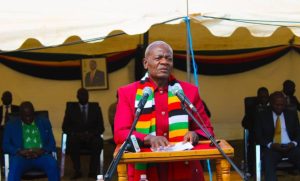
This difficult relationship between citizens, businesses and the tax authority was brought into sharp focus during a breakfast meeting held in Rusape on Friday, where Zimbabwe Revenue Authority (ZIMRA) engaged members of the business community and other stakeholders.
Lovemore Mandiopera used a simple but powerful illustration to provoke discussion about compliance, civic responsibility and the culture surrounding taxation in Zimbabwe.
He described a hypothetical, or illustrative, incident in Japan in which a technical glitch at a tollgate resulted in motorists being allowed to pass without paying. According to the illustration, when the system was restored the following day, motorists voluntarily returned to settle the toll fees they had not paid.
The question posed to the Zimbabwean audience was straightforward, What would have happened if the same situation had occurred in Zimbabwe?
The question goes beyond the payment of a toll. It cuts to the heart of the country’s compliance culture.
Would motorists voluntarily return to pay what they owed, or would many consider the system failure an opportunity to avoid the payment altogether?
That question is uncomfortable because it forces Zimbabweans to examine the relationship between personal responsibility and the broader national economic crisis.
Against this background, ZIMRA has increasingly sought to move beyond its traditional image as simply the institution that collects taxes.
The tax authority has embarked on awareness campaigns aimed at engaging taxpayers, educating businesses, listening to their concerns and identifying challenges arising from the tax administration system, rather than waiting until taxpayers default, incur penalties or face enforcement action, the approach seeks to encourage voluntary compliance.
At the heart of the campaign is a simple proposition, citizens and businesses should voluntarily disclose their income, understand their tax obligations and pay what is legally due.
This sounds straightforward, but in Zimbabwe it is complicated by years of economic instability and a deeply entrenched perception that taxation represents a one-sided relationship between the citizen and the state.

Many Zimbabweans, like people elsewhere in the world, would prefer to keep more of their income rather than surrender a portion of it through taxation. Taxes are often regarded as a burden, particularly when household budgets are already stretched.
Some citizens increasingly question whether the taxes they pay are translating into tangible improvements in their daily lives. If taxes are collected from virtually every economic transaction, where is the corresponding improvement in roads, public services, healthcare, education, infrastructure and the general quality of life?
When citizens believe their taxes are disappearing without producing visible public benefits, the psychological connection between paying taxes and contributing to national development begins to weaken.
Citizens become reluctant to comply because they believe their money is being wasted. The state responds with greater enforcement and more aggressive revenue collection. Businesses pass increased costs on to consumers. Consumers struggle with higher prices. Trust deteriorates further, and voluntary compliance becomes even more difficult.
Professor Arthur Mutambara during the CEO Africa Roundtable meeting told the Post that Tax compliance is stronger in societies where citizens believe that the state is using public resources responsibly and where taxpayers can see a connection between what they contribute and the services they receive.
Zimbabwe faces a difficult contradiction, on one hand, ZIMRA continues to report strong revenue collection, regularly meeting and, in some instances, surpassing its revenue targets. On the other hand, large sections of the population continue to ask what exactly is being achieved with the money being collected.
“For the ordinary citizen, the measure of an effective tax system is not only how much money the government collects. It is also what that money does after it has been collected,” said Mutambara.
Economist, Prof Gift Mugano added, a taxpayer does not experience a revenue target, he or she experiences a repaired road, or a pothole, a functioning public hospital, or a shortage of medicines.
“A taxpayer experiences reliable public infrastructure, or deteriorating services, a taxpayer experiences a wage that can meet household expenses, or an income that disappears before the month ends. This is where the debate about financial literacy intersects with the debate about taxation,” said Prof Mugano.
The country continues to contend with dilapidated infrastructure, economic pressures, low salaries and wages, high living costs and significant production expenses.
For businesses, taxation is only one component of the cost structure, but it can become particularly controversial when it is layered on top of other statutory obligations, licensing fees, compliance costs, financing expenses, energy costs, transport charges and exchange-rate pressures.
Ultimately, those costs often find their way into the price of goods and services. The consumer therefore encounters the tax system repeatedly.
The result is a perception among many Zimbabweans that they are being taxed from multiple directions while their purchasing power continues to decline.
According to reports in the possession of this publication, Zimbabwe collected approximately ZWG$137.8 billion, equivalent to about US$5.2 billion, between January and June 2026.
The collection was driven significantly by revenue streams such as Value Added Tax (VAT) and Pay As You Earn (PAYE), while corporate taxation also contributed to the national revenue pool.
The figures are striking when placed alongside Zimbabwe’s annual 2026 national budget of approximately US$9.5 billion.
Even more interesting is the performance of non-tax revenue.
According to the figures cited, non-tax revenue reached approximately ZWG$7.2 billion in just six months, effectively reaching the annual target within the first half of the year.
These figures provide a useful reminder of just how much money circulates through the hands of the state and how important revenue collection is to Zimbabwe’s fiscal position.
There is also a common misconception among sections of the public regarding excise duty. Many citizens assume that excise duty, particularly on fuel, tobacco, alcohol and other excisable products, generates enormous amounts of foreign currency for the country.
While excise duties are an important component of the tax system, their contribution needs to be understood within the broader architecture of national revenue rather than viewed in isolation.
The same applies when discussions move toward diaspora remittances.

Zimbabwe’s economy receives substantial financial support from Zimbabweans living and working abroad. Remittances have become an important source of foreign currency for households and the wider economy.
Yet remittances are fundamentally different from tax revenue.
A tax is a statutory obligation imposed by the state. A remittance is money voluntarily sent by an individual, usually to support family members or other recipients.
However, financial literacy must form part of that conversation, a financially literate citizen should understand income, expenditure, savings, debt, investment, taxation and financial obligations. A financially literate business owner should understand revenue, profit, cash flow, payroll obligations, tax liabilities and regulatory compliance.
And a financially accountable government should understand that public revenue does not belong to the government of the day. It is money collected from citizens and businesses and entrusted to the state for public purposes.
The illustration asks whether Zimbabweans would voluntarily correct an underpayment if the opportunity to avoid payment presented itself.
It forces society to confront a difficult reality, laws and enforcement mechanisms can compel compliance, but no tax authority can build a healthy tax culture through enforcement alone, paying taxes is part of citizenship and participation in the economy and government cannot expect unconditional trust.
Voluntary compliance grows when citizens believe that the system is fair, transparent and accountable.
ZIMRA’s decision to engage the business community, provide education and listen to the challenges being experienced by taxpayers is therefore significant as the country needs a broader financial literacy programme that begins long before an individual becomes a taxpayer or a business owner but at grassroot level, from primary and secondary schools, building a culture and system of responsibility.
Zimbabwe’s revenue figures show that the state is capable of collecting substantial amounts of money. The challenge is converting revenue collection into economic confidence.
The 2026 budget of US$9.5 billion, set against billions already collected during the first six months of the year, makes the conversation even more important.
Zimbabweans need to understand where the money comes from, where it goes and what it achieves.



More Stories
Retrenchment Axe Hangs Over TelOne
Marital Feud Escalates Into Gun Drama in Rusape
Zimbabwe’s Export Engine Fires Up