





By Evans Jona
The AIDS Healthcare Foundation (AHF) has called for increased domestic investment in healthcare, stronger regional collaboration and sustained advocacy to consolidate gains made in the fight against HIV and AIDS.
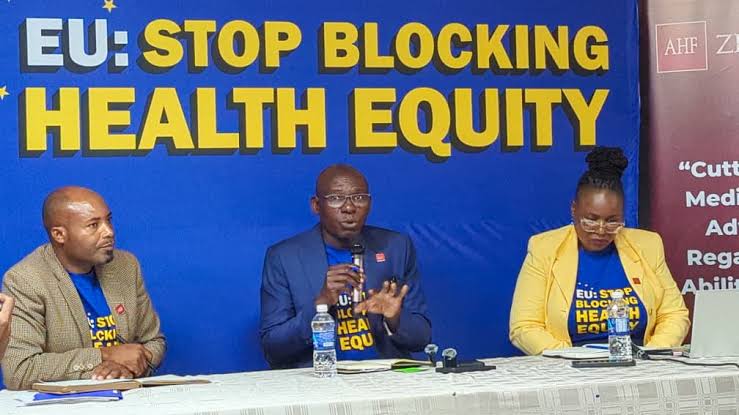
The call was made during a media briefing held at Holiday Inn in Harare on 12 November 2026, as AHF Zimbabwe commemorated its 10th anniversary of providing HIV prevention, testing, treatment and care services in the country.
The anniversary celebrations also included a commemorative dinner at Golden Conifer, bringing together stakeholders to mark the organisation’s decade of work in Zimbabwe.
Speaking at the media briefing, AHF Zimbabwe Country Director Dr Ernest Chikwati said while the organisation had made significant progress over the past decade, persistent stigma, discrimination, inequalities in healthcare access and sustainable health financing remained major challenges.
Dr Chikwati said AHF’s work had extended beyond clinical services to include HIV prevention, condom promotion, community mobilisation, advocacy, stigma reduction and health education, particularly among underserved populations.
He emphasised the need for stronger partnerships with government, civil society organisations, communities and development partners to accelerate progress towards ending AIDS as a public health threat by 2030.
Dr Chikwati also underscored the importance of the media in educating communities, challenging harmful narratives and holding institutions accountable on health-related issues.
Meanwhile, AHF Executive Vice President Global, Dr Penninah Iutung Amor, called for increased domestic financing and stronger political and legislative commitment to sustain Zimbabwe’s HIV response.
Dr Amor said healthcare should be regarded as a national security and development priority rather than an expenditure competing with other national needs.

She commended Zimbabwe for its commitment to financing the HIV response through initiatives such as the AIDS Levy, saying the country’s experience provided an important example of domestic resource mobilisation.
She also called for greater parliamentary engagement in shaping health policies, approving budgets and ensuring accountability in the allocation of resources towards healthcare.
Dr Amor further emphasised the need for regional cooperation among Southern African Development Community (SADC) countries, noting that HIV and other public health challenges transcend national borders.
She said countries needed to strengthen cross-border health programmes, share successful interventions and harmonise approaches to HIV prevention and treatment.
On sustainable financing, Dr Amor warned that international development assistance could not be guaranteed indefinitely, urging African countries to strengthen domestic revenue-generation mechanisms to protect gains made in the HIV response.
AHF Chief of Global Advocacy, Policy and Marketing, Terry M Ford, reaffirmed the organisation’s commitment to Zimbabwe, saying its presence in the country over the past decade demonstrated a long-term commitment to fighting HIV and AIDS.
Ford, who noted that AHF had been working in Africa for 25 years, said the organisation was committed to remaining in Zimbabwe for as long as necessary to help end the epidemic.
She described advocacy as central to all AHF interventions, including HIV testing, treatment, condom distribution and efforts to link patients to care.
Ford said advocacy went beyond public demonstrations, encompassing policy negotiations, strategic partnerships and engagements aimed at influencing decisions and improving people’s access to healthcare.
She also called on the media to keep HIV and AIDS high on their reporting agendas, saying journalists were critical partners in ensuring health information reached wider communities.
“We’re not going to be able to stop HIV and AIDS without the media,” Ford said, urging journalists to explore creative and innovative ways of keeping the public informed.
She said AHF was ready to work with media organisations to strengthen public awareness and ensure communities had access to accurate information.
As AHF Zimbabwe enters its next decade, the organisation says stronger partnerships, sustainable healthcare financing, effective advocacy and equitable access to services will remain critical to its efforts to end AIDS as a public health threat




More Stories
Applicant Fires Salvo, Then Fails to Show Up
Garwe’s Demolition Drive, ZANU PF Risks Losing The Votes Of The Victims
No Stall, No Income, No Tomorrow