





By Senior Reporter
The High Court’s decision to remove from the roll an urgent application by Citizens for Land Justice Zimbabwe involving Mupamombe Housing Co-operative Society Limited added a new dimension to a controversy that had already attracted considerable publicity around legal practitioner Chipo Mahlangu.
The matter raised questions about how she was cited as a respondent in matter she is simply executing her professional duties and how allegations against her were presented publicly before they had been tested in court.
The case, which placed Mahlangu’s professional reputation under public scrutiny, concerned allegations of irregular land administration, allocation and sales at Mupamombe Housing Co-operative Society in Ingezi, Kadoma.
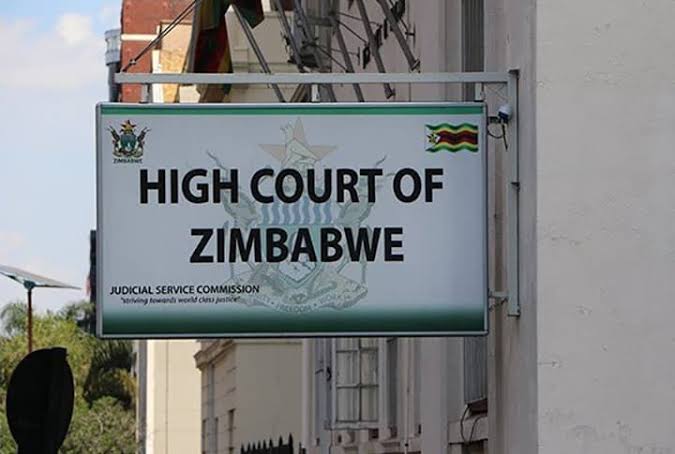
However, following proceedings at the High Court in Harare on November 11, 2026, the court removed the application from the roll and ordered Citizens for Land Justice Zimbabwe, the applicant, to pay punitive costs on a legal practitioner-and-client scale.
The development raises questions about the litigation process, the evidential basis of the allegations and the responsibility of media organisations to distinguish between claims contained in court papers and findings actually made by a court.
It is particularly significant for Mahlangu, who was personally cited as the second respondent in the proceedings despite maintaining that her involvement with the housing society was strictly professional, as its legal practitioner.
The allegations had attracted media attention, with reports associating her name with a purported land-sale scandal and an alleged Ponzi scheme.
Yet, the court did not make a finding that Mahlangu had participated in fraud, unlawfully sold residential stands, received money from prospective beneficiaries or engaged in professional misconduct.
The distinction is important because the publication of allegations in court papers does not, in itself, establish wrongdoing.
The urgent chamber application was filed under case number HCH 5526/26 by Citizens for Land Justice Zimbabwe.
It sought to interdict Mupamombe Housing Co-operative Society Limited from administering, allocating or selling residential stands at Mupamombe in Ingezi, Kadoma.
Apart from the housing co-operative, the applicant cited several individuals, including Mahlangu, as respondents. The Law Society of Zimbabwe, the Minister of Local Government and Public Works and the Director of Housing for the City of Kadoma were also cited.

On November 7, 2026, NewZimbabwe.com published an article titled “Lawyer dragged into land sale scandal”, which repeated allegations contained in the applicant’s founding affidavit, including claims concerning unlawful land dealings and an alleged Ponzi scheme.
NewsDay also carried reports arising from the same proceedings.
Mahlangu subsequently provided this publication with court documents and supporting correspondence, disputing the allegations and arguing that the reporting had failed to provide important background and adequately distinguish her professional role from the activities of the housing co-operative.
Her position is that the publicity surrounding the case has threatened her professional standing, with allegations being circulated before the underlying issues were judicially determined.
The documents provided to this publication present a different account of the housing initiative, its registration history, the Government’s involvement and the circumstances surrounding the urgent application.
According to documents supplied by the respondents, the housing initiative dates back to 2002, when it was established under the name Mupamombe Housing Project.
The project was reportedly conceived as a housing initiative intended to provide residential accommodation and related community facilities to its members under a Government non-monetary incentive housing arrangement.
It operated as Mupamombe Housing Project before steps were taken to formalise its legal and administrative structure.
The documents indicate that following proceedings under case number HCH 10206/18, the necessary steps were undertaken to regularise its operations.
On May 13, 2019, the project was formally registered as Mupamombe Housing Co-operative Society Limited under the Co-operative Societies Act [Chapter 24:05].
The respondents maintain that this registration did not establish an entirely new housing development or create an unrelated entity, but formalised an existing project that had been operating since 2002.
They point to registration documents, the co-operative’s by-laws, membership and committee records, court orders and correspondence with Government authorities as evidence of continuity.
This history is important because the applicant’s allegations raised questions about the legitimacy of the housing co-operative’s dealings with the land.
The respondents argue that the historical background cannot be ignored when examining the land allocation and subsequent administration of the project.
Another important development concerns correspondence from the Ministry of Local Government and Public Works dated November 3, 2026.
According to the documents supplied by the respondents, the Ministry confirmed that the land in question had been granted to Mupamombe Housing Project under the Government’s non-monetary incentive scheme.
The Ministry further indicated that the administrative process for issuing the relevant offer letter was underway.
This correspondence became an important part of the respondents’ opposition to the urgent application.
Citizens for Land Justice Zimbabwe had questioned whether the co-operative had sufficient evidence to establish that the land had been allocated to it.
The respondents argued that the Ministry’s correspondence provided an official administrative basis for the housing initiative and contradicted the suggestion that the co-operative was simply dealing in State land without any historical or Government-sanctioned arrangement.
Perhaps the most consequential aspect of the proceedings for the legal practitioner was her personal citation in the application.
Mahlangu maintained in her opposing affidavit that she was neither a member nor an executive officer of Mupamombe Housing Co-operative Society Limited.

Her involvement, she said, was in her professional capacity as the co-operative’s legal practitioner.
She disputed any suggestion that she personally administered, allocated or sold residential stands.
According to the opposing papers, the applicant’s founding documents did not identify a specific residential stand that Mahlangu had personally sold or allocated.
They also did not identify a purchaser with whom she had personally negotiated, an agreement of sale concluded by her or any payment she had personally received in connection with the land.
The respondents further argued that no affidavit from an allegedly prejudiced purchaser had been produced to substantiate the allegations against her.
Neither a sale agreement nor a receipt or other primary transaction document was presented in the papers to demonstrate her personal participation in the alleged dealings.
Mahlangu denied the allegations in their entirety.
The proceedings took an unusual turn when the urgent application first came before the High Court on November 6, 2026.
According to the respondents’ account of the proceedings, neither the applicant’s authorised official nor the deponent to the founding affidavit attended court.
When the court directed that the applicant’s authorised official be contacted, he could not be reached.
The applicant was nevertheless represented by its legal practitioner, Herbert Marava, who requested a postponement, explaining that he had only recently received instructions.
Mupamombe Housing Co-operative Society Limited was represented by Advocate Benjamin Magogo, instructed by Maposa Mahlangu Attorneys.
The matter was postponed to November 11, with directions for the filing of opposing papers and further documents.
The respondents subsequently filed their opposition, disputing the allegations and challenging several aspects of the application.
These included the urgency of the matter, the sufficiency of the evidence, the applicant’s legal standing and the failure to disclose relevant information concerning the history of the land and previous court proceedings.
When the matter returned to court on November 11, the applicant’s authorised official was again absent and unavailable.
Marava was present, but, according to the respondents’ account, informed the court that he believed the application lacked merit, including the personal citation of Mahlangu.
He nevertheless indicated that he had no instructions from the applicant’s authorised official to withdraw the proceedings.
The court subsequently removed the matter from the roll.
The order issued by Justice Munangati-Manongwa on November 11 directed that the matter be removed from the roll.
Beyond the immediate court proceedings, the controversy raises broader questions about the relationship between litigation and public reporting.
Court documents are legitimate sources of news, particularly where allegations concern public land, housing developments and the administration of community projects.
However, the existence of an allegation in a founding affidavit does not make that allegation an established fact.
Where a legal practitioner is personally named in proceedings, responsible reporting requires journalists to establish the nature of the alleged involvement, seek responses from the affected parties and clearly explain the procedural status of the case.
Mahlangu argues that the publicity attached to her name failed to adequately explain that she was acting as legal counsel for the co-operative and that no specific land transaction had been attributed to her personally.
The subsequent court proceedings provide an opportunity for the public record to be updated.
The November 11 order does not resolve the underlying land dispute, but it does make clear that no judicial finding of fraud, participation in a Ponzi scheme, unlawful land dealings or professional misconduct was made against Mahlangu in these proceedings.
For a legal practitioner whose professional reputation depends heavily on public confidence, the distinction between being cited as a respondent and being found guilty of wrongdoing is fundamental.
Allegations, however serious, must be subjected to evidence, due process and judicial scrutiny.
The responsibility does not end with reporting what appears in a court affidavit. It extends to following the proceedings, obtaining responses, examining documentary evidence and correcting the public record when subsequent developments materially change the picture.


More Stories
AHF Calls For Sustainable HIV Financing, Stronger Partnerships As It Marks 10 Years in Zimbabwe
CAA3 Puts Judicial Independence To The Test
No Stall, No Income, No Tomorrow