



By Senior Reporter
Wonders never seem to end in Zimbabwean politics.
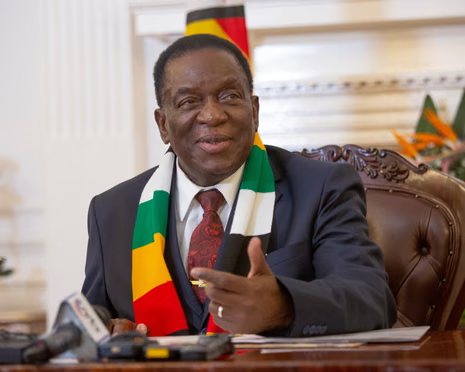
A political culture in which the birthdays of national leaders can acquire a place on the national calendar appears to be taking another turn, with President Emmerson Mnangagwa declaring his own birthday a public holiday to be known as Munhumutapa Day.
Mnangagwa has declared September 15 a national public holiday, with the date coinciding with his birthday.
The declaration was made through Statutory Instrument 148 of 2026 under the Public Holidays and Prohibition of Business Act [Chapter 10:21], and was published in the Government Gazette Extraordinary on September 9, 2026.
According to the statutory instrument, the President, exercising powers granted under section 2(2) of the Public Holidays and Prohibition of Business Act, declared that September 15 of every year would henceforth be observed as a public holiday.
The notice states: “His Excellency the President, in terms of section 2(2) of the Public Holidays and Prohibition of Business Act [Chapter 10:21], hereby makes the following notice: 1. This notice may be cited as the Public Holidays and Prohibition of Business (Declaration of Public Holiday) Notice, 2026. 2. It is hereby declared that the 15th of September every year henceforth shall be a public holiday to be known as Munhumutapa Day.”
The decision immediately raises questions about Zimbabwe’s evolving political culture, particularly around the relationship between political leaders, national institutions and the symbolism attached to the office of the President.
Zimbabwe has been here before.
For years, February 21 was observed as Robert Gabriel Mugabe National Youth Day, marking the birthday of the country’s late founding leader, Robert Mugabe.
The holiday was introduced during Mugabe’s later years in office and became an annual occasion associated with the former President’s legacy, particularly among sections of the ruling Zanu PF party and the country’s youth.
The tradition of turning a sitting leader’s birthday into a national occasion therefore did not begin with Mnangagwa.
But the latest declaration has inevitably revived debate over whether Zimbabwe is developing a political culture in which the birthdays, legacies and personalities of individual leaders become increasingly intertwined with the identity and institutions of the State.
The irony is difficult to miss.
A day that once celebrated the birthday of one long-serving President was subsequently retained as part of the country’s public calendar even after that President left office and died.
Now, another President has his birthday placed on the national calendar, although under a historical name that invokes one of the most powerful pre-colonial kingdoms associated with present-day Zimbabwe.
The official explanation for the new holiday is rooted in Zimbabwe’s pre-colonial history rather than in Mnangagwa’s birthday.
Munhumutapa, also written as Mwenemutapa, was the royal title used by rulers of the Mutapa Empire, one of the most significant pre-colonial states in the region.
The Mutapa state emerged during the 15th century and at various points controlled extensive territory covering parts of present-day Zimbabwe and Mozambique.
The title Munhumutapa is commonly interpreted as referring to the ruler as the lord or master of conquered lands.
The use of the historical title gives the holiday a broader cultural and historical narrative, a celebration of Zimbabwe’s pre-colonial civilisation, state formation, political authority and heritage.
On the surface, therefore, Munhumutapa Day is not officially presented as a celebration of Mnangagwa himself. Yet the timing presents an unavoidable political coincidence, the holiday falls on September 15, the President’s birthday.
And because the statutory instrument says the date shall be a public holiday every year henceforth, the decision goes beyond a one-off birthday celebration. It places the date permanently on the national calendar, subject to any future government deciding otherwise.
A President’s birthday can be privately celebrated by supporters, political parties or citizens. A national public holiday, however, is an act of the State, it carries the authority of government and affects the entire country.
The question now confronting Zimbabwe is not simply whether Munhumutapa Day is historically appropriate, it is whether national history should continue to be intertwined with the birthdays of sitting political leaders?
The argument from supporters will likely be that the holiday is not about Mnangagwa’s birthday at all, but about reclaiming Zimbabwe’s pre-colonial history and giving greater prominence to African civilisation which cannot simply be dismissed.
For decades, African governments have sought to reclaim historical narratives that were marginalised or distorted during colonial rule. Celebrating the Mutapa civilisation can therefore be understood as part of a broader effort to place Zimbabwe’s pre-colonial achievements at the centre of national identity.
If the objective is primarily to celebrate the Mutapa Empire and Zimbabwe’s pre-colonial civilisation, questions will inevitably arise over why September 15, the President’s birthday, was selected at a politically sensitive moment.
Mnangagwa’s administration has recently pushed through a constitutional amendment extending the presidential term from five years to seven, a development that has generated considerable debate over Zimbabwe’s constitutional order and the country’s succession politics.
The constitutional changes and the President’s continued stay in power have already fuelled speculation among critics and political commentators about the direction of Zimbabwe’s political system.
Against that background, the declaration of a permanent public holiday coinciding with the President’s birthday inevitably acquires additional political significance.
Some of Mnangagwa’s supporters have, at various times, been accused of advocating or entertaining proposals that would effectively transform the presidency into a more permanent or monarchical institution.
Whether such suggestions represent official government policy is another matter. But their existence provides the backdrop against which the Munhumutapa Day announcement will be interpreted.
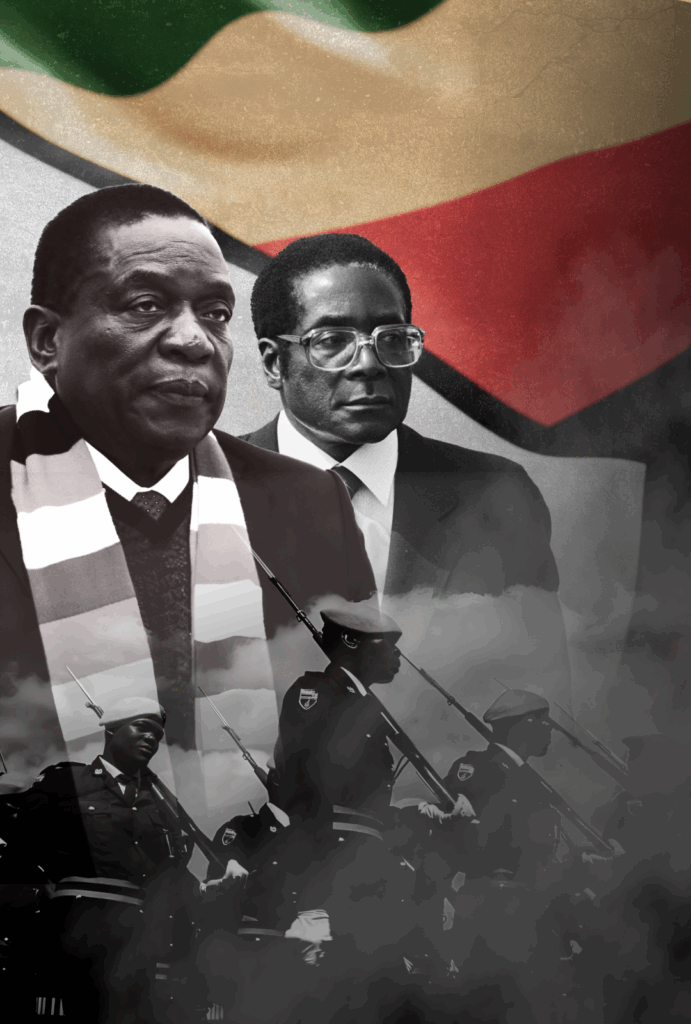
Zimbabwe’s political history is already dominated by the long shadow of Robert Mugabe, who governed the country from independence in 1980 until his removal from office in November 2017.
The creation of a national holiday around Mugabe’s birthday was one manifestation of the personality-driven politics that surrounded his rule. Mnangagwa’s administration inherited that political culture. and the question is whether it is dismantling it, modifying it, or inadvertently creating a new version of the same phenomenon.
Public holidays are never merely days when government offices and businesses close, they are statements about what a nation chooses to remember such as independence, heroes, religious traditions, cultural milestones and historical events, in so doing, they help shape the collective memory of citizens.
Munhumutapa Day could become an important annual reminder of Zimbabwe’s pre-colonial civilisation. Schools could use it to teach children about the Mutapa state, its rulers, trade networks, governance systems and contribution to regional history.

More Stories
AHF calls for African countries to unite against debt crisis
Pensioners Left Waiting As Billions Sit In Zimbabwe’s Pension Funds
Tax, Trust and Financial Literacy- Zimbabwe’s Long Struggle With the Obligations of a Modern Economy