



By Evans Jona and Vanessa Chiwetu
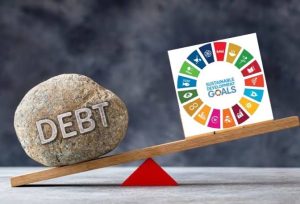
Zimbabwe’s worsening debt burden has renewed calls for African countries to unite and negotiate collectively with creditors, as civil society organisations warn that mounting debt obligations are increasingly constraining governments’ ability to finance essential public services, including healthcare.
The AIDS Healthcare Foundation (AHF) Zimbabwe has urged the Government of Zimbabwe and other countries in the Global South to join the proposed Borrowers Forum for Developing Countries, an initiative aimed at bringing debt-distressed nations together to amplify their negotiating power and push for reforms to the international financial system.
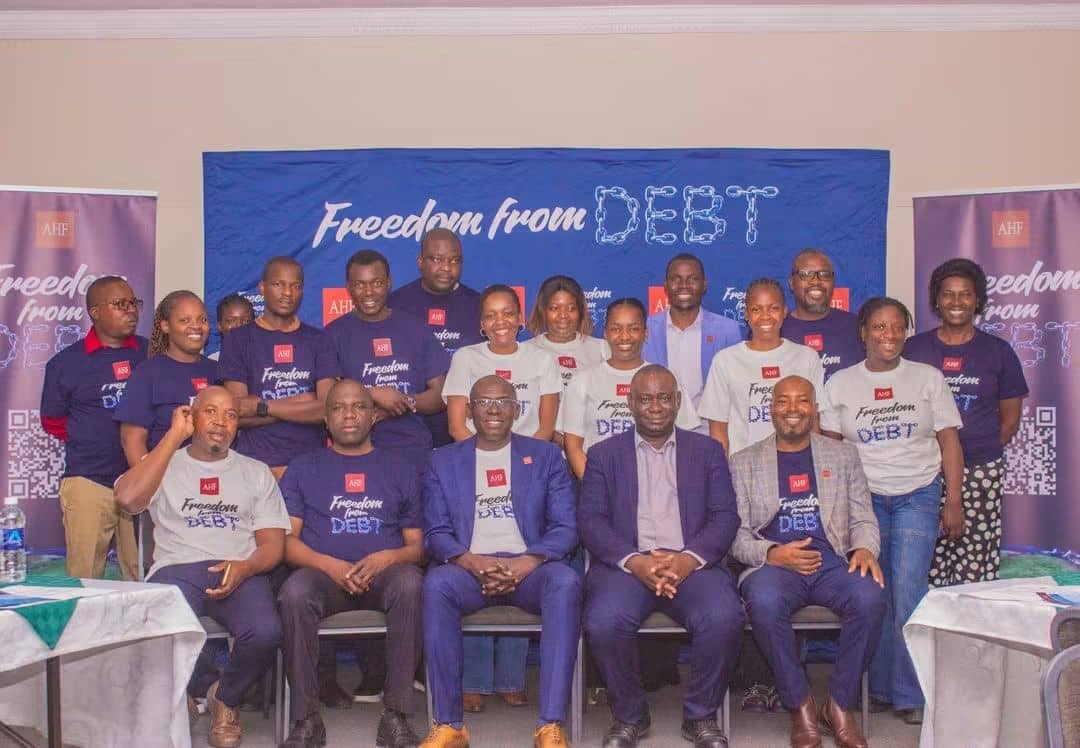
AHF Zimbabwe Country Programme Director Dr Ernest Chikwati made the call during a Freedom from Debt campaign meeting in Harare, where representatives of the media and civil society organisations gathered to discuss the impact of debt on development and public services.
Dr Chikwati said countries facing similar debt challenges needed to speak with one voice rather than negotiate individually with powerful creditors, urging governments across the Global South to take a stand against the debt crisis and join the Borrowers Forum for Developing Countries.
“Everyone must take a stand against this issue of debt. We are asking respective countries in the Global South to join the Borrowers Forum for Developing Nations,” Dr Chikwati said.
He said the Borrowers Forum concept had been discussed during the Fourth International Conference on Financing for Development in Seville, Spain, and subsequently gained attention during South Africa’s G20 presidency.
“The Borrowers Forum was mooted in Spain and at the G20 in South Africa. It is an idea where countries who owe money come together and speak with one voice,” Dr Chikwati said.
According to AHF, a united platform could enable developing countries to share experiences, provide technical support to one another and strengthen their collective bargaining position when engaging creditors.
“AHF Global stands ready to support the creation of a platform for peer learning, technical support and collective bargaining power, hence advancing a fairer global financial architecture,” Dr Chikwati said.
The call comes against the backdrop of Zimbabwe’s reported public debt of US$23.7 billion as of June 2026, a figure that economists say continues to exert pressure on government finances and limits the fiscal space available for social spending.
Presenting a paper on Zimbabwe’s national debt at the same meeting, Africa Economic Development Strategies (AEDS) senior economist Dr Tichaona Zivengwa said the country remained in debt distress, making it difficult to access new financing while also struggling to meet existing obligations.
“Zimbabwe remains in debt distress because we are not able to service the debt that we have and cannot get new debt from creditors,” Dr Zivengwa said.
The AEDS presentation indicated that Zimbabwe’s external debt stood at about US$11.7 billion, while domestic debt accounted for a significant portion of the overall debt stock. A substantial proportion of the debt was also attributed to arrears and penalties accumulated over years of non-payment.
Dr Zivengwa said the debt burden had to be understood not only as a financial problem, but also as a development challenge because government resources were finite and competing demands continued to increase.
“For the health sector, both channels squeeze the same pool of resources needed for medicines, equipment and infrastructure,” he said.
The economist said Zimbabwe’s debt problems had been driven by macroeconomic instability stretching back to the late 1990s and the hyperinflationary period of the 2000s.
He also raised concern over the accumulation of domestic debt by Ministries, Departments and Agencies, saying US$1.7 billion had been accumulated between 2022 and 2024 without the required approvals.
According to Dr Zivengwa, the Ministry of Finance attributed the accumulation to transactions outside approved systems, weak controls, over-contracting and misalignment between budgets and cash releases.
The consequences, he said, were particularly significant for social ministries that depend heavily on government funding to provide services to citizens.
The Ministry of Health had, by June 2026, received and utilised about 33 percent of its allocated budget, according to Dr Zivengwa, with resource constraints and administrative processes contributing to the pace of expenditure.
He said the ministry could potentially reach around 50 percent budget utilisation by the end of the year, although full utilisation could remain difficult because of limited resources and delays in processing expenditure requests.
“Going towards year-end, it is possible to hit 50 percent. Traditionally, we have managed to do so, sometimes going slightly above 50 percent. However, it may be difficult depending on the amount of resources available,” he said.
Dr Zivengwa said delays in budget utilisation were not necessarily caused by a lack of allocations alone, as some ministries and government departments also faced challenges in preparing and submitting requisitions that met Treasury requirements.
“Part of the problem with low disbursements in some ministries has to do with the processes involved in raising requisitions from Treasury. Some ministries, departments and agencies do not comply with the requirements, and as a result, their requests are not approved,” he said.
He said government expenditure was also dependent on revenue collections, meaning delays in revenue collection could subsequently affect Treasury disbursements to ministries.
“The government plans its expenditure based on the revenue it expects to collect. If the expected revenue comes in late, it also delays Treasury disbursements to ministries,” Dr Zivengwa said.
The situation has implications for the health sector, where government funding is required for medicines, medical equipment, infrastructure, health worker remuneration and other essential services.
Dr Zivengwa said the pressure on the health system was compounded by Zimbabwe’s relatively low health insurance coverage.
“Eight percent of the population has health insurance while 92 percent rely on out-of-pocket payments,” he said.
AHF argues that the impact of debt should therefore be considered in terms of its effect on ordinary citizens, particularly vulnerable communities that depend heavily on publicly funded services.
Dr Chikwati said creditors should consider mechanisms that allow countries to temporarily redirect resources towards emergency responses during periods of crisis.
He called for automatic pauses in debt servicing during public health emergencies and climate-related disasters, saying such measures could provide governments with fiscal space to respond to crises.
“All official and private creditors must pause debt service automatically in crises such as public health emergencies and climate disasters, freeing fiscal space for emergency response, medical countermeasures and recovery,” he said.
AHF is also proposing a new approach to financing debt relief by calling for a one percent contribution from the global artificial intelligence sector, arguing that the rapidly expanding industry should contribute towards addressing development challenges in countries in the Global South.
Dr Chikwati said revenues generated by the AI sector could provide an additional source of funding for debt relief and essential public goods.
“We are asking for one percent of AI-sector capital investment revenues, managed through a global framework and dedicated to debt relief and essential public goods, which include vaccines, food and infrastructure for the most vulnerable,” he said.
Dr Chikwati said part of the revenue generated by AI businesses could be directed towards debt relief.
“Most of these AI companies are getting money from Africa and the Global South. So, at least if you can get one percent of their revenue going towards debt relief, it will help a lot. That is what we are really pushing for,” he said.
For AHF, the proposed measures are part of a broader campaign for changes to the global financial architecture, particularly mechanisms governing how developing countries borrow, repay and respond to economic and humanitarian crises.
Dr Chikwati said AHF was already engaging with the Government of Zimbabwe around the proposed Borrowers Forum.
“We are working with and supporting the government to say, let’s get Zimbabwe to join the Borrowers Forum so that we amplify our voice when we are negotiating for debt repayment,” he said.
The campaign places Zimbabwe’s debt situation within a wider African and Global South context, where governments face competing demands to repay creditors while financing healthcare, education, social protection, infrastructure and climate resilience.
Dr Zivengwa said the debt burden had already placed significant pressure on social ministries, with the Ministry of Public Service, Labour and Social Welfare having utilised only eight percent of its allocated budget by June 2026, according to the presentation.
He also said about 45 percent of Zimbabwe’s total debt was due to mature within one year, while 46.3 percent consisted of arrears and penalties, reflecting prolonged non-payment rather than newly contracted financing.
The figures highlight the complexity of Zimbabwe’s debt situation, where the challenge is not simply the size of the debt stock but also the composition of the obligations, the accumulation of arrears and penalties, and the country’s limited capacity to access fresh financing.
For health advocates, the central concern is what the debt burden means for the availability and quality of essential services.
As government resources come under pressure, healthcare competes for funding with debt obligations and other national priorities. This can affect the availability of medicines and equipment, infrastructure development and the capacity of health institutions to meet growing demand.
AHF therefore argues that debt discussions should extend beyond negotiations between governments and creditors to include the human consequences of debt repayment.
The Freedom from Debt campaign is consequently seeking to place the experiences of developing countries at the centre of international discussions on debt sustainability, financing for development and global economic governance.
For Zimbabwe, the proposed Borrowers Forum could provide a platform through which the country engages other debt-distressed nations in sharing experiences and developing common positions.
Dr Chikwati maintained that collective action was necessary if developing countries were to have a stronger voice in discussions over the international financial system.
The advantage of having a Borrowers Forum is that you amplify your voices. You are better heard when you are united as a group,” he said.
With Zimbabwe’s public debt standing at US$23.7 billion, the debate is no longer confined to balance sheets and creditor negotiations. It increasingly intersects with the government’s ability to finance services on which millions of citizens depend.
For AHF and its partners, the push for a Borrowers Forum, crisis-related debt-service pauses and new financing mechanisms such as an AI-sector contribution represents an attempt to shift the debt debate towards development, public health and the protection of vulnerable communities.


More Stories
Pensioners Left Waiting As Billions Sit In Zimbabwe’s Pension Funds
Tax, Trust and Financial Literacy- Zimbabwe’s Long Struggle With the Obligations of a Modern Economy
Birthday, Power and Politics- Enter Munhumutapa Day