




Government preaches inclusion and protection, but the removal of street vendors exposes persons with disabilities, pensioners and struggling families to deeper poverty
By Shingirai Vambe
For millions of Zimbabweans, vulnerability is no longer confined to the traditional categories of persons with disabilities, older people, orphans and households requiring social assistance. It has become a much wider national reality, shaped by decades of economic decline, unemployment, migration and the collapse of reliable livelihoods.
The post-millennium economic downturn, restructuring and privatisation of state enterprises, together with changing labour markets and technological advances replacing some human labour, have left many people outside formal employment. For a growing number, vending, small-scale trading and other informal activities have become the only available means of putting food on the table.
Yet it is this very survival economy that is now facing an aggressive clean-up campaign by local authorities.
The operations targeting street vendors have exposed a troubling contradiction in government policy, while authorities speak about protecting vulnerable citizens and promoting inclusive development, enforcement measures are threatening the limited income sources on which many of those citizens depend.
The consequences are particularly severe for persons with disabilities (PWDs), older people and economically disadvantaged households, many of whom have no alternative employment or reliable social protection.
The debate has also exposed differences in emphasis within government itself.
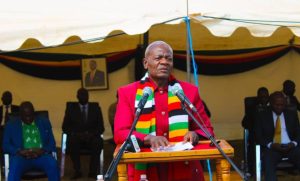
ZANU PF Mashonaland Central provincial chairman and Minister of Home Affairs and Cultural Heritage, Dr Kazembe Kazembe, recently urged local authorities to approach vendor relocation with responsibility and compassion, warning against removing traders before providing alternative designated trading spaces.
Speaking at a ZANU PF Provincial Executive Council meeting, Kazembe said efforts to restore order in towns and growth centres must not undermine the livelihoods of thousands of people dependent on informal trading.
“Development must leave no one and no place behind,” he said.
His remarks appear to acknowledge what affected traders have repeatedly argued, relocation without alternatives is not urban development but the displacement of people whose economic survival depends on access to customers.
However, the experiences of vulnerable traders on the ground raise questions about whether this principle is being translated into practice.
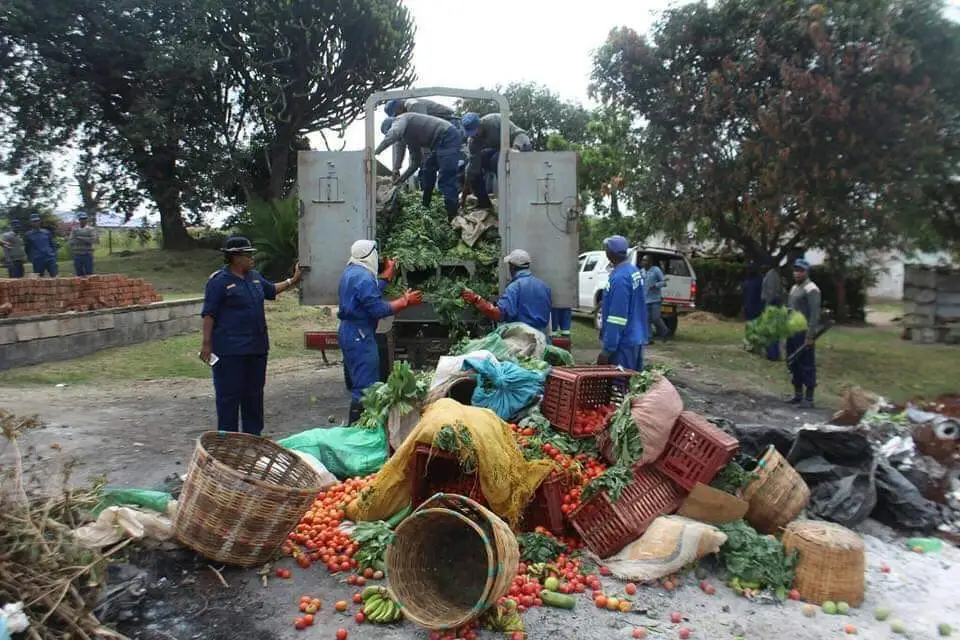
The Post On Sunday engaged Public Service, Labour and Social Welfare Minister Edgar Moyo following reports of the arrest and harassment of two persons with disabilities in Rusape by municipal police and members of the Zimbabwe Republic Police. The two were reportedly surviving through street vending in the small farming town.
Asked about government policy towards PWDs affected by the operations, Moyo said persons with disabilities were entitled to dignity, equality before the law, protection from discrimination and participation in national development.
He said government policy was guided by the Constitution, the National Disability Policy of 2021 and the Persons with Disabilities Act [Chapter 17:13].
However, the minister added that, like other citizens, persons with disabilities were expected to operate within the law.
That position raises an important question; how does government enforce the law without destroying the livelihoods of people it simultaneously recognises as requiring protection and inclusion?
The minister’s response acknowledges the economic vulnerability of affected traders, but it also exposes the distance between policy commitments and the immediate realities of enforcement.
Moyo said the Ministry, through the Department of Social Development and in collaboration with local authorities and community structures, was identifying and assessing affected persons with disabilities and other vulnerable individuals.
The exercise is expected to establish how many people have lost their sources of income and determine their food, medical and social welfare needs.
Eligible households would then be considered for food assistance, financial support and other interventions under the Social Welfare Assistance Act. The Ministry also intends to link affected traders to vocational training, livelihood programmes, disability-inclusive revolving loan facilities and other empowerment opportunities.
These commitments are important. But identification, assessment and promises of future assistance do not immediately replace the daily income lost when a trader is removed from a familiar trading place.
A person who earned a few dollars selling goods each day may need food that evening, medication the following morning and money for transport. A proposed loan facility or vocational training programme cannot automatically meet those immediate needs.
The figures provided by Moyo demonstrate the scale of the social protection challenge.
During the 2025/26 food-insecurity response, government assisted 1,757,611 people, including 55,340 persons with disabilities. Each beneficiary received 7.5 kilogrammes of cereal per month.
The minister further said more than 379,000 beneficiaries had been registered for Treasury-funded cash transfers during the year, while development partners supported an additional 49,350 people. Among cash-transfer beneficiaries were 7,850 persons with disabilities.
These figures reveal an extensive social protection burden, but they also raise questions about the adequacy of assistance against the scale of economic vulnerability.
The situation could become more difficult if the anticipated El Niño conditions affect the 2026/27 agricultural season.
Moyo said government projections indicated that approximately 7.5 million people could require food assistance if the forecast conditions materialised, including six million in rural areas and 1.5 million in urban areas.
Government has estimated that approximately ZiG12 billion would be required for food assistance interventions.
The minister acknowledged that removing or relocating informal traders could disrupt household incomes, increase food insecurity and place additional pressure on already stretched social protection programmes.
He specifically recognised that many persons with disabilities depend on informal trading as their primary source of livelihood.
This admission makes the policy contradiction even more difficult to ignore. If government recognises that displacement can increase poverty, dependence on food assistance and pressure on public resources, why should relocation proceed without first guaranteeing practical alternatives?
Kazembe’s call for compassionate relocation, Moyo’s commitment to social protection and the actions reported in Rusape point to the need for clearer coordination between central government, local authorities and law-enforcement agencies.
Vulnerable citizens should not have to depend on the goodwill of individual officers to retain their dignity and livelihoods, nor should disability inclusion remain a policy statement while persons with disabilities face arrest or harassment in circumstances where they are trying to earn an income.
For the two PWDs reportedly arrested in Rusape, and thousands of others facing similar uncertainty, it is how they will earn their next dollar.


More Stories
The Informal Sector, A Backbone Under Siege
Fix The Economy, Not Just The Buildings
Retrenchment Axe Hangs Over TelOne