





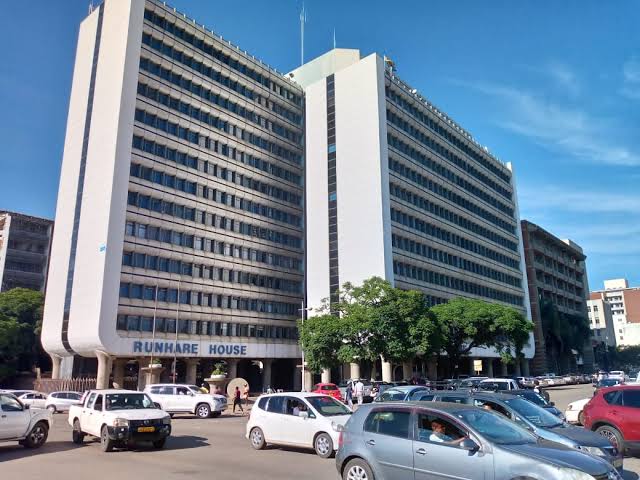
State telecoms giant faces mounting financial pressures and a rapidly changing digital market as employees brace for possible retrenchments…
By Shingirai Vambe
For thousands of TelOne employees, the future is suddenly looking far less certain, the Post On Sunday has been reliably informed that the State-owned telecommunications giant is preparing for a major restructuring exercise that could result in a significant number of employees leaving the company, raising fresh anxiety among workers already battling an economy where secure formal employment has become increasingly difficult to find.
While the exact number of employees potentially affected could not be independently established by the time of going to publish, sources familiar with the developments said the company was considering a broad workforce rationalisation exercise as it seeks to respond to mounting financial pressures and a telecommunications industry that has changed dramatically over the past decade.
Many fear that a restructuring programme could leave them without the employment security, income and benefits they have relied on for years, pushing them into an economy increasingly dominated by informal trading, vending and precarious self-employment.
The potential exercise also comes at a delicate moment for TelOne, which is attempting to modernise its business while carrying a heavy legacy debt burden and dealing with the cost of maintaining an extensive telecommunications infrastructure.
The company’s own recent financial disclosures show a business under pressure, although not one simply in decline.
TelOne reported a 10 percent increase in inflation-adjusted revenue to ZiG2.6 billion for 2025, while data usage rose by 60 percent and broadband services accounted for 81 percent of revenue, yet, behind those numbers lies a more complicated picture.
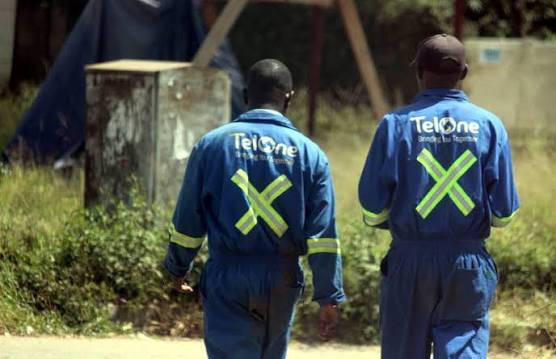
TelOne’s legacy debt remains a major obstacle to investment, while money owed to the company by Government has also put pressure on its cash flows and ability to finance network expansion and modernisation. Recent reporting put Government arrears at almost US$42 million, more than double the previous year’s figure.
The company has also previously acknowledged the need for balance-sheet restructuring and greater investment in modern network infrastructure.
Employees are now anxiously watching developments, with some fearing that the anticipated restructuring could open the door to what one source described as a mass exodus from the organisation.
The uncertainty is particularly painful in a country where retrenched workers often struggle to find comparable formal employment and losing a TelOne job would mean more than losing a monthly salary, It could mean losing access to medical benefits, pension contributions, institutional support and the relative security associated with working for one of the country’s established telecommunications companies.
TelOne’s predicament also reflects the extraordinary speed at which Zimbabwe’s communications industry has changed. The telecommunications market that existed when many of today’s employees joined the company is no longer the same. Consumers have increasingly moved from traditional voice services towards data, smartphones, digital platforms, online payments, streaming and internet-based communication.
Mobile operators and digital platforms have transformed the way Zimbabweans communicate, conduct business and access information. The rise of mobile data has also altered customer expectations. People increasingly want affordable, fast and reliable connectivity that works seamlessly across smartphones, homes and businesses.
TelOne, meanwhile, has had to maintain a vast fixed-line and broadband infrastructure while attempting to transition into a more digitally focused telecommunications business, the company’s own strategy has acknowledged this transformation.
TelOne has previously undertaken restructuring and skills-realignment programmes as part of efforts to transform itself into a more digital entity. In 2021, the company announced a restructuring exercise involving 184 employees whose skills it said had become redundant amid digitalisation and changing technological requirements.
The growing global conversation around artificial intelligence has added another layer of uncertainty across industries, companies are increasingly examining whether automation, artificial intelligence and digital systems can perform functions previously handled by large human workforces.
Without blame-shifting, The company’s financial and operational challenges are much broader.
They include legacy debt, the cost of infrastructure, liquidity constraints, network modernisation requirements, changing customer behaviour and the need to remain competitive in a telecommunications market increasingly driven by data and digital services.
Indeed, TelOne’s latest figures show that demand for data remains strong, with data usage rising sharply and broadband becoming the dominant contributor to revenue.
The challenge, therefore, is not simply that technology is replacing people, it is that the skills required by telecommunications companies are changing, and organisations that fail to adapt their workforces may eventually find themselves carrying costs that their business models can no longer sustain.
The Auditor-General’s 2023 report raised a material uncertainty regarding TelOne’s ability to continue as a going concern, citing substantial losses and legacy loans and borrowings that were in default.
The company has subsequently continued to pursue restructuring and modernisation measures.
Its 2025 financial performance showed signs of improvement, with revenue growth and stronger demand for broadband, but the balance sheet remains constrained by legacy obligations.
A 2026 report on the company’s financial position put its legacy loan burden at about ZiG10.95 billion at the end of 2025, describing the debt as a major constraint on access to new funding and digital transformation.
At the same time, TelOne continues to operate in an environment where the State itself is a major customer but has accumulated substantial unpaid bills.
The irony is that many of the workers now facing uncertainty helped build and maintain the infrastructure on which Zimbabwe’s digital economy depends.
They installed equipment, maintained networks, handled customers, managed accounts and kept services running through difficult economic periods.
Now, as the industry changes, some fear that the very transformation they helped enable could eventually make their positions redundant.
Should the solution to financial pressure primarily be workforce reduction, or should restructuring be accompanied by a deeper examination of business models, management systems, infrastructure investment, procurement, debt, government arrears and the company’s competitive position?
Broadband growth and increased data consumption demonstrate that the market opportunity has not disappeared.
The company’s challenge is converting that demand into sustainable growth while carrying the financial and operational burdens inherited from the past.
TelOne had not, by the time of publication, publicly confirmed the reported mass retrenchment exercise or the number of workers who could potentially be affected. The Post On Sunday will continue to seek the company’s response.




More Stories
Zimbabwe’s Export Engine Fires Up
Zimbabwe Power Supply Improves as Energy Sector Turns Corner
AHF calls for African countries to unite against debt crisis