




By Shingirai Vambe
LUSAKA, Zambia- As Southern African countries confront rising electricity demand, climate-related shocks and the urgent need to power industrialisation, the region is increasingly looking beyond national borders for solutions to its energy security challenges.
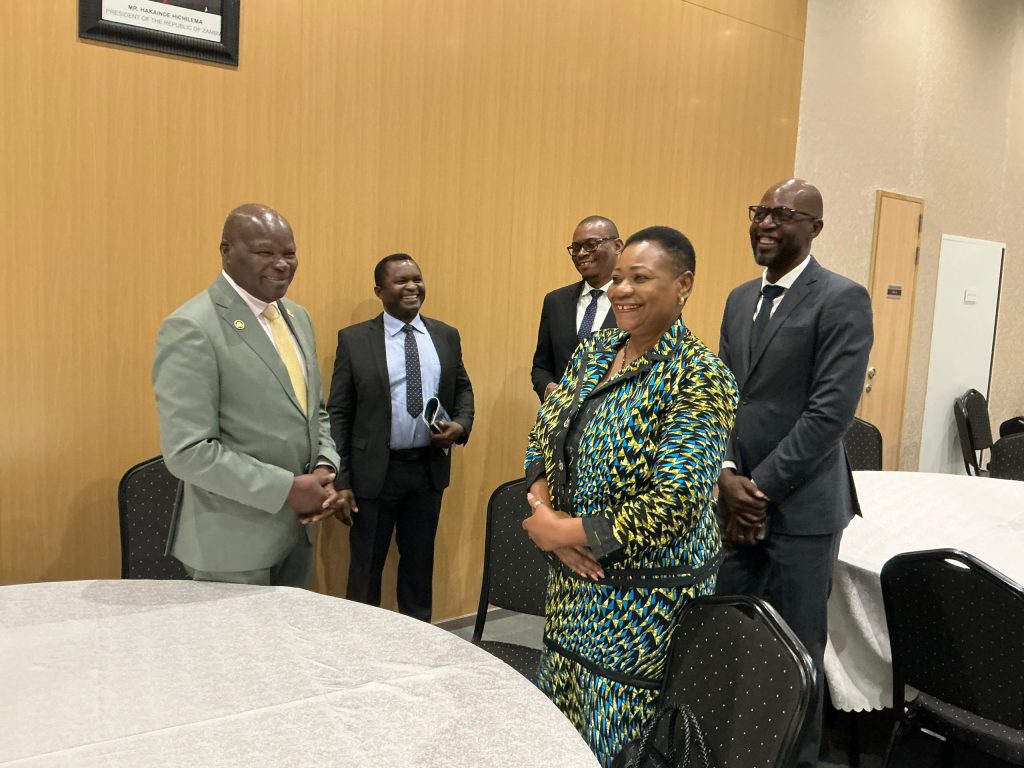
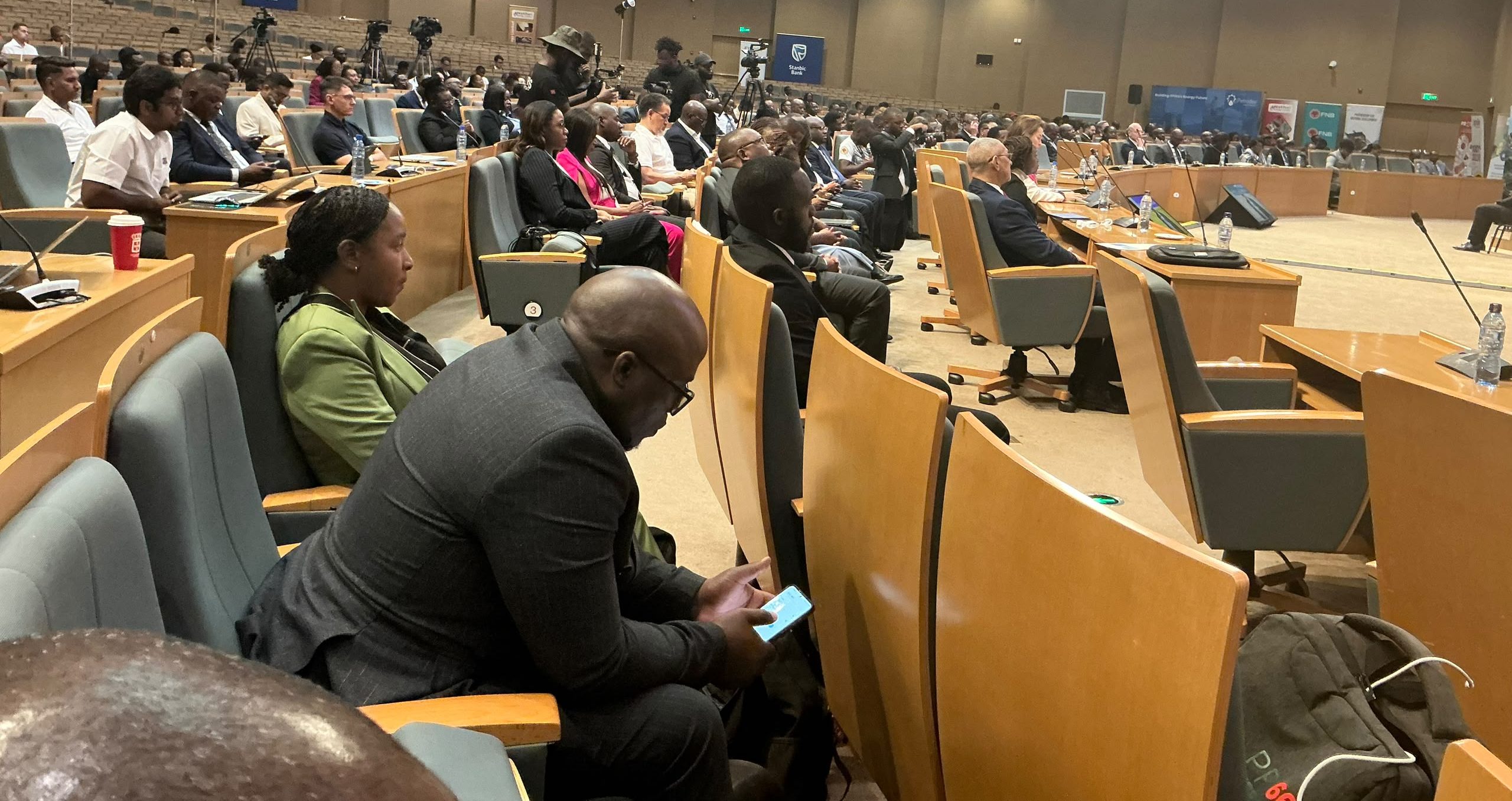
Ministers, utilities, investors, financiers and development partners gathered in Lusaka this month for the Energy Forum for Africa 2026, under the theme “Driving a Borderless Energy Future for Africa”, with discussions centred on how countries can share generation capacity, strengthen transmission networks and develop energy markets capable of moving electricity across borders.
For Zimbabwe, the discussions come at a significant moment.
After years of severe electricity shortages, the country has experienced a marked improvement in power availability, with the Government now seeking to consolidate those gains through additional generation, renewable energy, transmission investment and deeper regional electricity trading.
At the centre of Zimbabwe’s regional energy diplomacy has been Energy and Power Development Minister July Moyo, who has increasingly positioned the country as an active participant in efforts to build a more integrated Southern African energy market.
Speaking at the Lusaka forum, Moyo argued that the region’s energy future could no longer be built around isolated national systems.
Zimbabwe and Zambia, he said, already demonstrate the benefits of cross-border cooperation through the Zambezi River Authority, the Southern African Power Pool and bilateral electricity trading arrangements.
The two countries’ shared experience is particularly important because the same climatic and economic pressures that affect one country can quickly spill across borders.
The 2023/24 El Niño-induced drought, for example, sharply reduced water levels at Kariba and constrained hydropower generation, exposing both Zimbabwe and Zambia to simultaneous electricity shortages. Moyo warned that the threat of another strong El Niño during the 2026/27 rainfall season makes diversification and regional cooperation even more urgent.
The response, he said, must include accelerated development of non-hydro generation, optimisation of existing thermal plants, stronger regional power trading and demand-side management.
This is where Zimbabwe’s recent improvement in electricity supply becomes particularly important.
The country has significantly strengthened its generation position over the past three years, with improved availability supported by additional generation capacity, rehabilitation and the contribution of independent and captive power producers.
At the latest strategic planning review, Moyo reported that ZESA had recorded more than 280 consecutive days of uninterrupted electricity supply, while conventional generation capacity had increased from 2,905MW to 3,025MW.
Net metering had surpassed 110MW, while captive power producers had added 162.47MW.
More than 8,500 institutions had been electrified through rural electrification programmes, while more than 9,500 solar home systems had been distributed under the Presidential Solar Scheme.
The figures suggest that Zimbabwe’s electricity story is gradually moving away from emergency management towards a more diversified energy system.
Moyo’s tenure at the Energy Ministry has consequently coincided with a period in which the Government has increasingly focused not only on increasing generation but also on transmission, regional interconnection, private investment and alternative energy sources.
The next challenge is turning that progress into durable energy security.
The emerging model being discussed in Lusaka is fundamentally different from the traditional approach in which each country attempts to produce enough electricity to meet all of its own needs.
Under a more integrated regional model, electricity can move towards areas experiencing shortages from countries or projects with surplus capacity.
Zimbabwe and Zambia already operate bilateral power-purchase arrangements allowing electricity to flow in either direction depending on demand and available capacity.
Moyo said these arrangements should be expanded as new generation comes online.
The proposed Hwange–Mukuni transmission line, known as ZiZa, is expected to strengthen the connection between Zimbabwe and Zambia and form part of the wider Zimbabwe-Zambia-Botswana-Namibia (ZiZaBoNa) interconnector.
According to Moyo, the project is nearing financial close and could increase transfer capacity across the Zambezi while opening another corridor for regional electricity trade.
That infrastructure could become increasingly important as Southern Africa attempts to balance countries with different generation profiles.
A country with abundant solar generation during the day, for example, could potentially export electricity to a neighbouring market experiencing higher demand, while hydro-rich systems could provide complementary supply when conditions permit.
The region’s challenge is therefore no longer simply building power stations.
It is building the networks and commercial arrangements that allow electricity to move efficiently to where it is needed.
The proposed 2,400MW Batoka Gorge Hydroelectric Scheme, jointly developed by Zimbabwe and Zambia, sits at the centre of this regional vision.
The project would provide 1,200MW to each country and, if successfully developed, could become one of the region’s most important new generation projects.
The two governments have committed a combined US$440 million, with each contributing US$220 million towards construction of the dam, while a special-purpose vehicle is expected to mobilise additional financing and manage the project.
But Batoka also illustrates the risks facing large energy projects.
The region cannot afford to rely exclusively on hydropower at a time when climate change is increasing uncertainty around rainfall and river flows.
Moyo therefore called for greater investment in solar photovoltaic projects, battery storage, cleaner coal technologies, gas-to-power and distributed generation.
Zimbabwe’s emerging gas prospects at Muzarabani could eventually provide another component of that diversification, while the country’s substantial solar resources offer opportunities for utility-scale and distributed generation.
The debate has become even more urgent because Southern Africa’s energy requirements are rising alongside mining and industrial development. Zimbabwe’s ambitions to process lithium, platinum, gold, chrome and other minerals locally will require large quantities of reliable electricity, the same is true of Zambia’s copper industry.
Moyo told delegates that beneficiation cannot be separated from energy security. Smelters, refineries and mineral-processing plants require reliable and increasingly competitive electricity. The region therefore faces a fundamental policy choice: export minerals in raw form or build an integrated industrial economy in which energy infrastructure supports local processing and manufacturing.
The improvement is not simply about keeping households connected. It is about creating the power base required to transform the structure of the economy. There is little doubt that Moyo has overseen an important period of change in Zimbabwe’s energy sector. The most visible measure is the improvement in electricity availability.
But his longer-term legacy will ultimately be judged by whether the current gains survive beyond individual projects and whether Zimbabwe can build a financially sustainable, diversified and interconnected energy system.
The Minister has increasingly argued for a model built around public investment, private capital, independent power producers, captive generation, renewable energy, transmission expansion and regional electricity trading.
That approach recognises a reality that has become increasingly difficult for Southern African governments to ignore: no country can guarantee energy security entirely on its own. Moyo has also pushed for greater participation by domestic investors, including pension funds, insurance companies, banks and citizens, in long-term energy infrastructure. The argument is that energy projects should not only serve citizens but, where possible, allow citizens to own part of the infrastructure that powers their economies.
The question now is whether Southern Africa can move from repeated declarations of regional cooperation to actual implementation.
The region has enormous energy resources, hydropower, coal, solar, gas and emerging renewable technologies, but the benefits are often constrained by inadequate transmission infrastructure, financing difficulties, regulatory differences and financially weak utilities.
The Southern African Power Pool offers an existing platform for regional electricity trading, but the ambition now is to deepen that market and make it more responsive to rapidly changing demand.
The country’s stronger generation position, improving supply reliability, growing renewable-energy base and strategic location within the regional transmission network give it an opportunity to become more than simply a consumer of imported electricity.
Today, the conversation is increasingly about how Zimbabwe can use improved energy security to power mines, factories, farms and households, while helping build a Southern African electricity market in which power can move across borders according to where it is produced and where it is needed.
The Lusaka discussions suggest that the next chapter of the region’s energy story will not be written by individual countries acting alone.
It will be written through interconnected grids, shared infrastructure, diversified generation, cross-border investment and electricity markets that treat Southern Africa as an integrated energy economy.
More Stories
Zimbabwe Power Supply Improves as Energy Sector Turns Corner
AHF calls for African countries to unite against debt crisis
Zimbabwe’s Second Bid to Remove Vendors from Harare Streets Triggers Fresh Livelihoods, Law and Order Clash