






Government insists restoring sanity in the capital is non-negotiable as vendors demand dialogue and warn against a crackdown that could leave thousands without income…
By Shingirai Vambe
Zimbabwe is once again confronting the difficult and increasingly familiar question of how to balance the need to restore order in its urban centres with the economic realities confronting thousands of citizens who have turned to vending as a means of survival.
The latest confrontation has emerged in Harare, where Government has issued a seven-day ultimatum to illegal vendors operating from unauthorised sites, ordering them to vacate the streets by September 9 or face a Government-led clean-up operation.
The directive, issued by Local Government and Public Works Minister Daniel Garwe, represents another attempt by authorities to remove street vendors from the capital’s central business districts and other urban areas, where the rapid growth of informal trading has increasingly become a source of tension between Government, formal businesses, residents and vendors themselves.
For Government, the issue is no longer simply about people selling goods on the streets. Authorities argue that the uncontrolled expansion of vending has contributed to urban disorder, blocked pedestrian walkways, obstructed entrances to formal businesses, worsened waste management and created conditions that can exacerbate flooding during the rainy season.
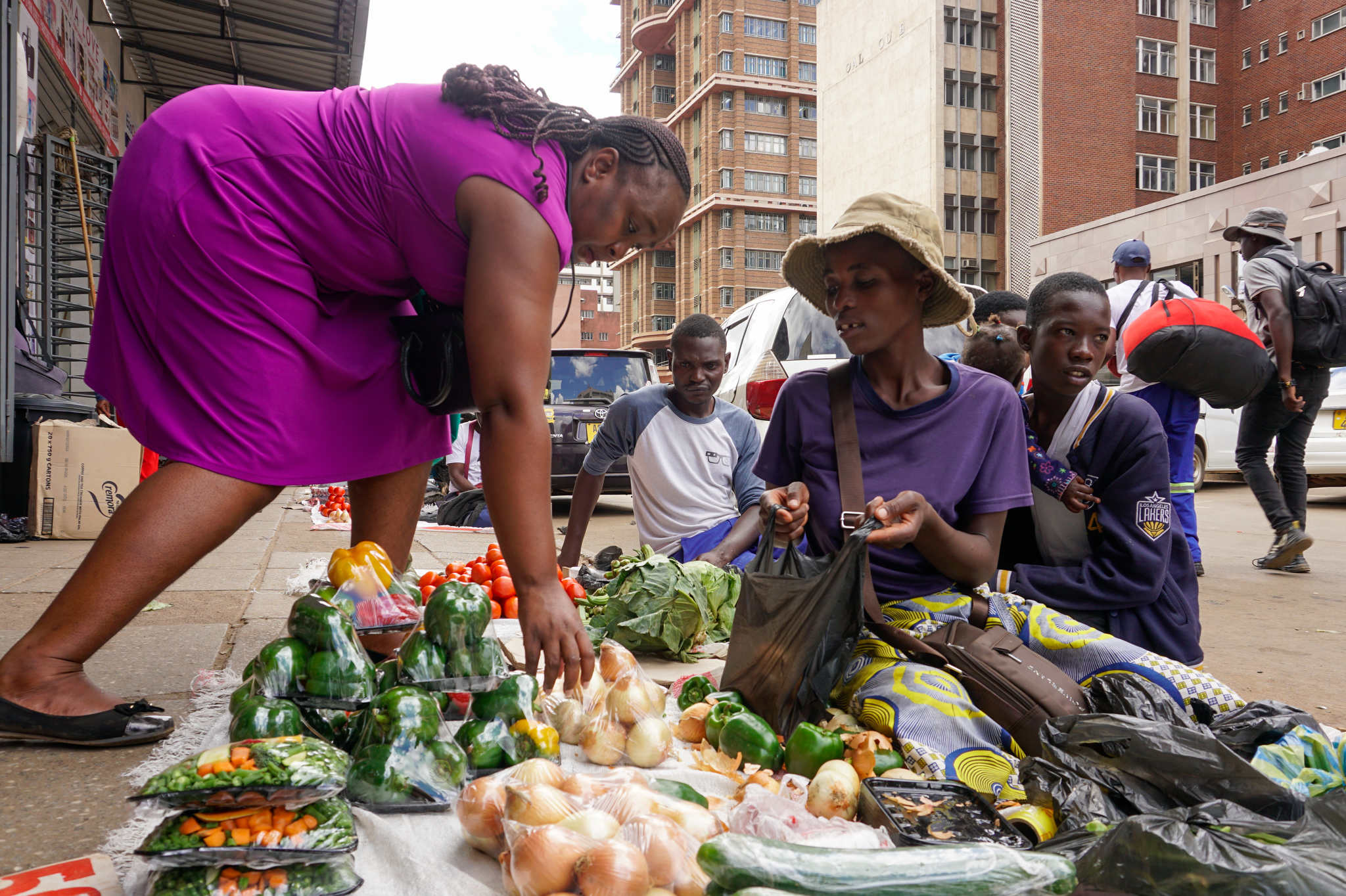
But for thousands of vendors, the streets are more than trading spaces. They are workplaces, sources of income and, in many cases, the only available means of putting food on the table.
That tension was brought sharply into focus after Minister Garwe announced the latest crackdown.
One vendor, reacting to the minister’s seven-day ultimatum, said traders were prepared to give the Government an ultimatum of their own.
He said he and other vendors would give Minister Garwe and his team five days to withdraw the directive, after which they should engage vendors and negotiate a practical way forward.
The vendor argued that Government could not simply impose a drastic measure affecting thousands of people without first providing a realistic alternative for those whose livelihoods depended on informal trading.
His argument reflects a broader concern among informal traders that removing vendors from the streets without addressing unemployment, poverty and the limited availability of formal employment could simply shift the problem from one location to another.
For vendors, therefore, the question is not whether Harare requires order and cleanliness. Rather, they want Government to recognise the economic circumstances that have pushed so many people into the informal economy and to ensure that any relocation programme provides viable and accessible trading opportunities.
Minister Garwe, however, has maintained a firm position that Zimbabwe is governed by laws and that restoring order in the country’s urban areas is not negotiable.
In a statement, the minister expressed concern over what he described as the continued growth of illegal vending and informal trading at undesignated sites in Harare’s Central Business District and throughout the wider Harare Metropolitan province.
According to Government, the expansion of illegal vending has created a range of challenges for urban authorities, including sanitation problems, congestion, obstruction of public pathways and interference with formally established businesses.
The authorities also contend that unregulated street trading has become a public health and safety concern.
“The current state of disorderliness on the streets is intolerable,” Minister Garwe said.
He described illegal vending as “a threat to the health and security of our nation”, while simultaneously acknowledging that informal trading remains an important source of livelihood for many Zimbabweans.
That acknowledgement, however, did not translate into a relaxation of the Government’s position.
Instead, the minister stressed that informal trading must operate within the law and take place at sites legally designated by local authorities.
“Government acknowledges the existence of informal trading as a recognised avenue of livelihood,” he said. “This, however, should be within the bounds of municipal by-laws and at legally designated marketplaces.”
The distinction is central to the Government’s position.
Authorities are not necessarily seeking to eliminate informal trading altogether. Rather, they argue that vendors should operate from designated markets where sanitation, waste collection, traffic management and public safety can be better controlled.
Under the latest directive, all vendors engaged in illegal street trading and night trading have until September 9 to vacate unauthorised locations.
Those affected have been instructed to relocate to lawful vending markets provided by local authorities.
The minister warned that the deadline would be followed by enforcement action.
From September 9, the Ministry, working with other Government ministries, departments and agencies, will commence what it described as a “comprehensive, zero-tolerance clean-up operation” targeting illegal vending sites in Harare and the broader Harare Metropolitan province.
“During this operation, all illegal vending structures, stalls, and sites will be completely disbanded,” Minister Garwe said.
The language used by Government signals a determination to ensure that the latest directive does not become another short-lived clean-up campaign in which vendors disappear temporarily only to return days or weeks later.
Zimbabwe has experienced several previous attempts to regulate street trading, with enforcement operations often producing a cycle in which vendors are removed from central business districts before returning when enforcement subsides.
The latest operation therefore raises questions about whether authorities will be able to sustain enforcement while simultaneously providing sufficient alternative trading spaces to accommodate the thousands of people currently operating informally.
The dispute comes against the backdrop of Zimbabwe’s difficult economic environment, which has seen informal trading become an increasingly important component of household survival.
The number of vendors operating in major urban centres has increased tremendously, with streets, pavements and areas surrounding shops and supermarkets becoming important trading spaces for people selling a wide range of goods.
While the proliferation of vendors has provided income to unemployed and economically vulnerable citizens, the rapid expansion has also created considerable inconvenience for residents and businesses.
In some areas, pedestrians have been forced to share increasingly congested spaces with traders, customers, vehicles and informal transport operators.
Waste generated by trading activities has also become a persistent challenge.
Discarded packaging, plastic materials, food waste and other refuse can accumulate rapidly where large numbers of vendors operate without adequate waste collection facilities.
During the rainy season, the consequences can become more serious.
Blocked drainage channels and waterways, combined with accumulated waste and other obstructions, can contribute to the rapid accumulation of stormwater, increasing the risk of flash flooding in parts of Harare’s central business districts.
For Government, these problems reinforce the argument that informal trading cannot simply be allowed to expand wherever traders find space.
For vendors, however, the same circumstances raise another question: if people are being driven into vending by economic hardship, where are they expected to go when they are removed from the streets?
Economist Professor Gift Mugano told the Post on Sunday that Zimbabwe’s economic landscape had deteriorated significantly during the Second Republic, creating conditions in which informal economic activity had become an increasingly important survival mechanism.
According to Mugano, the economic difficulties have been compounded by developments in neighbouring countries, including anti-migration measures that have resulted in Zimbabweans returning home after losing opportunities or facing restrictions abroad.
The return of thousands of citizens, many of them without jobs, has added pressure to an already difficult domestic employment environment.
For those returning home without stable employment, vending can become one of the few immediately accessible options.
Unlike formal employment, informal trading generally does not require lengthy recruitment processes, specialised qualifications or substantial capital to enter. A person with a small amount of money can purchase goods and attempt to sell them on the streets, often beginning with very modest stock.
That accessibility has made vending a critical economic safety valve.
But the same economic conditions that have made vending attractive have also contributed to its explosive growth.
What may once have been a relatively small informal sector operating alongside the formal economy has, in many urban areas, become a highly visible and sometimes dominant feature of commercial activity.
The result is an increasingly difficult policy dilemma.
Government wants to enforce municipal regulations, protect public spaces and formal businesses, improve sanitation and restore order.
Vendors want to protect their livelihoods and argue that they cannot be removed from trading areas without viable alternatives.
Both positions are rooted in legitimate concerns, but the challenge lies in finding a policy capable of addressing them simultaneously.
Government also argues that formal businesses have been negatively affected by the uncontrolled expansion of street vending.
Some traders operate directly outside shops and supermarkets, sometimes selling products similar to those offered by formally registered businesses.
In other cases, vendors position their stalls at entrances to commercial premises, making it difficult for customers to access businesses.
Formal businesses argue that they carry the cost of registration, taxation, licences, rentals, utilities, wages and regulatory compliance, while some informal traders operate outside many of those obligations.
The Government has therefore positioned the latest crackdown partly as an intervention to protect businesses that operate lawfully and contribute to the tax base.
Minister Garwe maintained that Government had a responsibility to restore order and protect businesses that were operating within the law and paying taxes.
The issue, however, is complicated by the fact that many consumers are attracted to informal markets because vendors can offer goods at competitive prices, convenient locations and, in some instances, flexible bargaining arrangements.
Removing vendors from central commercial areas may therefore benefit formal businesses while simultaneously making basic goods less accessible to some consumers.
At the centre of the Government’s response is the proposal that vendors relocate to designated marketplaces.
On paper, the approach offers a compromise: vendors retain the ability to earn an income, while authorities regain control over public spaces.
In practice, however, the success of such a policy will depend heavily on the availability, location, affordability and attractiveness of the designated markets.
Vendors are unlikely to permanently abandon busy trading areas if the alternative markets are poorly located, inaccessible to customers or too expensive to operate from.

A market may be legally designated, but if customers do not go there, vendors may struggle to earn enough to survive.
This is likely to be one of the most important issues in any negotiations between Government and the vendors.
The traders’ demand for dialogue therefore reflects more than resistance to regulation. It also raises questions about whether the proposed relocation sites have been designed around the realities of informal commerce.
The five-day counter-ultimatum reportedly issued by vendors illustrates the level of frustration among traders and suggests that the September 9 deadline could become a flashpoint between authorities and the informal sector.
For Government, allowing illegal trading to continue unchecked risks undermining municipal authority and encouraging further disregard for urban regulations.
For vendors, complying with the directive without securing viable alternative livelihoods could mean losing their only source of income.
The danger is that a confrontation focused solely on enforcement could deepen tensions without resolving the underlying economic problem.
Zimbabwe’s informal economy is not simply a regulatory problem. It is also a symptom of unemployment, declining purchasing power, limited formal employment opportunities and the broader struggle by households to survive in a difficult economic environment.
Consequently, removing vendors from the streets may restore temporary order, but unless the economic conditions driving people into vending are addressed, the pressure is likely to reappear elsewhere.
The challenge confronting Government is therefore how to restore order without criminalizing poverty or destroying livelihoods.
There is a strong public interest in clean streets, functioning drainage systems, accessible pavements, safe public spaces and a business environment in which formally registered companies can operate without obstruction.
At the same time, there is an equally important economic reality, thousands of Zimbabweans depend on informal trading to survive.
A sustainable solution would need to recognize both realities.
That could mean expanding and improving designated markets, ensuring that they are located where there is sufficient customer traffic, keeping fees affordable, providing proper sanitation and waste management facilities, and engaging vendors before relocation exercises are implemented.
It could also involve stronger enforcement against genuinely illegal trading while creating clearer pathways for informal traders to become licensed and gradually transition into the formal economy.
For the vendors, dialogue could provide an opportunity to put forward practical proposals rather than simply resisting Government action.
For Government, engagement could help ensure that enforcement does not produce unintended economic consequences for already vulnerable households.
Ultimately, the Harare vending crisis is a reflection of a much larger national problem.
The streets have become the workplace for people who cannot find employment elsewhere. The growth of vending is therefore both a source of urban disorder and a visible manifestation of Zimbabwe’s economic struggles.
Minister Garwe’s insistence that the country has laws and that restoring sanity is non-negotiable may resonate with residents, motorists and formal businesses frustrated by congestion, blocked walkways, waste and flooding.
But the vendors’ response carries an equally powerful question, what happens to the thousands of families whose livelihoods depend on the very activities Government is seeking to eliminate from the streets?
As the September 9 deadline approaches, the outcome may depend not only on the Government’s willingness to enforce its directive, but also on its ability to provide credible alternatives to those being removed.
However, vending has for years sustained councils, including the Government as revenue collected around the country by all 92 local authorities go beyond US $150000 on a daily basis and a bigger chunk is taxed by ZIMRA, and it goes to treasury.




More Stories
Retrenchment Axe Hangs Over TelOne
Marital Feud Escalates Into Gun Drama in Rusape
Zimbabwe’s Export Engine Fires Up