





Exhibitor Numbers Rise Ahead of ZITF…
By Shingirai Vambe
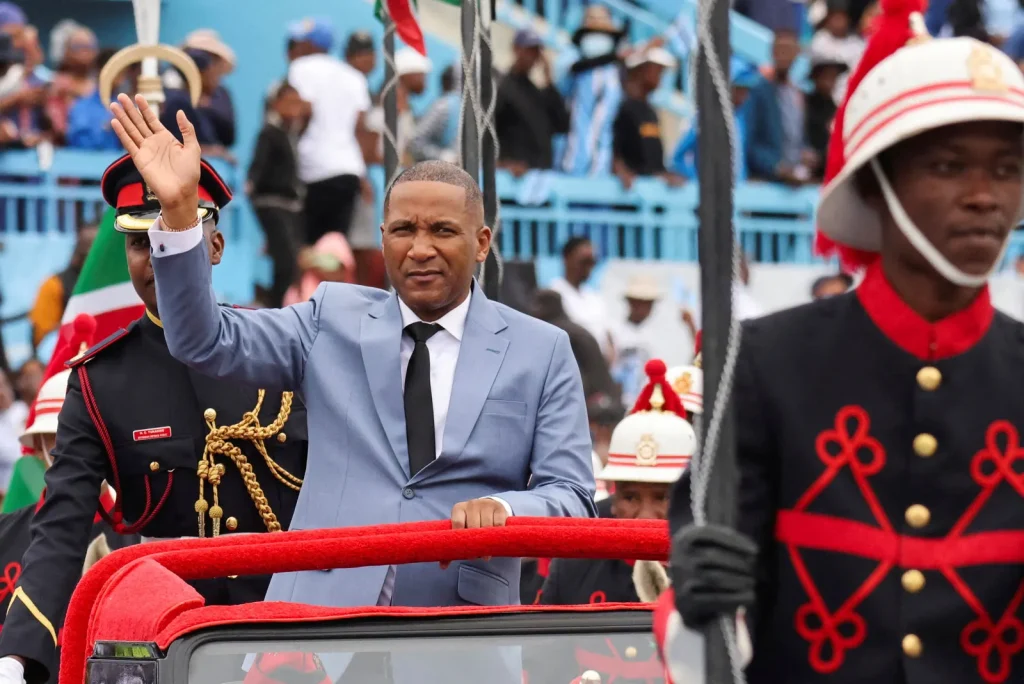
Zimbabwe’s diplomatic and economic spotlight is set to turn toward regional cooperation and political symbolism as President Duma Gideon Boko of Botswana is expected to officially open the 66th edition of the Zimbabwe International Trade Fair (ZITF), a major regional showcase scheduled to run from April 20 to 25, 2026.
The announcement, confirmed by Cabinet in its latest briefing, has drawn particular attention not only because of the economic significance of the annual trade fair, but also due to Boko’s growing reputation as a forthright and outspoken leader on issues of governance, democracy and constitutionalism across the region. Known for his candid stance on leadership accountability and his criticism of leaders who seek to extend their stay in power through undemocratic means, Boko’s presence at this year’s ZITF carries both economic and political undertones.
The 2026 edition of the ZITF will run under the theme “Connected Economies, Competitive Industries,” a message that underscores the importance of regional integration, cross-border collaboration, and the strengthening of resilient supply chains in line with the broader aspirations of the African Continental Free Trade Area (AfCFTA). His official opening of the event on April 23 is expected to amplify these themes, positioning the fair as a platform for both economic diplomacy and regional dialogue.
Relations between Zimbabwe and Botswana have historically been shaped by both cooperation and complexity. The two neighboring, landlocked nations share more than 500 kilometers of border and maintain deep economic, political and social ties. Both countries are active members of key international and regional bodies, including the African Union, United Nations, Southern African Development Community (SADC), and the Non-Aligned Movement.
Formal diplomatic relations between the two countries were established in 1983, shortly after Zimbabwe attained independence following the Zimbabwe War of Independence. During that period, Botswana played a delicate balancing act, providing refuge to Zimbabwean liberation fighters while avoiding direct military involvement due to its own geopolitical vulnerabilities, surrounded at the time by hostile regimes in Rhodesia, apartheid South Africa, and South West Africa.

Over the decades, Zimbabwe has remained one of Botswana’s key trading partners, with the two countries signing a bilateral trade agreement as early as 1988. However, relations have not been without strain. The economic crisis that gripped Zimbabwe in the early 2000s triggered large-scale migration into Botswana, at times fueling tensions and prompting stricter border controls. During that period, former Botswana President Ian Khama controversially described Zimbabwe as an “unfriendly neighbour,” reflecting the complexities of bilateral engagement.
Despite such challenges, Botswana has also played a constructive diplomatic role in Zimbabwe’s political affairs. Following the disputed 2008 Zimbabwean general election, Gaborone was instrumental in efforts to prevent further escalation of political tensions. More recently, during a visit to Harare in September 2022, Boko’s predecessor, Mokgweetsi Masisi, called for the removal of Western sanctions imposed on Zimbabwean officials, signalling Botswana’s continued engagement in regional diplomacy.
Against this historical backdrop, Boko’s upcoming visit for the ZITF is being viewed as both a continuation of strong bilateral ties and a moment of renewed regional engagement.
Preparations for the 2026 ZITF are already at an advanced stage, according to the Minister of Industry and Commerce, Hon. Nqobizitha Mangaliso Ndlovu, with the event expected to surpass previous editions in both scale and participation. Cabinet noted that 520 exhibitors have registered so far, exceeding the 486 recorded in 2025, with 72 of them participating for the first time. Exhibition space uptake has reached 49,100 square metres, representing 93 percent of the total available capacity, signalling strong interest from both local and international stakeholders.
International participation is also on the rise, with more than 33 exhibitors from 16 countries confirmed, a notable increase from the 17 recorded last year. This growing global interest reflects Zimbabwe’s efforts to position itself as a competitive investment and trade destination within the region.
In preparation for the influx of delegates and exhibitors, authorities are engaging key aviation partners, including Air Zimbabwe, Fastjet Zimbabwe, and Ethiopian Airlines, to increase flight frequencies and ensure smooth connectivity during the event.
The ZITF programme itself promises a wide array of high-level engagements and activities designed to foster innovation, investment and collaboration. These include the Rural Industrialization Indaba, the Youth in Business Festival, the ZITF Innovators Forum, the Connect Africa Symposium, the Diplomats Forum, and a Charity Golf Challenge, among others.
As Zimbabwe prepares to host one of its flagship economic events, the presence of a regional leader known for his outspoken views on governance adds an additional layer of intrigue. While the official focus will remain on trade, industry and regional cooperation, observers will be watching closely to see whether the visit also sparks broader conversations around leadership, democracy and the future of governance in Southern Africa.




More Stories
Retrenchment Axe Hangs Over TelOne
Marital Feud Escalates Into Gun Drama in Rusape
Zimbabwe’s Export Engine Fires Up