




War Veterans, Ex-General Unite on Constitutional Concerns…
By Senior Reporter
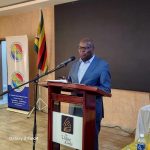
A rare and unusually candid voice has emerged from within Zimbabwe’s former military establishment, adding fresh weight to the intensifying national debate over constitutional reform and governance. Retired Lieutenant General Winston Sigauke Mapuranga has publicly challenged President Emmerson Mnangagwa’s push to amend the country’s Constitution, warning that attempts to do so without a referendum reflect a deeper crisis of trust between leadership and citizens.
In a strongly worded statement released through his social media platforms, Mapuranga questioned the rationale behind Constitutional Amendment Bill No. 3, which is widely understood to seek an extension of the President’s term by an additional two years. For the retired general, the issue is not merely legal or procedural—it is fundamentally about legitimacy, accountability, and the relationship between the governed and those in power.
“Two years, President Mnangagwa, what exactly is the plan?” Mapuranga asked, setting the tone for a statement that blended personal reflection with sharp political critique.
Having spent decades in military service, Mapuranga framed his intervention as a reluctant but necessary break from silence. He described a long career dedicated to defending a nation he once believed in, only to witness what he characterized as a gradual decay of governance standards.
“I have watched governments rise and I have watched them rot,” he said. “I have held my tongue when discretion demanded it. I am holding it no longer.”
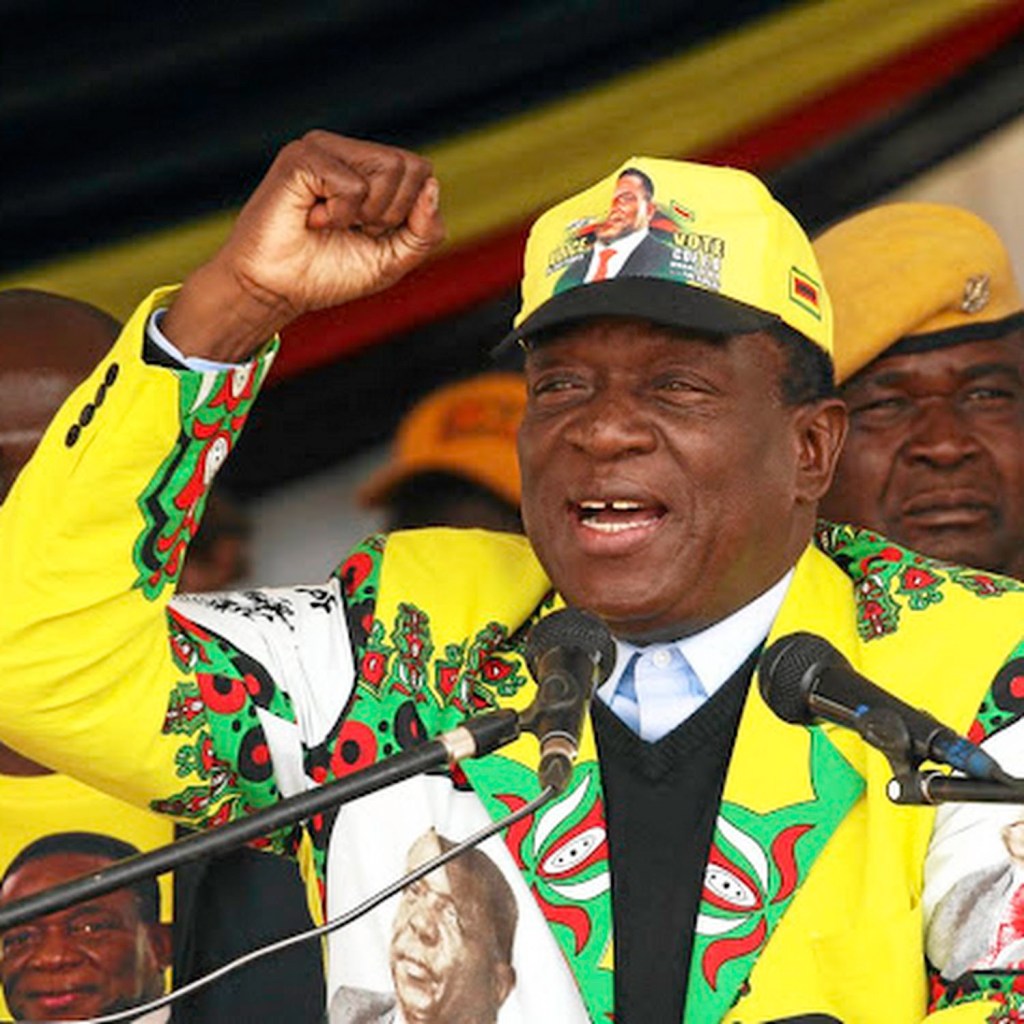
His remarks come at a time when the ruling ZANU PF is actively campaigning for the passage of Constitutional Amendment Bill No. 3 without subjecting it to a national referendum. Public hearings, which began earlier this week, have already drawn widespread criticism. Reports from various parts of the country describe chaotic scenes marked by intimidation, violence, and what critics allege to be a carefully managed process designed to suppress dissenting voices while amplifying support for the amendment.
Mapuranga dismissed the justification for the proposed changes, arguing that Zimbabwe’s Constitution is not inherently flawed. Instead, he suggested, the push for amendment is driven by political convenience rather than national necessity.
“We are being asked to amend the supreme law of the republic not because it is broken, but because a political timetable is inconvenient,” he said. “That is not governance. That is the behavior of a leader who does not trust the people to freely choose him. And if a leader cannot trust the people, why should the people trust the leader?”
Beyond the constitutional debate, Mapuranga’s statement painted a broader and more troubling picture of Zimbabwe’s socio-political environment. He argued that the country has, over time, normalized dysfunction to the extent that basic service delivery is now celebrated as exceptional performance.
“In Zimbabwe, we have lowered the bar so far that survival is mistaken for success,” he said.
He cited deteriorating infrastructure, unreliable water supplies, and poor public services as evidence of systemic governance failure. In a pointed comparison, he referenced countries such as South Korea, Botswana, and Rwanda, where public officials are routinely held accountable for failures in service delivery.
“In any serious republic, a government official presiding over a constituency without functioning sewer systems for five years would face consequences, either parliamentary censure or electoral defeat,” he said. “In Zimbabwe, that same official is promoted. Given a ministerial vehicle. Rewarded. And we wonder why nothing changes.”
Mapuranga went further, suggesting that Zimbabweans themselves have been conditioned to accept and even celebrate mediocrity. He described a national mindset in which the absence of crisis is mistaken for progress.
“The lights were on last night? Wonderful. Praise the President. The tap had water this morning? What a blessing,” he said. “Four decades of mismanagement sanitized into a daily miracle.”
His remarks also hinted at fractures within ZANU PF, suggesting that the party is not unified in its support for the proposed constitutional changes. According to Mapuranga, many within the ruling establishment are choosing silence, waiting for internal factional dynamics to determine the eventual direction before committing themselves.
Those who have openly supported the amendment, he argued, are either politically expedient actors or individuals who stand to benefit from the extension of power. In doing so, he echoed sentiments previously expressed by Vice President Constantino Chiwenga, who has used the term “Zvigananda” to describe corrupt elites accused of looting national resources.
While Mapuranga stopped short of explicitly calling for the resignation of the President, his message was unmistakable: Zimbabwe cannot afford continued leadership that is disconnected from the will of the people and unwilling to subject itself to democratic scrutiny.
His intervention comes amid growing criticism of governance in Zimbabwe, where economic challenges, institutional weaknesses, and persistent allegations of corruption have continued to erode public confidence. Nearly a decade after Mnangagwa assumed power, expectations of reform and renewal remain largely unmet in the eyes of many citizens.
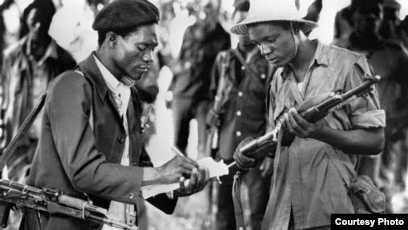
In a parallel development that further underscores the country’s constitutional tensions, the Zimbabwe National Liberation War Veterans Association (ZNLWVA) has called for the immediate repeal of the Maintenance of Peace and Order Act (MOPA), arguing that the law has deviated significantly from its intended purpose and now serves to undermine fundamental freedoms.
In a detailed statement, the association warned that MOPA, as currently applied, restricts constitutionally guaranteed rights, including freedom of assembly, association, and expression. What is officially described as a system of notification for public gatherings, the group argues, has effectively been transformed into a system of permission, one that places undue power in the hands of law enforcement authorities.
“We did not fight to replace one form of control with another,” said Andrease Ethan Mathibela, the association’s chairman. “The Constitution is clear. Citizens have the right to gather, to speak, and to participate in the affairs of their country without undue interference.”
The war veterans outlined several concerns, including the broad discretionary powers granted to police, the selective application of the law, and the chilling effect these practices have on citizen participation in governance.
While acknowledging the importance of maintaining public order, the association stressed that any such measures must remain firmly within constitutional boundaries and be applied fairly and proportionately.
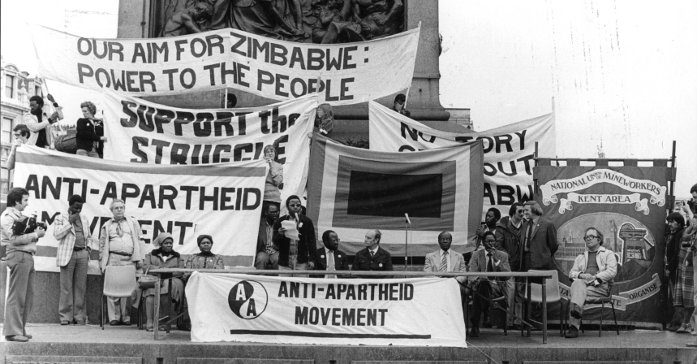
Taken together, these developments point to a nation at a critical crossroads. The convergence of dissenting voices, from a retired senior military official to liberation war veterans, signals a deepening unease with the current trajectory of governance and constitutional reform.


More Stories
Marital Feud Escalates Into Gun Drama in Rusape
AHF calls for African countries to unite against debt crisis
Pensioners Left Waiting As Billions Sit In Zimbabwe’s Pension Funds