





Office Earthquake Rocks Top Government Posts…
By Senior Reporter
Zimbabwe’s government is once again under intense scrutiny following a series of dramatic developments that have unfolded in the wake of a critical report by the Zimbabwe Human Rights Commission (ZHRC) on the controversial Constitutional Amendment Bill No. 3 (CAB3). What began as a constitutional process has now escalated into a broader political and institutional shake-up, raising questions about governance, accountability and the balance of power within the State.
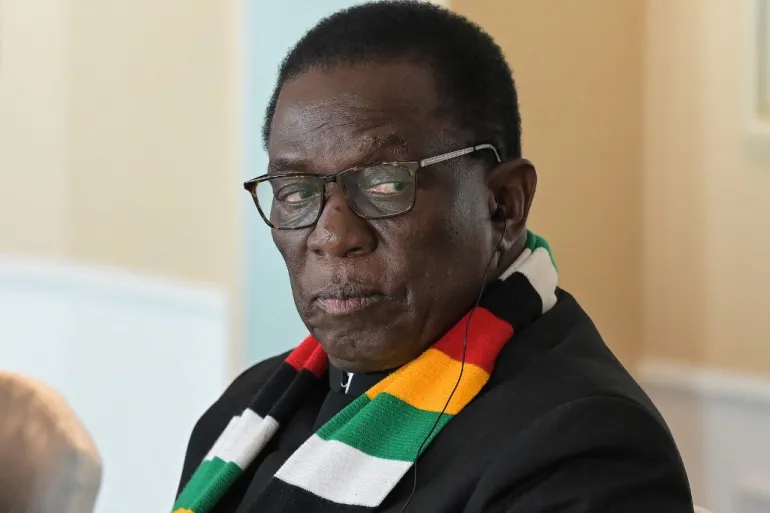
At the centre of the storm is President Emmerson Dambudzo Mnangagwa, whose administration has taken decisive actions that many observers interpret as both strategic and consequential. Following the release of the ZHRC report, which sharply criticized aspects of the proposed constitutional amendment for potentially undermining democratic principles and weakening accountability mechanisms, the government initiated sweeping changes across key institutions.
In a statement issued by Martin Rushwaya, Chief Secretary to the President and Cabinet, it was announced that Jessie Majome had been removed from her position as chairperson of the ZHRC and reassigned to the Public Service Commission (PSC) with immediate effect. The move, effected in terms of Section 202(1)(b) of the Constitution, came just days after the Commission publicly raised alarm over provisions within CAB3, warning that they could erode constitutional safeguards and dilute democratic oversight.

The reassignment of Majome has been widely interpreted as significant, given the timing and the Commission’s firm stance. Legal experts and civil society organizations had already begun voicing concern over the amendment, and the ZHRC’s position added institutional weight to growing national debate.
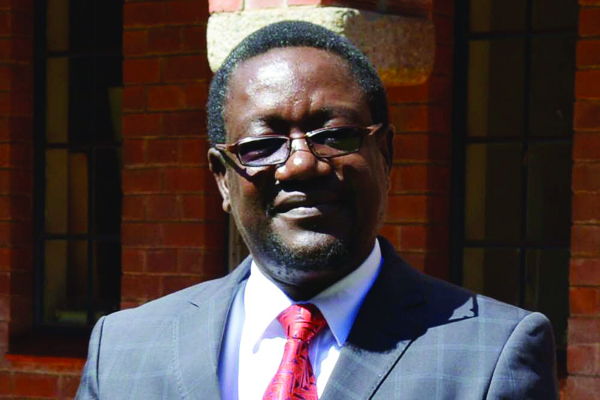
Simultaneously, another major shift occurred within the country’s security apparatus. Fulton Mangwanya was removed from his role as Director-General of the Central Intelligence Organisation (CIO), with seasoned diplomat Paul Chikawa stepping in to assume the influential post. Chikawa, who has previously served as Zimbabwe’s ambassador to Cuba and held diplomatic assignments in China, now finds himself at the helm of one of the most critical arms of the State.
These developments form part of a broader restructuring exercise that has also seen the Ministry of Lands, Agriculture, Fisheries, Water and Rural Development split into two separate portfolios. The newly established Ministry of Lands and Rural Development is now under Vangelis Haritatos, while the Ministry of Agriculture, Mechanisation and Water Resources Development is headed by Anxious Masuka. The restructuring signals a recalibration of government priorities in key economic sectors, particularly agriculture, which remains central to Zimbabwe’s development agenda.
Political analysts argue that such high-level changes are rarely isolated. Instead, they often reflect deeper currents within the State, ranging from efforts to consolidate executive authority to attempts at managing internal dynamics within both government and the ruling party. For critics, the timing of the reshuffle raises concerns about the independence of institutions and the implications for constitutional governance.
President Mnangagwa’s political trajectory provides important context to these developments. A liberation war veteran and long-time ally of former President Robert Mugabe, Mnangagwa has historically operated at the intersection of politics, security and governance. His early role as Minister of State Security placed him at the heart of Zimbabwe’s intelligence structures during a formative period in the country’s post-independence history.
His ascent to the presidency in 2017, following a dramatic fallout with Mugabe and a military-assisted transition, marked a turning point in Zimbabwe’s political landscape. Since then, observers note a consistent pattern of strategic appointments and institutional realignments, often interpreted as efforts to strengthen control over key levers of power while navigating factional dynamics within the ruling establishment.
While government officials typically frame such changes as administrative measures aimed at improving efficiency and service delivery, critics argue they reflect a recurring cycle of internal purges and political repositioning. The latest reshuffle, coming at a time of heightened debate over constitutional reform, has only intensified these perceptions.
Adding another layer to the unfolding developments are remarks by former Norton legislator Temba Mliswa, who has sharply criticized the restructuring of the Lands and Agriculture ministry. Mliswa alleges widespread corruption within the sector, directly accusing Minister Masuka of presiding over irregular land allocations and questionable financial dealings.
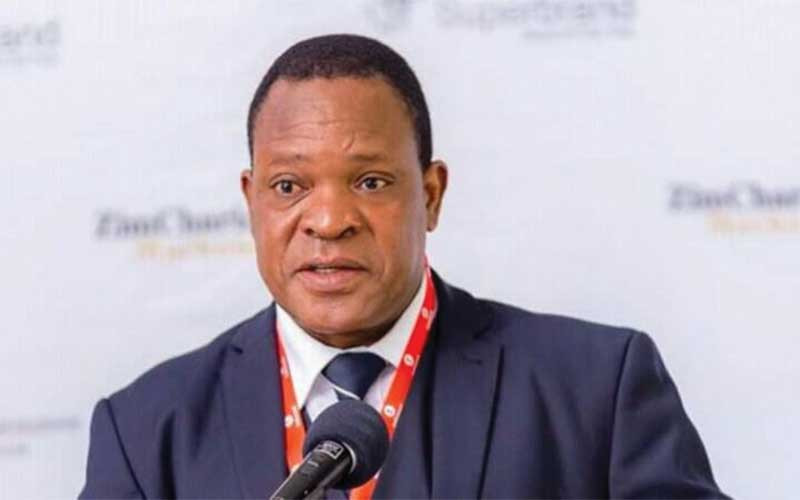
In strongly worded statements, Mliswa described the ministry as a “hub of corruption,” alleging that land was being distributed irregularly across provinces, often without proper authorization. He further claimed that millions of dollars had exchanged hands in controversial rehabilitation projects, some of which, he argued, were used as a cover for illicit mining activities.
Mliswa also suggested that internal protection networks within government structures had enabled such practices to persist, calling for a comprehensive audit of land allocations and greater accountability within the ministry. At the same time, he commended Haritatos for his perceived integrity, expressing hope that the restructuring would curb corruption and restore order within the sector.
As these developments continue to unfold, Zimbabwe finds itself at a critical juncture. The intersection of constitutional reform, institutional restructuring and allegations of corruption presents a complex and evolving political landscape. Whether these changes will lead to strengthened governance or deepen concerns about executive overreach remains a subject of intense national debate.



More Stories
Marital Feud Escalates Into Gun Drama in Rusape
AHF calls for African countries to unite against debt crisis
Pensioners Left Waiting As Billions Sit In Zimbabwe’s Pension Funds