


By Shingirai Vambe
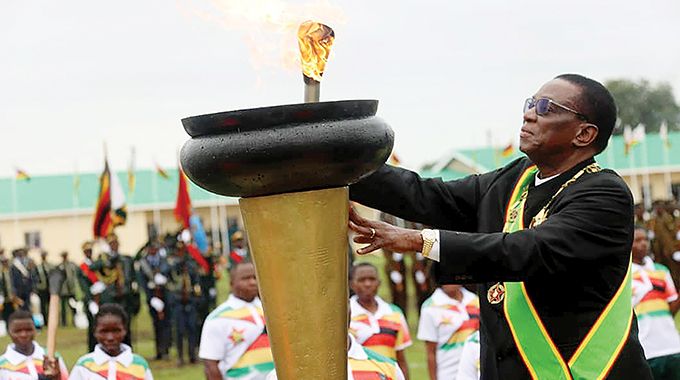
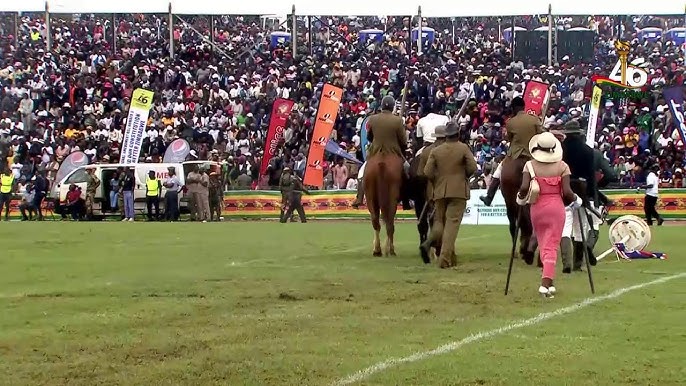
As Zimbabwe marked 46 years of independence, the national commemorations unfolded in a familiar blend of celebration, political reflection, and deepening contestation over the country’s democratic trajectory.
At the centre of the official proceedings was President Emmerson Dambudzo Mnangagwa, who addressed the nation In Matebeleland South, Maphisa, under the theme, “Zimbabwe at 46, Unity and Development, towards Vision 2030.”
His speech, delivered before thousands gathered at the main independence celebrations and broadcast to citizens across the country and the diaspora, was framed as both a tribute to the liberation struggle and a declaration of continued progress under the Second Republic.
He opened with customary salutations and liberation-era affirmations, extending Independence Day greetings across languages and regions, reinforcing the long-standing narrative of unity forged through sacrifice.
A significant portion of his address paid homage to Matabeleland South Province, describing it as a “sacred landscape” in Zimbabwe’s liberation history.
He recalled battles such as Ratanyana and referenced mission stations like Manama, Minda, and Thekwane as enduring symbols of wartime suffering and resilience.
The President named and honoured liberation figures such as Joshua Mqabuko Nkomo, Alfred Nikita Mangena, Lookout Masuku, George Silundika, and Simon Khaya Moyo, describing them as foundational architects of national independence. He reiterated that Zimbabwe’s freedom, in his view, was achieved through collective struggle that transcended ethnic and regional divisions.
From there, his speech shifted firmly into governance and economic performance.
Mnangagwa painted a picture of macroeconomic stabilization, citing foreign currency reserves exceeding US$1.2 billion, annual inflation reportedly reduced to 4.1% in January 2026, and foreign currency inflows surpassing US$16 billion. He attributed this to exports of gold, tobacco, platinum group minerals, and diaspora remittances.
Agriculture featured prominently as a success story. He announced record maize production of 2.4 million tonnes, alongside significant outputs of traditional grains and wheat, claiming national food self-sufficiency.
He highlighted ongoing construction of AI-enabled grain silos across multiple districts, positioning Zimbabwe as increasingly technologically integrated in agricultural storage and management systems.
He also referenced the expansion of irrigation, climate-proofing strategies, and rural development initiatives such as Village Business Units and School Agriculture Business Units.
Mining and infrastructure development were similarly presented as pillars of economic transformation. The President cited growth in lithium production and beneficiation projects in Gwanda, Bikita, and Kamativi, alongside expansion in tobacco, horticulture, and gold exports. Infrastructure projects, including highways, border post modernization, dam rehabilitation, and rural electrification, were framed as evidence of a country steadily advancing toward Vision 2030.
Tourism and technology were also highlighted, with Zimbabwe’s recognition by Forbes as a leading global travel destination in 2025 and the rollout of a national Artificial Intelligence strategy presented as milestones of international relevance and digital transformation.
Yet, beneath the celebratory tone of the official narrative, a contrasting discourse persisted among critics, opposition voices, civil society actors, and sections of the diaspora. While the government emphasized unity, development, and economic recovery, critics argued that the reality on the ground remains far more complex and, in some cases, contradictory.
Opposition voices maintain that political space in Zimbabwe remains constrained, with allegations of harassment, selective application of the law, and restrictions on dissent. Human rights groups and political commentators argue that despite constitutional guarantees of democratic freedoms, opposition parties continue to face structural and operational challenges that limit their participation in national politics.
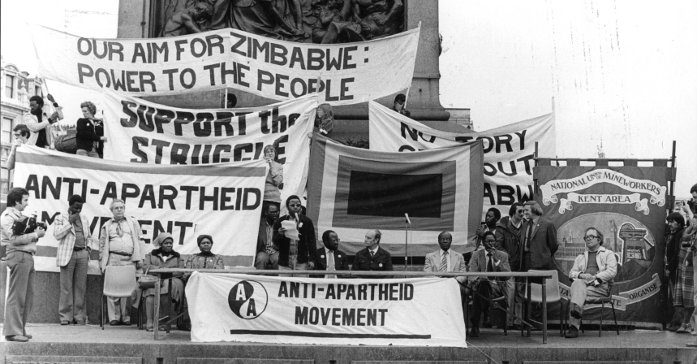
Some critics go further, arguing that the justice system lacks full independence, claiming that political influence still shapes key legal and institutional outcomes. In strongly worded comparisons, a minority of voices have controversially suggested that governance practices resemble or, in certain respects, fall short of even the late colonial administration under Ian Smith, an assertion that remains deeply contested and politically charged within Zimbabwe’s public discourse.
On economic matters, sceptics acknowledge macro-level indicators cited by government but question their translation into lived realities. They point to persistent unemployment, informalization of labour, currency volatility experienced in previous years, and high costs of living as evidence that recovery is uneven and not broadly felt across all social groups.
Civil society actors also highlight concerns around civic space, media freedom, and the treatment of journalists and activists. They argue that while independence celebrations emphasize unity and sovereignty, true democratic consolidation requires stronger protections for dissenting voices and more transparent governance systems.
Despite these tensions, the independence commemorations also reflected genuine moments of national pride and continuity. Across Matabeleland South and other provinces, communities celebrated their historical role in the liberation struggle. Government supporters pointed to infrastructure development, agricultural output, and expanding rural development programmes as tangible signs of progress.
The result is a national moment defined by duality, official optimism about economic transformation and Vision 2030 on one hand, and persistent public debate about governance, democracy, and inclusivity on the other.
As fireworks, speeches, and cultural performances marked 46 years of sovereignty, Zimbabwe once again found itself negotiating the meaning of independence, not only as a historical achievement, but as an ongoing question about political freedom, economic justice, and the nature of state power in a post-liberation era.


More Stories
Marital Feud Escalates Into Gun Drama in Rusape
AHF calls for African countries to unite against debt crisis
Pensioners Left Waiting As Billions Sit In Zimbabwe’s Pension Funds