




The Changing Face of Work in Zimbabwe…
By Shingirai Vambe
The Zimbabwean middle class, once regarded as the backbone of professional stability and social aspiration, has gradually dissolved under the weight of prolonged economic strain, stagnant remuneration, and deteriorating working conditions. What was once a proud and structured ladder of upward mobility having, over time, flattened into a survival economy where qualifications no longer guarantee comfort, and professions that once commanded respect now struggle to sustain dignity.
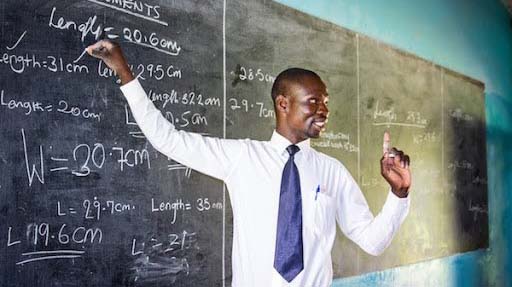
In earlier years, the public service stood as a symbol of national pride and aspiration. It was common for parents and elders to ask children a familiar and hopeful question, “What do you want to be when you grow up?” The expected answers were often anchored in stable and respected careers, police officer, teacher, nurse, soldier, or civil servant. These were not merely jobs; they were institutions of identity, discipline, and societal respect.
Today, that narrative has shifted dramatically.
Across Zimbabwe, the erosion of public sector welfare has quietly but profoundly reshaped how work is perceived. Teachers, nurses, police officers, and soldiers, once pillars of structured employment, now increasingly find themselves supplementing incomes through informal trading, private transport operations, vending, and other survival-driven activities. The line between formal employment and informal livelihood has blurred to the point where job titles no longer reflect economic reality.
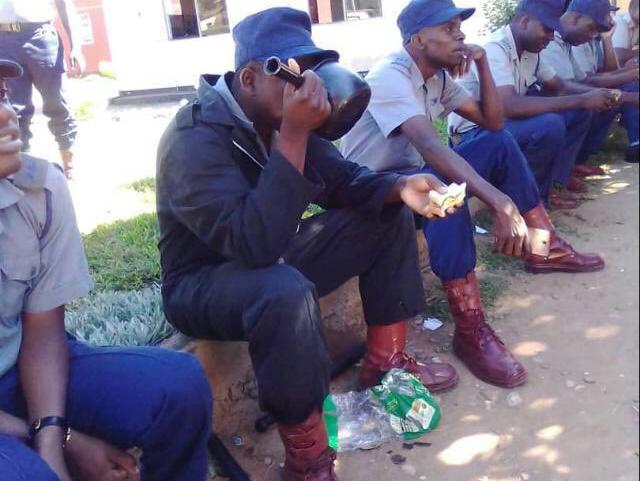
As a result, dignity within the public service has been steadily undermined. The aspiration that once drew young people into classrooms, police academies, and nursing colleges is fading. In its place is a growing sense of disillusionment, where many young Zimbabweans increasingly view public service roles not as opportunities for advancement, but as pathways associated with hardship, corruption risks, or institutional frustration.
The mass exodus of civil servants, into early retirement is a clear sign of frustration and search for greener pastures.
This shift has contributed to the broader informalization of Zimbabwe’s economy. Over the years, the country has witnessed the rapid expansion of informal trading networks, from street vending in central business districts to the dominance of commuter transport systems commonly referred to as mshika-shika and kombis. What some policymakers describe as “economic resilience” or “entrepreneurial growth” is, to many citizens, a reflection of a deeper structural breakdown, one in which formal employment is no longer sufficient to sustain livelihoods.
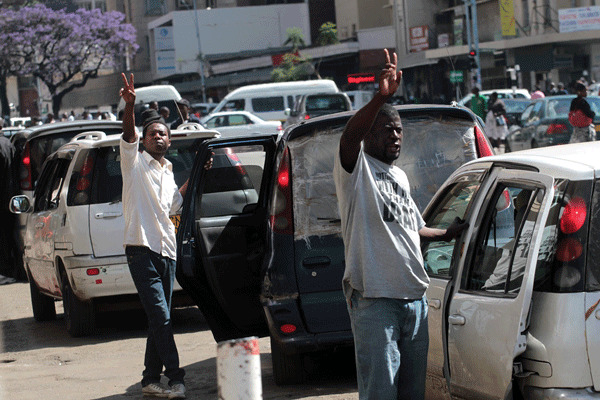
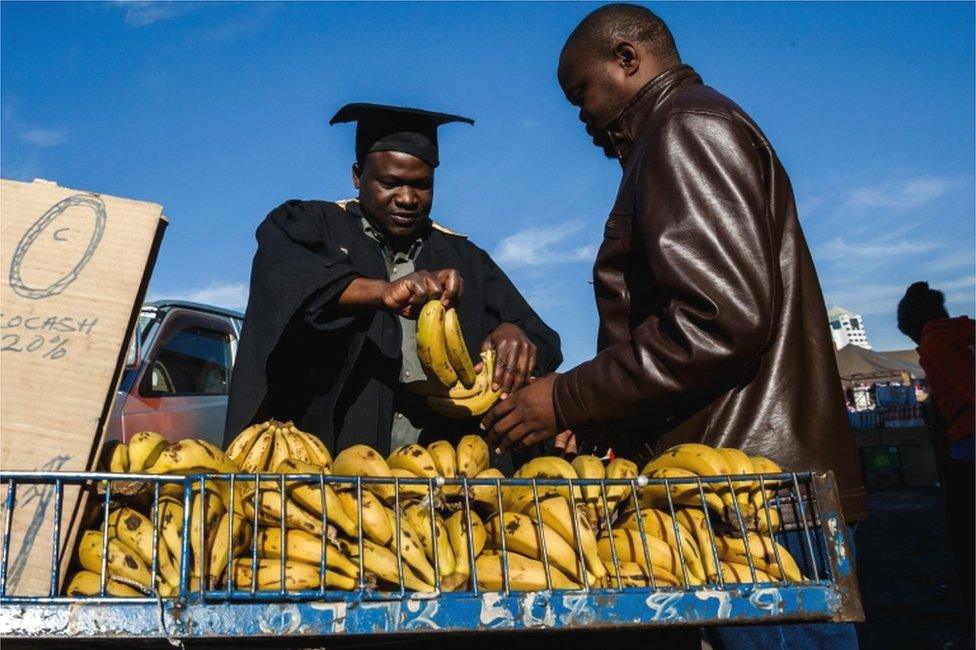
The informal economy has, in many ways, become the default safety net. University graduates, once expected to transition into professional careers, are increasingly finding themselves behind steering wheels, running small cross-border trading ventures, or engaging in currency exchange activities in urban centres. For a growing number of young people, higher education is being re-evaluated not as a guaranteed investment in future stability, but as a costly gamble with uncertain returns.
At the heart of this transformation lies a persistent wage crisis. Economic analyst Vince Musewe told The Post On Sunday that Zimbabwe’s economic structure has deteriorated to the point where survival has become dependent on informal systems that now dominate key sectors.
“The economy is a disaster, and the transport industry has offered relief to many,” Musewe said. “This is an essential sector that is providing means of transport for many. The sector needs better regulation, especially with regards to transport cost and public safety. It must also self-organize to keep high standards. Other countries have effective transport associations which ensure that standards are met and vehicles meet safety requirements. We can also look at transport cost subsidies to ensure affordability. The sector remains a key contributor to the economy while also creating many jobs for our youth.”
His remarks reflect a growing consensus among analysts that while the informal transport sector has become a critical economic lifeline, it also operates in a largely unregulated environment that raises concerns around safety, pricing consistency, and long-term sustainability.
This reality unfolds against the backdrop of ongoing government efforts to restructure public sector remuneration. In a recent salary review exercise, civil servants began receiving revised pay packages, with uniformed forces among the first to benefit from the adjustments. The new salary framework reflects a wide-ranging overhaul intended to realign wages with qualifications, responsibilities, and job grading.
Under the revised structure, entry-level A3 workers are now set to earn between US$370 and US$375, while B-grade employees move up to around US$435. Mid-tier C-grade staff have seen adjustments to approximately US$536, while senior D-grade positions now approach US$900, with top figures reaching around US$897.
Authorities have framed the changes as part of a broader job evaluation exercise aimed at restoring coherence in the public service salary system. The initiative is also being implemented alongside wider economic stabilization efforts, including attempts to strengthen the Zimbabwe Gold (ZiG) currency and introduce supplementary support mechanisms such as housing schemes and vehicle assistance programmes.
Yet despite these interventions, the gap between earnings and the cost of living remains a central concern. For many households, the revised salaries, while improved on paper, still fall short of restoring the purchasing power and stability once associated with formal employment.
The ongoing conflict in the Middle East, which has triggered a surge in international fuel prices, has resulted in a sharp ripple effect across global markets, with the cost of goods and services in many economies effectively doubling in certain instances.
Beyond the external shock of rising energy prices, the crisis has also reshaped the global cost of living landscape. In Zimbabwe, however, attention is increasingly shifting toward internal economic pressures, with analysts pointing to domestic policy choices and fiscal structures as significant contributors to the deepening economic strain.
The growing tax burden, in particular, is being cited as a key pressure point, with many arguing that it has become increasingly misaligned with the income realities of ordinary citizens. As a result, households are finding themselves squeezed between rising prices driven by global shocks and a domestic fiscal environment that many believe exceeds the capacity of the average worker to sustain.
In this evolving economic landscape, Zimbabwe finds itself at a crossroads. The traditional middle class has thinned, the informal economy has expanded, and public service professions are struggling to retain their historical status.
What remains is a society adapting in real time, where survival, rather than stability, has become the defining measure of work, ambition, and economic participation.


More Stories
Retrenchment Axe Hangs Over TelOne
Zimbabwe’s Export Engine Fires Up
Zimbabwe Power Supply Improves as Energy Sector Turns Corner