





Sibanda’s Politburo Appointment Reignites Debate Over Military Influence in Zimbabwean Politics…
By Senior Reporter
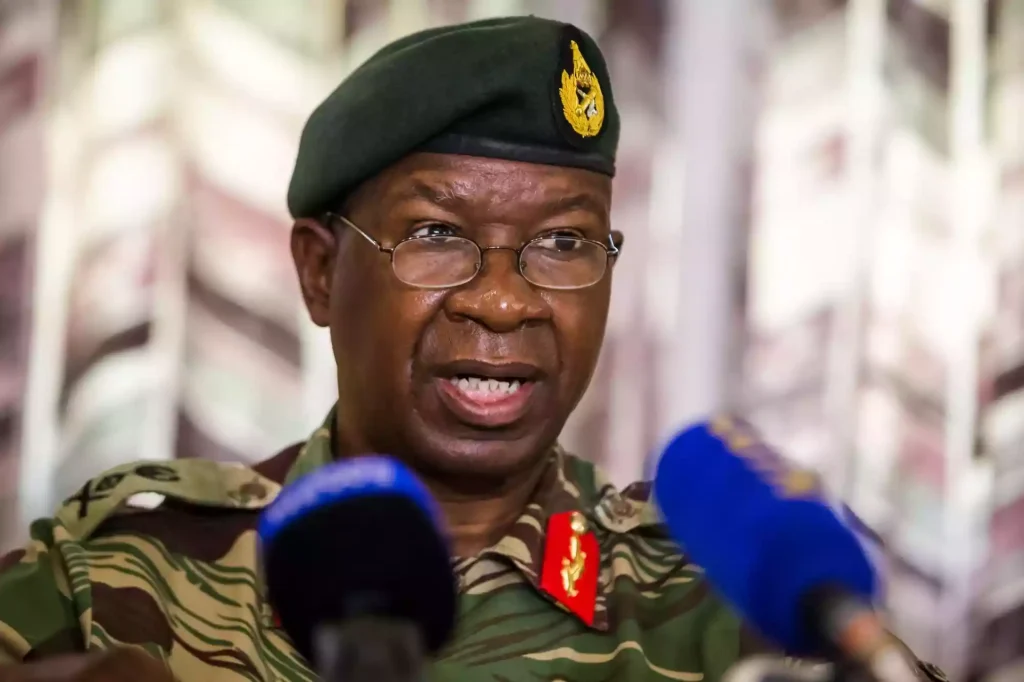
The continued intersection between Zimbabwe’s political leadership, the security establishment, and state institutions has once again come under intense public scrutiny following the appointment of retired military commander Philip Valerio Sibanda to the ruling ZANU PF Politburo by President Emmerson Mnangagwa.
The appointment, which takes immediate effect, has reignited debate over the independence of national institutions and the increasingly blurred lines between the ruling party, the military, and the machinery of the state in Zimbabwe’s post-independence political order.
In an official statement, ZANU PF confirmed that Mnangagwa exercised powers granted to him under the party constitution to elevate General (Rtd) Sibanda into the Politburo, the party’s highest decision-making body outside congress.
“The Zanu PF First Secretary and President of the Republic of Zimbabwe, His Excellency Cde Dr Emmerson Dambudzo Mnangagwa, exercising his mandate in terms of Article 9, Section 65 as read with Section 67 of the Zanu PF Constitution, has appointed General (Rtd) Philip Valerio Sibanda to the Zanu PF Politburo. This appointment is with immediate effect,” the statement read.
Sibanda only recently retired from active military service after serving as commander of the Zimbabwe Defence Forces since 2017, a period that coincided with one of the most defining political moments in Zimbabwe’s modern history, the military-assisted transition that removed former president Robert Mugabe from office and ushered Mnangagwa into power.
A veteran of the liberation struggle, Sibanda has occupied influential positions within Zimbabwe’s security establishment for decades. Before ascending to the command of the Zimbabwe Defence Forces, he served as commander of the Zimbabwe National Army and remained one of the most senior figures within the military hierarchy.
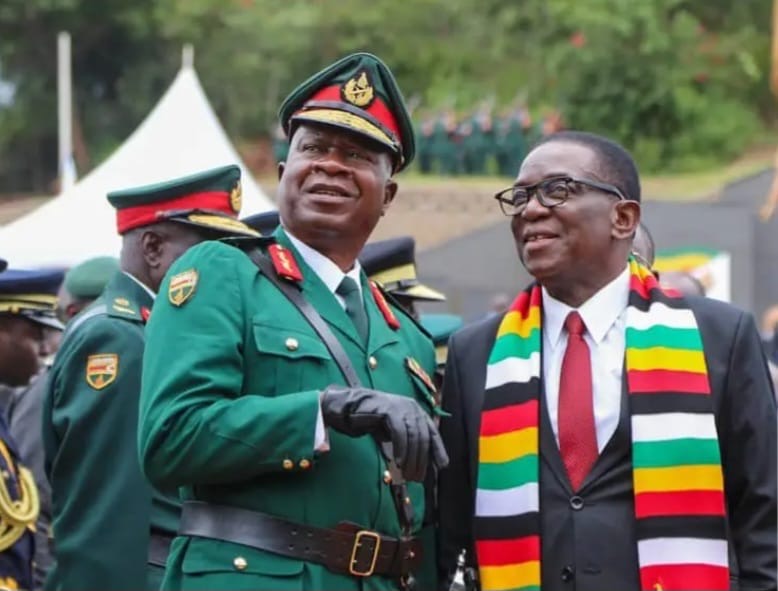
His immediate transition from military commander to a senior political office within the ruling party has once again raised difficult constitutional and political questions regarding the neutrality of state institutions, particularly the military, which under Zimbabwe’s Constitution is expected to remain apolitical and serve all citizens regardless of political affiliation.
Critics argue that the development reinforces long-standing concerns over what they describe as the “capture” of institutions by political interests, with observers increasingly pointing to Parliament, the judiciary, local authorities, and sections of the civil service as examples of institutions whose independence is being eroded.
The debate has also intensified around whether senior public servants and security officials continue to operate as neutral custodians of the state or as active participants in partisan political structures.
For many Zimbabweans, Sibanda’s appointment represents more than just a political promotion. It symbolizes what they see as the deep-rooted historical relationship between the ruling party and the military establishment, a relationship forged during the liberation struggle and sustained throughout Zimbabwe’s post-independence era.
The Politburo itself plays a central role in shaping ZANU PF’s political strategy, policy direction, and governance approach. Sibanda’s inclusion therefore places a recently retired military commander directly at the heart of both party and national political decision-making.
Public reaction to the appointment has been swift and sharply divided.
On social media platform X, user Collen Chikore wrote: “President Emmerson Mnangagwa lining up the pawns for his chess board. Do not be fooled Zimbabwe.”
Another commentator, identified as @Droid, suggested the appointment could signal further political and institutional shifts within government circles, posting: “It’s coming out exactly as the rumours have been saying, next Mohadi retires.”
Others, however, welcomed the appointment, congratulating Sibanda and describing him as a disciplined liberation war veteran whose experience and strategic expertise could continue serving the nation in political leadership.
Political analysts say the controversy surrounding the appointment reflects broader anxieties within Zimbabwean society about power, succession politics, institutional independence, and the enduring role of the military in governance.
Lecturer, writer, and political analyst Alexander Rusero told The Post On Sunday that many Zimbabweans and sections of the media were approaching the issue from what he described as a simplistic or overly Western perspective of civil-military relations.
“I think Zimbabweans are not naive, neither is the media supposed to be naive,” Rusero said.
“So when you look at the appointment of General Philip Valerio Sibanda, it’s a noble appointment, so to speak. We are talking about a political party that was midwifed by military outfits in the form of ZANLA and ZIPRA. That puts the debate to rest.”
Rusero argued that Zimbabwe’s political and military structures cannot be understood outside the country’s liberation history, saying the military itself emerged directly from liberation movements linked to ZANU and ZAPU.
“We are still in the immediate post-colony in Zimbabwe to the extent that neoliberal lenses, perceptions and approaches, especially with regards to civilian-military politics, do not suffice and do not apply in Africa,” he said.
According to Rusero, many liberation war commanders have always existed within political spaces, even while serving in military structures.
“We are talking about ZANLA and ZIPRA being liberation forces of liberation movements ZANU and ZAPU, and they so happen to be in power,” he explained.
“So to question why somebody who has retired from the army is now in politics, I think it’s naivety, because these are the same people who were ZANLA and ZIPRA. They are just crossing from one square to the other.”
Rusero further argued that military commanders of Sibanda’s stature are rarely expected to disappear from national leadership structures after retirement.
“It doesn’t happen that such a commander retires and starts loitering around or goes to the farm. It has never happened anyway, including in the United States and Britain,” he said.
“These are the same people you see sitting in the House of Lords or in Congress. You retire them somewhere else where their expertise, their experience, and more importantly their strategic gravitas is required.”
The analyst also dismissed speculation linking Sibanda’s appointment to succession politics within ZANU PF, describing much of the public discourse as fueled by political uncertainty and the absence of a strong opposition.
“Normally such an atmosphere develops when you have a decimated opposition, when you have an incidental and scattered opposition, as is the case,” Rusero said.
“So whenever you do not have a real alternative to the ruling party, there is creation of a void. Minus a vibrant opposition, you hear these talks of possibilities of coups, succession dynamics, internal fights in ZANU PF, which for most of the time are just storms brewing in a teacup.”
He argued that the appointment was in fact a correction of an earlier constitutional complication after Mnangagwa had initially attempted to appoint Sibanda while he was still serving as commander of the Zimbabwe Defence Forces.
“This was just a matter of timing,” Rusero said. “Now the Commander Defence Forces is no longer the Commander Defence Forces, so why not graduate him into another service?”
According to Rusero, Zimbabwe’s liberation history and governance architecture make the participation of former military figures in politics almost inevitable.
“I see a political party that genuinely believes in the service of the men and women in uniform to be part and parcel of Zimbabwe’s governance architecture,” he said.
The appointment comes at a time when Zimbabwe continues to grapple with deep economic and political challenges, rising public frustration over governance and corruption allegations, and ongoing debates over democratic reform and institutional accountability.
Against this backdrop, the transition of senior military officials into political office is likely to remain a contentious issue, one that continues to shape conversations around constitutionalism, civil-military relations, succession politics, and the future direction of Zimbabwe’s governance system under the Mnangagwa administration.



More Stories
AHF calls for African countries to unite against debt crisis
Pensioners Left Waiting As Billions Sit In Zimbabwe’s Pension Funds
Tax, Trust and Financial Literacy- Zimbabwe’s Long Struggle With the Obligations of a Modern Economy