




Law, Power and Corruption…
By Shingirai Vambe
South Africa’s justice system is increasingly being tested by a sweeping wave of investigations, arrests, and public inquiries targeting corruption, organized crime, and alleged criminal infiltration within state institutions, developments many observers say demonstrate both the resilience and the growing strain of the country’s democratic institutions.
Over the past two years, South Africa has witnessed an intensified push by law enforcement agencies and judicial bodies to confront allegations of state capture, corruption, and criminal syndicates believed to be operating within powerful political, business, and security networks.
The developments have unfolded amid rising public concern over organized crime, political interference, and allegations that criminal cartels have penetrated parts of the state security apparatus itself.
At the center of the latest anti-corruption momentum is the ongoing commission led by Acting Deputy Chief Justice Mbuyiseli Madlanga, established following explosive allegations made by KwaZulu-Natal Police Commissioner Nhlanhla Mkhwanazi regarding criminality, political interference, and alleged syndicate operations linked to influential figures.
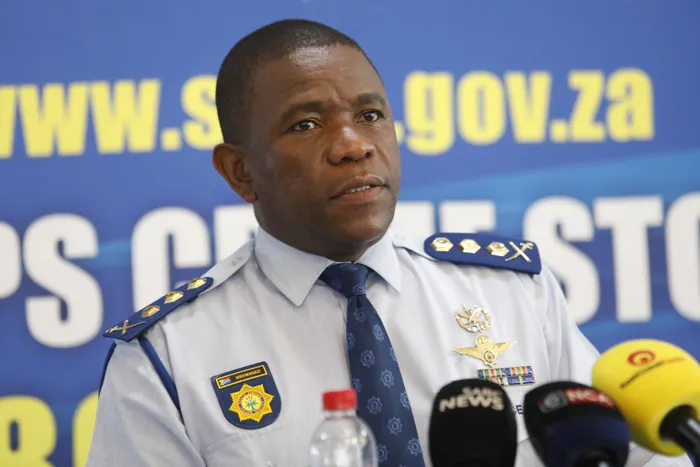
The commission continues to investigate claims that organized criminal networks may have developed relationships with individuals connected to political and security structures, further deepening national anxiety over the integrity of law enforcement institutions.
At the same time, South African authorities have continued arresting prominent figures linked to corruption, extortion, and organized criminal activities, including high-ranking police officials and influential businesspeople.
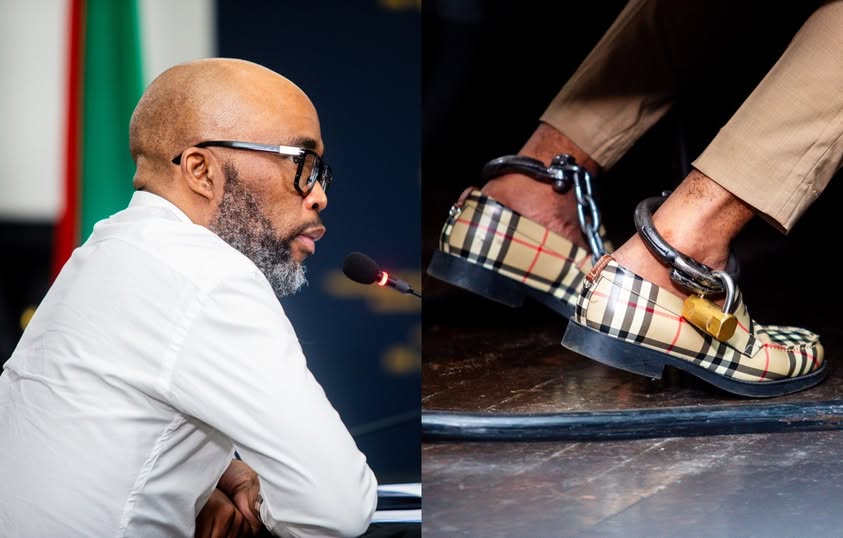
In one of the latest developments, former Hawks head Ebrahim Kadwa and Crime Intelligence boss Feroz Khan appeared in court alongside security company owner Tariq Daniels.
The trio is linked to investigations surrounding a 2021 seizure of unwrought gold valued at approximately R62 million at OR Tambo International Airport.
Their arrests have once again placed South Africa’s crime intelligence structures under intense scrutiny, with critics warning of weak oversight mechanisms, internal corruption, and deteriorating accountability within specialized law enforcement units.
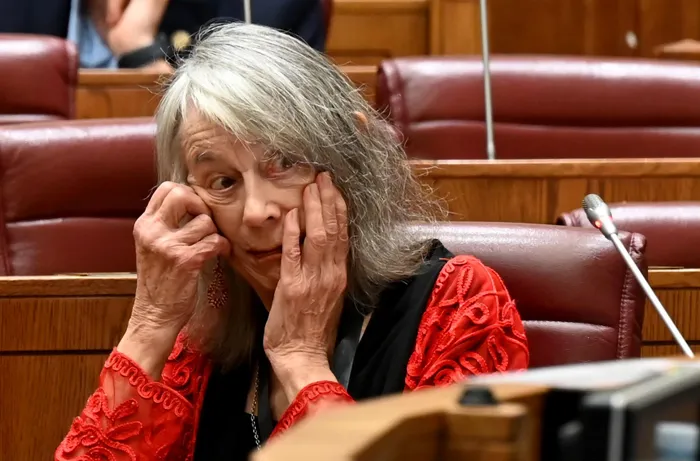
KwaZulu-Natal violence monitor and analyst Mary de Haas described the allegations as deeply troubling and reflective of broader institutional failures.
“What worries me most about this is that there’s no oversight of what these people are doing at the moment,” De Haas said.
She argued that the latest arrests were not isolated incidents, but evidence of a much deeper crisis within crime intelligence structures.
“There’s a very, very deep problem in crime intelligence,” she warned. “If you destroy crime intelligence, you’re never going to deal with crime.”
De Haas further alleged that parts of the intelligence system had effectively been “captured by crooks,” while experienced and competent officers had been sidelined or suspended.
Her remarks also highlighted growing concerns over weakened accountability structures, particularly following the suspension of the Inspector-General of Intelligence, a development some analysts say removed a critical oversight mechanism.
The arrests have intensified pressure on the South African government to explain how alleged criminal networks were allowed to operate within senior law enforcement structures for years without detection or intervention.
Public trust in policing institutions has continued to decline amid recurring allegations of corruption, political interference, illegal searches, intimidation, and criminal infiltration within the police service.
De Haas questioned why stronger intervention had not emerged from Parliament, the Police Ministry, and other oversight institutions.
“Without political will and without stronger action by Parliament, I don’t know what we’re going to do,” she said.
The crackdown has also extended beyond police structures.
Prominent taxi boss Joe Sibanyoni, widely known as “Ferrari,” recently appeared before the Kwaggafontein Magistrate’s Court alongside co-accused facing extortion-related charges. Authorities allege that the group demanded money from a businessman over an extended period.
Meanwhile, suspended National Police Commissioner Fannie Masemola is expected to appear in court over charges linked to the controversial R228 million Medicare24 tender scandal.
Masemola is set to appear alongside controversial businessman Vusimuzi Matlala, popularly known as “Cat,” and several senior police officials implicated in the case.
These developments have reinforced perceptions that South Africa is entering a critical period of institutional reckoning, where even individuals occupying the highest offices within the security establishment are no longer immune from prosecution and public accountability.
For many observers across the Southern African region, the developments stand in sharp contrast to neighbouring countries where allegations of state capture and institutional compromise continue to dominate political discourse without corresponding legal consequences.
The recent Constitutional Court ruling ordering Parliament to reconsider impeachment proceedings against President Cyril Ramaphosa over the controversial Phala Phala scandal has also been widely interpreted as evidence of the relative independence of South Africa’s judiciary and constitutional institutions.
Although Ramaphosa survived previous political and legal challenges linked to the scandal, the court ruling demonstrated that even sitting presidents remain subject to judicial review and constitutional scrutiny.
For some regional analysts, these developments highlight the widening contrast between South Africa’s institutional responses and governance crises unfolding elsewhere within the Southern African Development Community (SADC).
In Zimbabwe, critics continue to allege that elections have historically been marred by accusations of vote rigging, state-sponsored violence, abductions, and security sector interference, allegations that have contributed to decades of political and economic instability.
As a consequence, millions of Zimbabweans, both documented and undocumented, have migrated to South Africa and other neighboring countries in search of economic opportunities, political stability, and improved living conditions.
Estimates suggest that more than two million Zimbabweans currently reside in South Africa alone, a situation that has increasingly fueled social tensions and anti-immigrant sentiment within some South African communities.
As South Africa strengthens immigration enforcement and intensifies operations targeting undocumented migrants, calls have grown louder from some local groups demanding that undocumented foreign nationals return to their countries of origin.
This growing pressure has simultaneously exposed broader regional governance failures within SADC, particularly regarding unresolved political crises, economic collapse, and governance challenges that continue driving migration across borders.
While South Africa’s institutions are increasingly showing willingness to investigate and prosecute individuals linked to corruption and organized crime, including senior security officials, analysts warn that the country itself remains deeply vulnerable to criminal infiltration, institutional erosion, and political instability if reforms fail to keep pace with the scale of the crisis.
However, the arrests, commissions of inquiry, and court rulings unfolding across South Africa are being viewed by many as signs of a democracy still attempting to assert accountability, constitutionalism, and the rule of law, even as it battles entrenched corruption and organized criminal networks operating dangerously close to the centers of power.


More Stories
Marital Feud Escalates Into Gun Drama in Rusape
Zimbabwe’s Export Engine Fires Up
Southern Africa Rethinks Energy Security as Zimbabwe Pushes Regional Power Integration