



By Shingirai Vambe
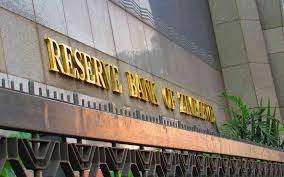
In a move that underscores growing private sector concern over Zimbabwe’s monetary direction, the CEO Africa Roundtable (CEOART) has formally engaged the Governor of the Reserve Bank of Zimbabwe (RBZ), John Mushayavanhu, seeking urgent dialogue on what it describes as structural weaknesses in the country’s monetary architecture.
The engagement comes ahead of the forthcoming Monetary Policy Statement (MPS), at a time when business leaders say macroeconomic stability remains fragile, confidence-sensitive and heavily dependent on the United States dollar rather than endogenous strength in domestic monetary instruments.
In its detailed submission, CEOART acknowledged the RBZ’s willingness to open consultation channels with industry and commerce. However, it cautioned that Zimbabwe’s current price stability should not be mistaken for deep-rooted monetary resilience.
According to the Roundtable, the present calm in inflation and exchange rate volatility is sustained primarily by a de facto multicurrency regime, essentially, the anchoring effect of the US dollar.
This, they argue, is not structural strength but a transitional arrangement compensating for years of policy reversals, savings erosion and exchange losses that severely damaged public trust in domestic currency systems.
In that context, CEOART warned that even subtle or implied signaling toward accelerated dedollarisation could destabilize expectations.
“Policy signaling toward premature depolarisation introduces forward-looking currency risk,” the submission notes, arguing that such signals encourage defensive dollarisation, precautionary portfolio behaviour and reduced appetite for local currency exposure.
The message to the central bank is clear: preserve the multicurrency framework as a stabilizing anchor while rebuilding credibility in domestic monetary instruments, not the other way around.
Zimbabwe’s economic actors remain highly sensitive to currency regime shifts. The scars of past transitions, from hyperinflation to bond notes to abrupt currency conversions, remain fresh.
CEOART cautioned that any dedollarisation perceived as administratively driven rather than confidence-led could trigger, intensified currency substitution, liquidity segmentation, parallel market expansion, reduced demand for local currency instruments and shortened asset duration preferences.
In simple terms, if businesses and households believe that currency changes are being forced without adequate trust-building, they will respond defensively, by holding more US dollars, externalising savings, and limiting long-term investments.
The Roundtable urged the RBZ to adopt what it termed a “performance-based convergence framework,” where domestic currency credibility is earned through consistency and stability, rather than enforced through administrative timelines.
Beyond currency concerns, CEOART painted a stark picture of Zimbabwe’s evolving economic structure: a progressively informalised, cash-intensive ecosystem where a significant volume of transactions occurs outside the formal banking system.
High currency circulation outside banks, weak deposit mobilisation, externalised savings and parallel pricing frameworks are now entrenched features of the economy.

The burden of regulation and taxation, the Roundtable argued, falls disproportionately on the shrinking formal sector.
This imbalance is producing predictable consequences such as rational migration toward informality, contraction of the formal tax base, weak monetary policy transmission and reduced financial intermediation.
Without structural incentives that make formalisation economically rational, Zimbabwe risks permanent dualisation, a small compliant formal sector carrying the regulatory load, and a dominant informal economy operating beyond policy reach.
One of the most pointed interventions concerned foreign currency surrender requirements imposed on exporters.
While originally justified as a mechanism to build reserves, CEOART warned that surrender requirements are increasingly perceived as quasi-fiscal instruments, especially where surrendered proceeds are not settled immediately.
Where exporters cannot access their funds on demand, the mechanism begins to resemble involuntary state financing rather than reserve management.
The consequences are far-reaching, with implicit taxation of exporters, balance sheet strain, reduced export competitiveness, under-invoicing incentives and externalisation pressures.
CEOART’s position was unequivocal: if the State lacks the capacity to honour surrendered proceeds on call, continued enforcement undermines credibility and ultimately reduces formal foreign currency inflows.
Settlement certainty, transparent accounting and gradual tapering aligned with reserve adequacy were identified as necessary reforms.
The Roundtable also highlighted the heavy sovereign debt burden as a structural constraint on monetary flexibility.
High public financing requirements sustain elevated interest rates, crowd out private sector credit and compress fiscal space.
The result is a structurally tight monetary environment characterised by, high real cost of capital, suppressed mortgage and long-term lending markets and weak domestic savings mobilisation.
In such an environment, monetary easing is not a discretionary choice but a structural impossibility.
Perhaps most alarming for long-term growth prospects is the prohibitive cost of capital.
CEOART observed that formal credit has become largely unviable for productive sector expansion. Long-tenor lending has collapsed, corporates increasingly self-finance, and cash-based settlement ecosystems are expanding.
This signals structural financial disintermediation, where banks lose relevance in capital formation and monetary policy transmission weakens.
Without targeted financing frameworks for productive sectors, capital formation will remain constrained and industrial growth stunted.
The Roundtable warned that durable macroeconomic stability cannot exist without close alignment between fiscal and monetary policy.
Any perceived divergence between fiscal expansion, debt issuance, currency management and monetary tightening cycles generates signaling ambiguity, elevated risk premiums and shortened investment horizons.
Zimbabwe’s macroeconomic architecture, they argued, demands synchronized policy signaling to sustain credibility.
In closing, CEOART outlined strategic imperatives for transitioning from fragile to durable stability, to preserve the multicurrency system as the operative anchor and eliminate coercive or implied dedollarisation timelines, to incentivise formalisation and rebalance the tax burden and reform surrender requirements around strict credibility, to implement a credible sovereign debt management pathway and reduce the real cost of productive capital and to institutionalise fiscal–monetary congruence so that there could be a reinforce to central bank independence while Deepening structured state–industry dialogue.
Efforts to obtain a comment from Africa Roundtable Chairman Oswel Binha were unsuccessful, as he was not reachable to clarify the RBZ position on the submissions and if they are indeed going to consider the sector’s submission for a viable business environment.
Zimbabwe, as a case study, has historically conducted numerous consultative processes, yet implementation of submitted recommendations has often fallen short. While the latest engagement has been welcomed as a positive step toward economic recovery and stability, there are concerns it could yield little tangible outcome if Government, the Treasury and the central bank fail to incorporate substantive input from industry and commerce, particularly from business owners and chief executive officers who operate at the frontline of the economy.
About The Author


More Stories
Funding and Fertiliser Woes Hit Lowveld Sugar Producers
NEC Agriculture Expands Outreach to Strengthen Industrial Relations
ZWG 54 Million Deployed for Manicaland Road Works