



‘Coup in Motion’
By Staff Reporter
Rising political tensions over proposed constitutional amendments, particularly those linked to the extension of presidential term limits, are beginning to reverberate beyond Zimbabwe’s borders, drawing regional attention and igniting debate both at home and abroad.
What has emerged is a widening confrontation between the State and a growing chorus of dissenting voices, ranging from opposition figures and legal experts to former military personnel and war veterans. Across the region, the issue has triggered demonstrations, including in neighbouring South Africa, where exiled Zimbabwean politicians and activists have sought to internationalize the matter.
At the center of this mounting storm is the proposed Constitutional Amendment Bill, which critics argue seeks to fundamentally alter the balance of power by weakening the electorate’s direct role in choosing national leadership. Former St Mary’s legislator Job Sikhala recently convened a press conference in South Africa, describing the developments in stark and uncompromising terms.
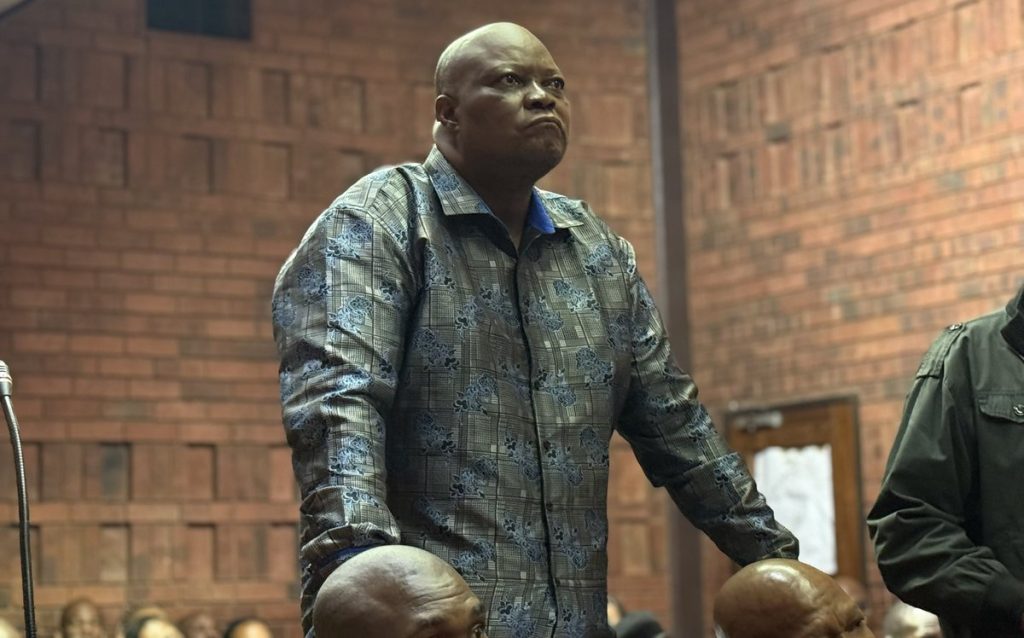
Sikhala characterized the proposed amendments as a “constitutional manipulation” amounting to what he termed a “coup in motion,” arguing that any attempt to extend the tenure of leadership without a referendum undermines the very foundations of democratic governance. Speaking as Chairman of the National Democratic Working Group, he insisted that the process currently unfolding in Zimbabwe represents a deliberate effort to bypass the will of the people.
“The Constitution is clear,” Sikhala argued. “Any extension of term limits must be subjected to a referendum. Avoiding that process is an admission of fear, fear of the people’s verdict.”
His sentiments have found resonance among other influential voices, including within the ranks of former military leadership. Retired Lieutenant General Winston Sigauke Mapuranga publicly broke ranks, delivering a rare and candid critique of the proposed amendments. In a strongly worded statement following a recent politburo meeting, Mapuranga rejected Constitutional Amendment Bill No. 3, describing it as a “constitutional manipulation designed to serve the ambitions of a few at the expense of the many.”
Invoking his oath as a soldier, he declared that his allegiance remained with the Constitution and the people, not with political expediency. He challenged proponents of the amendment to subject it to a national referendum, arguing that only the people, not party structures or intermediaries, should determine the country’s constitutional direction.
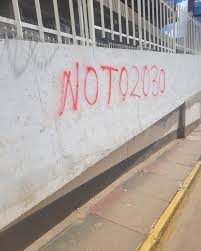
“Zimbabwe belongs to Zimbabweans,” he said. “Not to a committee, not to a faction, and not to a timeline crafted to suit individual ambition.”
Back home, the debate has increasingly spilled into public institutions, including universities. On March 27, 2026, students at Marondera University of Agricultural Sciences and Technology (MUAST) gathered for a consultative engagement involving participants from Kushinga Phikelela Polytechnic and the broader student body. The meeting, centered on the constitutional bill, reportedly included provisions such as catered meals for attendees, an approach critics have likened to past political mobilization tactics associated with election campaigns, dishing out boxes of chicken Inns, while some are being paid to speak positively about this controversial bill.
Reports from parliamentary public consultations conducted across the country suggest overwhelming resistance to the proposed amendments, with local journalists indicating that an estimated 99.9 percent of participants rejected the changes. While these figures remain contested in official circles, they point to a deepening disconnect between policymakers and sections of the public.
Meanwhile, the political climate has grown increasingly charged, with allegations of crackdowns on dissent. Critics claim that opposition members, activists, and civil society leaders have faced arrests, intimidation, and, in some cases, violent attacks. Incidents involving figures such as Tendai Biti and Lovemore Madhuku have further heightened concerns about shrinking democratic space, as calls for open debate are met with increasing resistance.
Months after a brazen act of arson reduced offices linked to the Southern African Political and Economic Series Trust to charred remains in Harare, the silence from the country’s security establishment continues to raise more questions than answers.
The attack, which targeted premises associated with prominent academic and public intellectual Ibbo Mandaza, sent shockwaves across Zimbabwe’s civic and policy community. Known for its role in fostering dialogue on governance, economic reform, and regional integration, SAPES Trust has long stood as a platform for critical engagement, making the incident not just an attack on property, but, many argue, an assault on intellectual discourse itself.
Yet, despite the gravity of the incident, authorities have, to date, failed to identify or apprehend any suspects. The lack of progress in the investigation has left observers baffled, with many questioning how such a high-profile act could remain unresolved in the capital city.
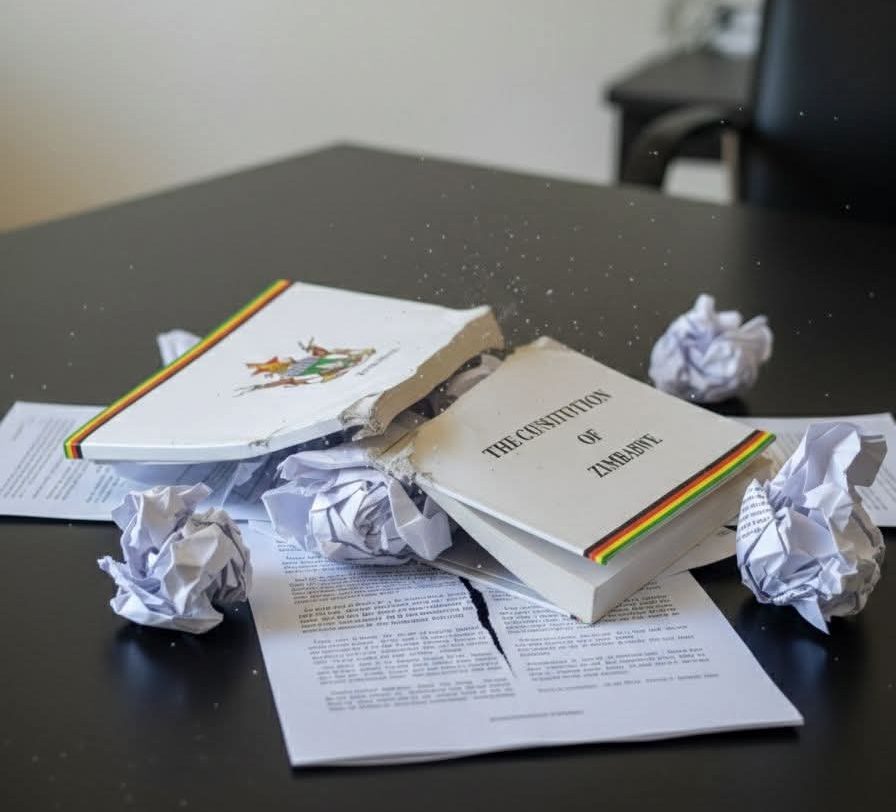
For critics, the situation is as troubling as it is perplexing. In a country where the security sector is often perceived to have extensive surveillance and intelligence capabilities, the inability, or perceived unwillingness, to pinpoint those responsible has been described as both “weird” and “deeply awkward.” The apparent inertia has only fueled speculation, with some interpreting it as a reflection of deeper systemic challenges within law enforcement institutions.
The attack itself came at a time of heightened political sensitivity, further amplifying concerns about shrinking democratic space and the safety of institutions that host alternative viewpoints. SAPES Trust, under Mandaza’s stewardship, has frequently convened discussions that interrogate state policy and governance, positioning it at the center of Zimbabwe’s intellectual and political discourse.
In the aftermath, calls for accountability have grown louder. Civil society actors, analysts, and ordinary citizens alike have demanded transparency in the investigative process, arguing that failure to resolve such cases risks normalizing impunity. For them, the unresolved arson is not an isolated incident, but part of a broader pattern in which acts of intimidation go unpunished.
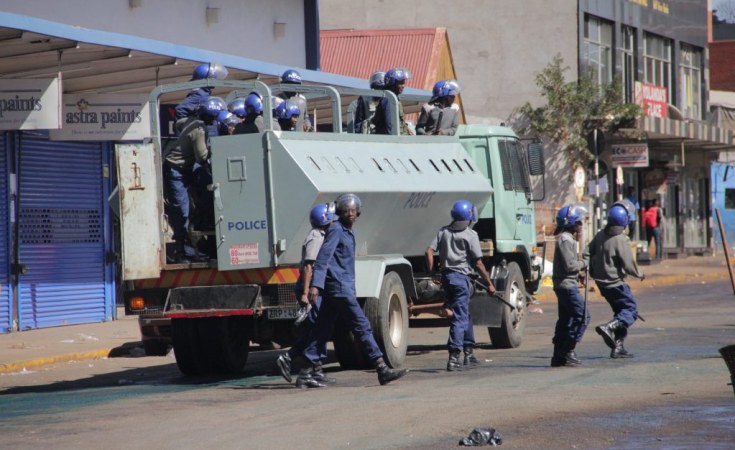
As time passes without answers, the unanswered question lingers, how does an attack of such magnitude, in such a visible location, remain without closure?
For many, the issue is no longer just about identifying the perpetrators. It has evolved into a test of institutional credibility, whether the security sector can demonstrate its capacity and commitment to uphold the rule of law without fear or favor.
Sikhala, in his address, went further to call for regional and continental intervention, urging bodies such as the African Union and the Southern African Development Community to step in and ensure constitutional processes are respected. He warned that failure to address the crisis could deepen instability and erode Zimbabwe’s democratic institutions.
Despite the intensifying rhetoric, the central issue remains unresolved, whether the proposed constitutional changes will proceed through parliamentary processes or be subjected to a referendum as demanded by critics.
Zimbabwe stands at this critical juncture, the unfolding developments reflect more than a legal or political dispute, they speak to broader questions about governance, legitimacy, and the enduring struggle over who ultimately holds power in shaping the nation’s future.


More Stories
Marital Feud Escalates Into Gun Drama in Rusape
Zimbabwe’s Export Engine Fires Up
Southern Africa Rethinks Energy Security as Zimbabwe Pushes Regional Power Integration