



Ghosts of 2008 Resurface as Zimbabwe Edges Toward Another Political Storm..
By Own Correspondent
History, it seems, is circling back with unsettling familiarity for Zimbabweans, as mounting political tensions evoke painful memories of past national crises. The current push by the ruling ZANU-PF to amend the Constitution has triggered widespread anxiety, with many drawing parallels to the violent aftermath of the disputed 2008 elections.
That year remains etched in the country’s collective memory as a defining moment of political turmoil. Following the harmonized elections, the Zimbabwe Electoral Commission withheld presidential results for nearly two months, creating a vacuum of uncertainty that gripped the nation. When results were finally released, Zimbabwe was forced into a tense run-off election.
Opposition leader Morgan Tsvangirai ultimately withdrew from the race, citing a collapse of democratic conditions. While official narratives varied, what became undeniable was the climate of fear that engulfed the country. Reports of abductions, torture, and killings of opposition supporters became widespread. Homes were destroyed, livelihoods shattered, and thousands fled across borders seeking safety.
For many, the events of 2008 were not unprecedented. They echoed an earlier dark chapter in Zimbabwe’s history, the Gukurahundi period between 1982 and 1987, when state-led violence left deep scars in Matabeleland and beyond. Today, critics warn that the country may once again be edging toward a dangerous crossroads.
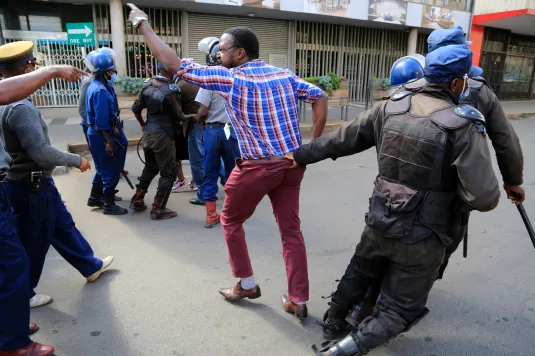
In 2018, people were shot dead with live round in the streets of Harare, following yet another harmonized election, which saw Zimbabweans coming out in numbers, trying to defend the vote.
Transform Zimbabwe leader, Jacob Ngarivhume told the Post on Sunday that ZANU PF is an evil regime that does not listen to the people that uses force against the people.
“We have always said it, institution are captured, ZANU PF collapsed institutions that must be independent. majority of officers used to disrupt meeting for the opposition members have on several occasions confessed, in private conversations the police said they work accordimng to the directive of the party, and they don’t even like,” said Ngarivhume.
“From my own experience, i can tell you that the police who arrested me the last time i was arrested, they came to my house and apologized that they have been sent to do something that they knew was very wrong, they know it, our institutions are compromised and captured and its very regrettable and unacceptable,” added Ngarivhume.
“Citizens must unite, just like during the smith regime and fight for their rights as enshrined in the constitution,” concluded Ngarivhume.
Amalgamated Rural Teachers Union of Zimbabwe (ARTUZ) president, Obert Masaraure told this publication that, it is very unfortunate that the state continues to target people who are opposed to the 2030 agenda.
“If the people are really supporting the amendment of the constitution, then there is no reason whatsoever to target those opposing it,” asked Masaraure.
The latest concerns stem from proposed constitutional changes that critics argue could fundamentally alter Zimbabwe’s democratic framework. Among the contentious proposals are extending the presidential term beyond the current five-year limit, transferring control of the voters’ roll from the Zimbabwe Electoral Commission to the Registrar General’s office, and introducing diaspora voting.
However, it is another alleged proposal, quietly circulating within political corridors, that has sparked the greatest alarm, a plan that could see the election of the President confined solely to Members of Parliament. Critics argue that such a move would effectively strip ordinary citizens of their direct voting power, rendering other electoral reforms meaningless.
As debate intensifies, reports of intimidation and fear are beginning to surface.
The Post On Sunday is reliably informed that David Mukunda, the national chairman of the Parents Teachers Association (PTA), ATUZ, has gone into hiding following a speech he delivered on March 14, 2026. The address, delivered during commemorations linked to International Women’s Day, called on citizens to speak out against Constitutional Amendment Bill No. 3.
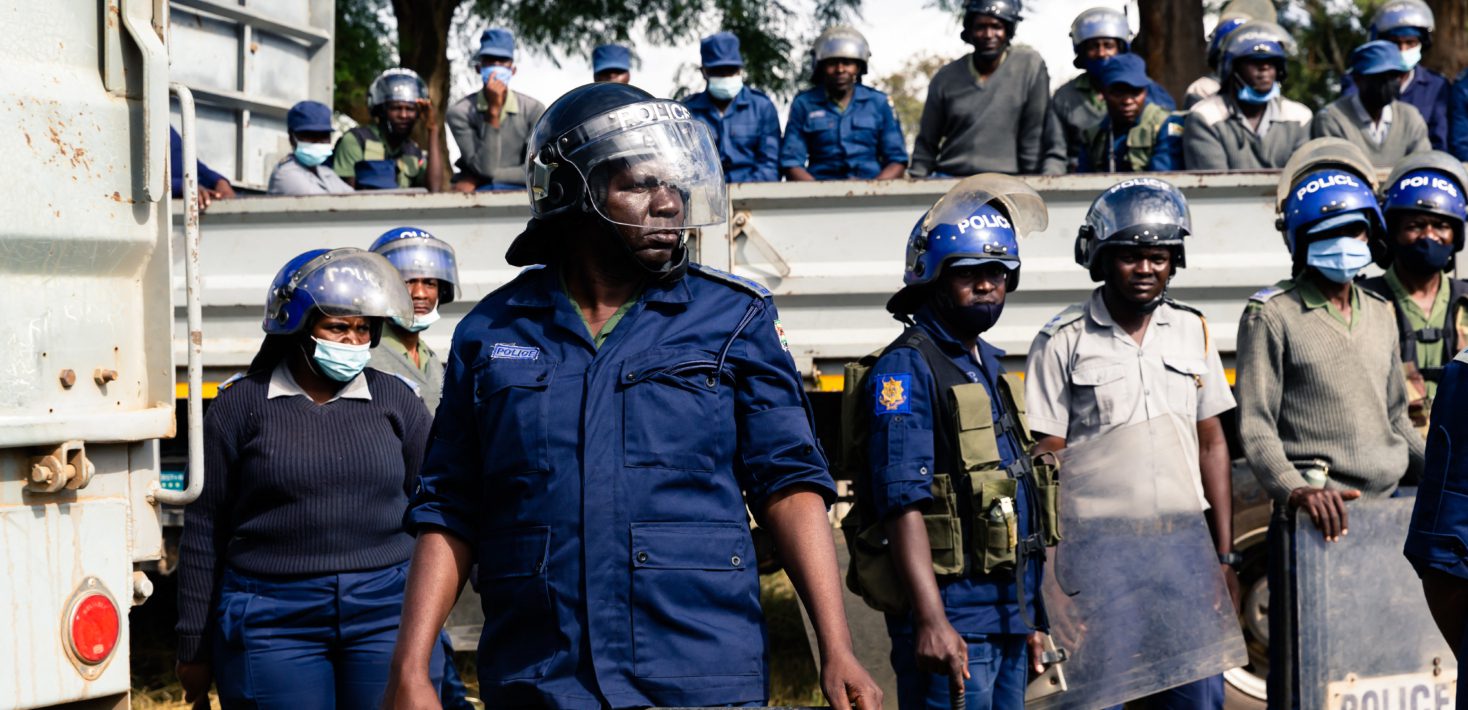
According to Mukunda, shortly after his remarks, a truck carrying police officers, both in uniform and plain clothes, descended on the Zimbabwe Congress of Trade Unions offices in Mutare. The officers reportedly conducted a search operation, interrogating staff and demanding information on his whereabouts.
In an interview, Mukunda revealed that he is not alone. “Many people are now in hiding. Others have already fled the country,” he said, describing an atmosphere of growing fear as pressure surrounding the constitutional amendments intensifies.
His claims are echoed by other recent developments. Former Finance Minister Tendai Biti was recently arrested and detained for two nights in Mutare, while constitutional lawyer Lovemore Madhuku and his associates were reportedly subjected to violent attacks. Observers say such incidents point to an increasingly constrained political environment, even as authorities maintain a measured public posture.
Yet, the unfolding crisis is not confined to the opposition. Signs of internal strain are beginning to emerge within ZANU-PF itself. War veterans and former military figures, long regarded as pillars of the ruling establishment, have reportedly voiced unease over the proposed constitutional changes, signaling potential fractures within the party’s ranks.
Political analyst, Jealousy Mawarire suggest that these divisions could prove significant. Historically, dissent within the ruling party has often preceded major political shifts, though it remains unclear whether the current tensions will translate into meaningful resistance.
For ordinary Zimbabweans, however, the stakes are deeply personal. The memories of 2008, and before that, Gukurahundi, serve as reminders of how quickly political disputes can escalate into national crises.
As the debate over Constitutional Amendment Bill No. 3 continues, the country finds itself once again navigating a precarious path.
Whether Zimbabwe can avoid repeating its past, or is destined to relive it, may depend on how the coming weeks unfold.


More Stories
Marital Feud Escalates Into Gun Drama in Rusape
Zimbabwe’s Export Engine Fires Up
Southern Africa Rethinks Energy Security as Zimbabwe Pushes Regional Power Integration