




A Policy Failure Waiting for the Next Disaster?
By Shingirai Vambe
Insurance is supposed to serve one of the most fundamental purposes in any functioning economy: protecting individuals, businesses and institutions against losses arising from events that cannot always be predicted or prevented.
Whether it is an accident, illness, death, fire, theft, natural disaster or damage to valuable property, insurance exists to transfer risk from the individual or institution to an insurer, allowing the affected party to recover financially without being forced to shoulder the entire burden alone.
Yet the unfolding tragedy at Lake Kariba has exposed a troubling contradiction in Zimbabwe’s approach to insurance, a country that continues to encourage citizens and businesses to insure themselves appears to have left some of its own critical public assets exposed to exactly the risks it expects the private sector to guard against.
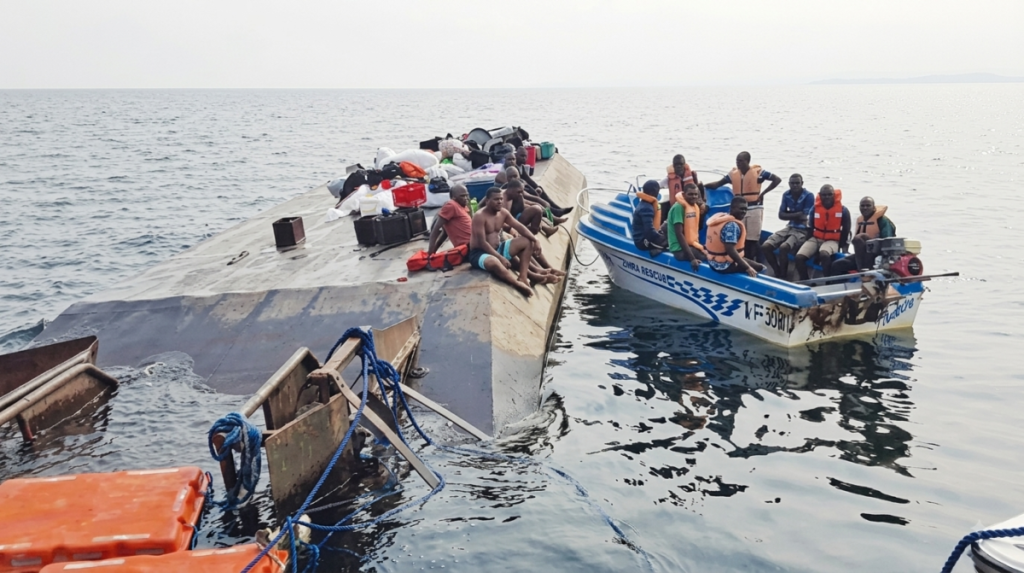
The capsizing of the Mbuya Nehanda ferry on Friday afternoon, in which close to 100 people have reportedly been recovered and confirmed dead, has brought the issue of public asset insurance sharply into focus.
The tragedy is not only a devastating human loss. It has also raised serious questions about risk management, accountability and whether public institutions are adequately protecting assets that belong to the State and, ultimately, the people of Zimbabwe.
The Post On Sunday is reliably informed that the Mbuya Nehanda ferry was not insured at the time of the disaster, a position reportedly confirmed by the Insurance Council of Zimbabwe.
That revelation is particularly difficult to reconcile with the nature of the asset and the business it was undertaking.
The ferry operates in one of Zimbabwe’s major tourism destinations and carries passengers and goods across Lake Kariba, an environment where risks associated with water transport are inherently significant. The vessel, understood to have been operating on the lake for more than three decades, was reportedly generating revenue from passengers and cargo.
Yet despite the income generated from its operations and the obvious risks associated with transporting people and goods on one of Africa’s largest man-made lakes, the vessel was apparently operating without insurance cover.
The question now is simple but uncomfortable; if Government expects ordinary citizens, companies and tourism operators to insure their assets, why was a public ferry carrying passengers and goods apparently allowed to operate without adequate insurance protection?
The issue becomes even more significant because the State has spent years urging the private sector to embrace insurance as a critical component of responsible business.
Insurance companies collect substantial premiums from individuals, companies and institutions across the country. Some of those policies will never result in claims because the insured events never occur.
That is, in fact, how the insurance model is designed to work.
But where an asset carries a substantial and foreseeable risk, insurance should not be viewed merely as an additional cost. It is a risk-management mechanism designed to protect both the asset owner and the wider economy from potentially devastating financial consequences.
The Kariba tragedy demonstrates what happens when that principle is not adequately applied.
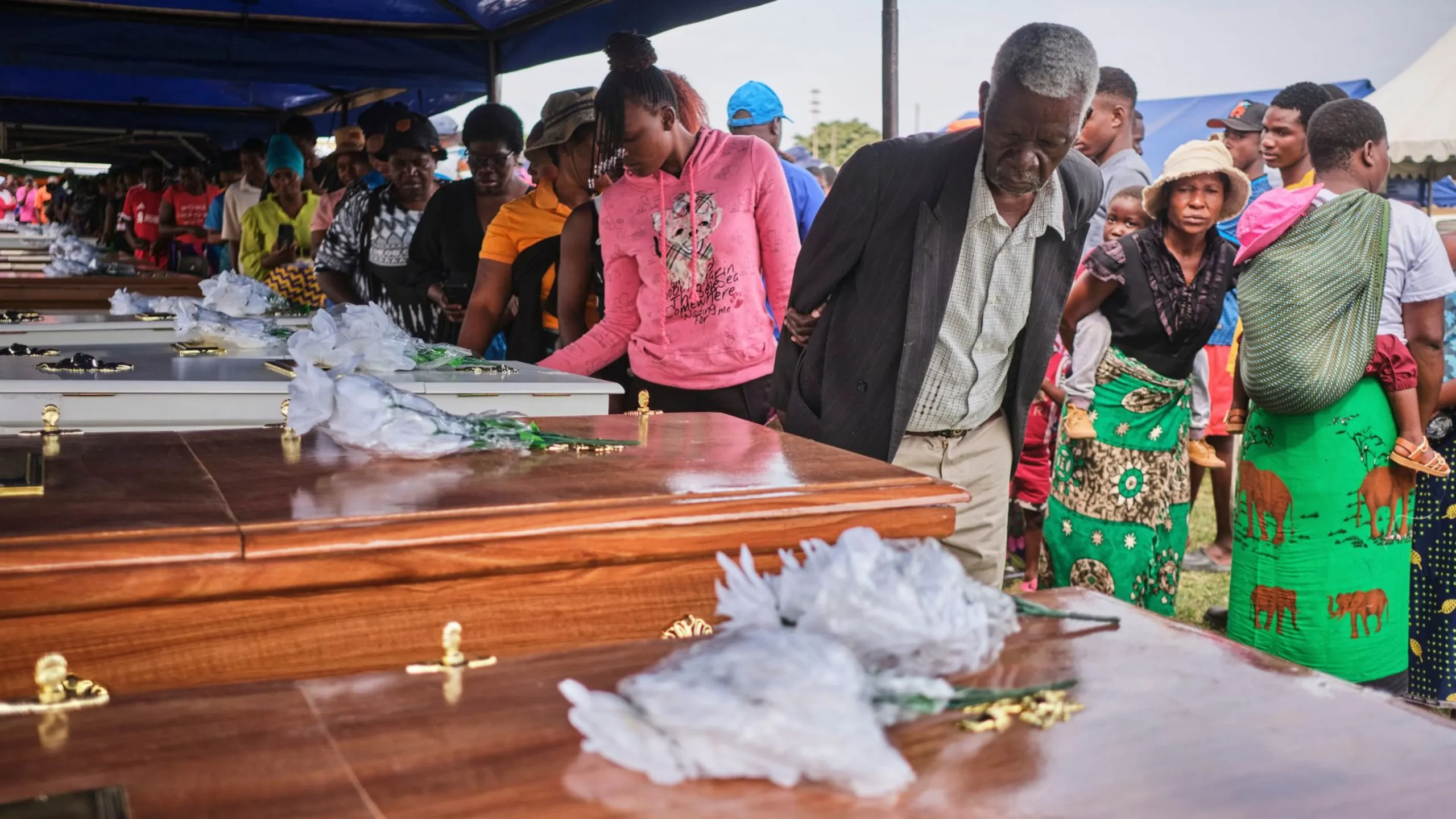
The immediate human cost cannot be measured in monetary terms. Families have lost relatives, communities have been traumatised and questions surrounding the safety of water transport are likely to persist for years.
But there is also a financial dimension.
Government has already been reported to have offered compensation of about US$100 to victims or affected families, raising further questions about whether such assistance represents meaningful compensation for people who may have lost relatives, livelihoods, goods and other valuable possessions.
The tragedy has therefore exposed what appears to be a much broader weakness in Zimbabwe’s public-sector risk management.
It is not only about the Mbuya Nehanda.
It is about whether Zimbabwe has a comprehensive system for identifying, valuing and insuring the billions of dollars’ worth of public assets spread across ministries, local authorities, State-owned enterprises, parastatals and public institutions.
For years, the insurance industry has argued that public assets must be adequately protected because disasters can impose enormous costs on the fiscus.
Earlier this year, the Insurance and Pensions Commission (IPEC) made precisely this argument during consultations on public asset insurance.
IPEC Commissioner Dr Grace Muradzikwa described the insurance of public assets as a matter of national interest, warning that inadequate insurance exposes Government to unexpected fiscal shocks whenever disasters occur.
Her argument was straightforward, where a public asset is properly insured, an insurer bears the financial burden of an insured loss rather than Treasury having to divert scarce public resources towards reconstruction, repairs or replacement.
“When public assets are insured, it is the insurer that compensates for losses arising from insured events, rather than Government having to divert scarce public resources for repairs and replacement,” Dr Muradzikwa said.
That warning now appears particularly relevant in the aftermath of the Kariba tragedy.
Zimbabwe has invested heavily in infrastructure and public assets over the years, from roads and bridges to schools, hospitals, power infrastructure, vehicles, aircraft, water infrastructure and tourism facilities.
Yet if these assets are not adequately insured, a disaster can quickly turn into a major fiscal liability.
The issue was also acknowledged by Government during a consultative meeting held on February 13, 2026.
Chief Accountant in the Accountant General’s Department of the Ministry of Finance, Mr Wellington Havadi, acknowledged that insurance provides Government with an important mechanism for transferring risk.
He noted that the cost of repairing and maintaining public assets following damage can be considerably higher than the cost of obtaining appropriate insurance.
Havadi cited the devastating impact of Cyclone Idai in Chimanimani in 2019 as an example of the financial burden Government can face when disasters cause extensive damage to public infrastructure.
The lesson from Cyclone Idai should have been clear, disasters do not wait for Treasury to find money.
They happen first. The bill comes afterwards.
And when public assets are uninsured or inadequately insured, taxpayers ultimately carry the burden.
Government had, at the February meeting, indicated its willingness to consider proposals from the insurance industry on how an effective public asset insurance framework could be structured.
The meeting formed part of broader efforts to implement the National Development Strategy 2 and strengthen cooperation between Government, regulators and the insurance sector.
Stakeholders also agreed to establish a multi-stakeholder working group involving IPEC, the Ministry of Finance and the insurance industry to drive implementation of public asset insurance.

The objective was to create a coordinated national approach that would protect public investments, strengthen fiscal resilience and reduce the financial impact of disasters.
But the Kariba disaster now raises a critical question, how far has that process gone, and why are major public assets still apparently exposed to significant risks?
The issue is particularly important for Zimbabwe’s tourism industry.
Kariba is not simply a local transport destination. It is one of the country’s major tourism assets, attracting domestic and international visitors and supporting thousands of livelihoods in hospitality, transport, fishing and related businesses.
Tourism operators in Victoria Falls have previously raised concerns about the cost of doing business, including insurance premiums for high-risk operations such as helicopters.
For businesses operating in environments where accidents can have catastrophic consequences, insurance can represent a significant operational expense.
But that concern also exposes another uncomfortable contradiction.
If private operators are expected to absorb high insurance costs as part of the cost of doing business, should public operators be exempt from the same principle?
The answer should arguably be no.
The age of the Mbuya Nehanda should, if anything, have strengthened the case for comprehensive insurance rather than weakened it.
A vessel that has been operating for decades on a large body of water should be subjected to rigorous safety assessments, regular maintenance and appropriate insurance protection.
Age alone does not make an asset uninsurable, Instead, it makes proper risk assessment even more important.
The tragedy should therefore prompt Government to undertake a comprehensive audit of all public assets that carry significant operational risks.
That audit should establish what is insured, what is not insured, the value of the assets, the level of cover, exclusions contained in policies, and whether premiums are being paid consistently.
It should also establish who is responsible for ensuring that public assets remain adequately insured. The absence of insurance should never become an administrative oversight. And where insurance is considered too expensive, Government must ask a different question, can the country afford not to insure?
The experience of natural disasters, accidents and infrastructure failures suggests that the answer may be even more expensive. Zimbabwe cannot continue encouraging citizens to insure their vehicles, homes, businesses and lives while leaving valuable public assets exposed.
The Mbuya Nehanda tragedy should therefore be more than another national disaster followed by condolences, compensation and investigations. It should become a turning point in how Zimbabwe manages public risk.
The country needs a culture in which insurance is regarded not as an unnecessary expense but as part of responsible public financial management.
As Government pursues fiscal discipline, infrastructure development and the objectives of NDS2, protecting existing assets should be treated with the same seriousness as building new ones.
The Kariba tragedy has brought the issue into painful focus.



More Stories
Retrenchment Axe Hangs Over TelOne
Marital Feud Escalates Into Gun Drama in Rusape
Zimbabwe’s Export Engine Fires Up