





Cold Weather, Warm Dreams…
By Shingirai Vambe
A cold and cloudy Bulawayo morning, heavy with the promise of rain, set the tone for Zimbabwe’s 2026 International Girls in ICT Day commemorations at the National University of Science and Technology, where more than 1,200 girls from across Matabeleland Province gathered to celebrate technology, innovation, and the growing role of young women in shaping the country’s digital future.
As winter slowly tightened its grip, girls wrapped in coats, scarves, jackets and school jerseys streamed into the university campus, their excitement cutting through the chilly weather. Bulawayo, a city more commonly associated with scorching temperatures, wore an unusually cold face as buses carrying students from schools across the province arrived at the venue from the early hours of the morning.
Inside the university’s main auditorium, the atmosphere was electric.
Large branded banners and colorful pop-up displays from major telecommunications companies including NetOne, Econet Wireless Zimbabwe, Telecel Zimbabwe, TelOne and Dandemutande transformed the auditorium into a vibrant digital exhibition centre.
Towering over the venue was a carefully designed backdrop carrying the branding of the event convener, the Postal and Telecommunications Regulatory Authority of Zimbabwe (POTRAZ), whose strong visual presence reflected the regulator’s growing influence in Zimbabwe’s digital transformation agenda.
Among the excited students moving around the auditorium was young form 1 pupil, Sukuluhle Ncube, from Mpopoma High School.
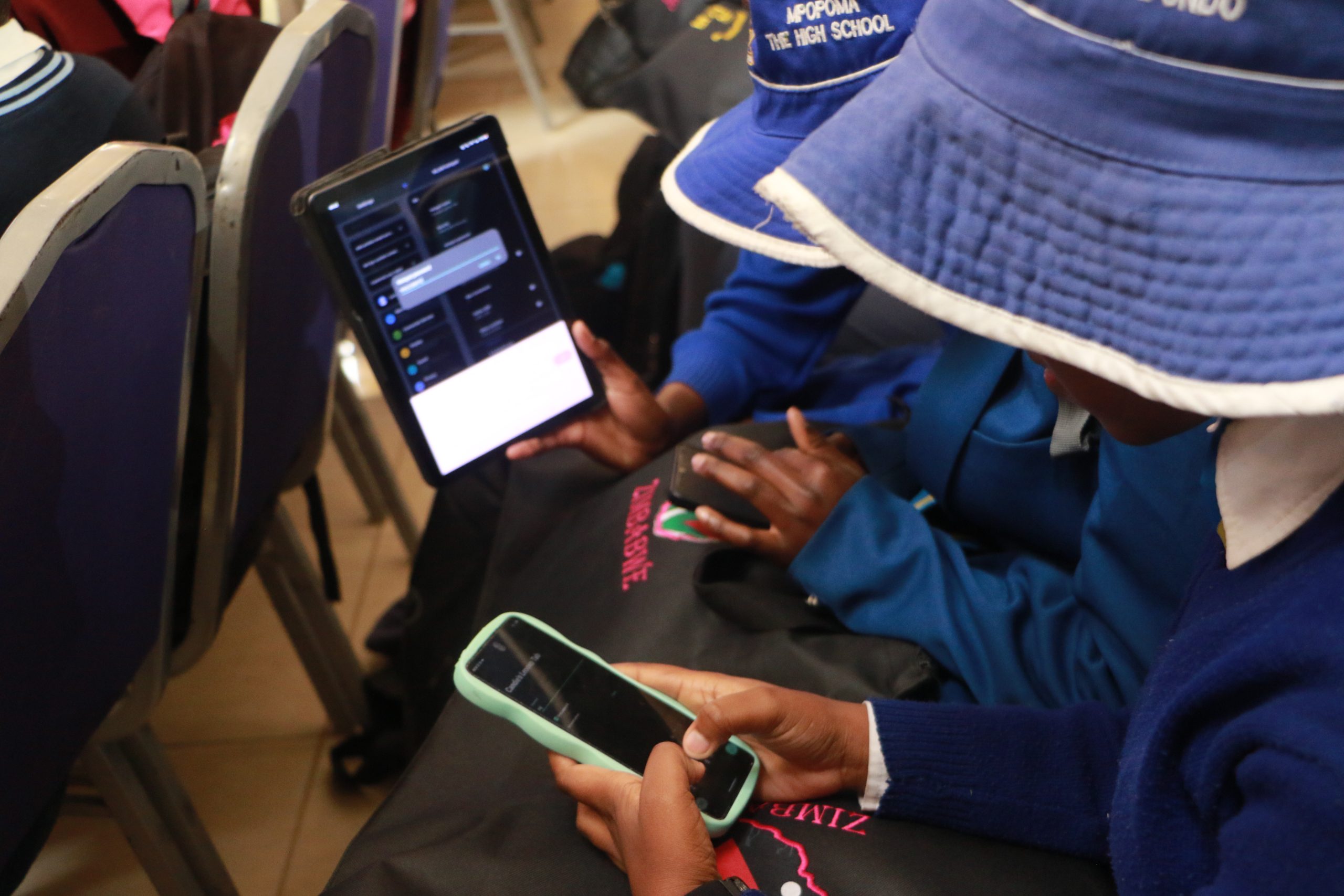
Holding a Huawei tablet tightly in her hands, Sukuluhle smiled continuously as she recorded videos, took selfies and captured photographs of the proceedings around her. Seated on the third row alongside two of her classmates, she appeared completely immersed in the digital environment unfolding before her.
For Sukuluhle and many of the girls attending the commemorations, navigating smartphones, tablets and computers appeared effortless. The familiarity with digital tools among the younger generation was unmistakable.
Operating gadgets, taking pictures, recording videos and accessing digital content has become second nature for many young Zimbabweans growing up in an increasingly connected world.
Yet beneath the excitement and technological confidence lies a deeper reality, access remains unequal.
While Zimbabwe has made significant strides in expanding mobile network coverage and digital infrastructure, many girls, particularly in rural communities, still face barriers to accessing devices, affordable internet, and digital opportunities.
The digital divide between urban and rural communities may have narrowed in terms of network connectivity, but affordability of gadgets and meaningful access to technology continue to exclude many young girls from fully participating in the digital economy.
Globally, women and girls remain disproportionately represented among the digitally disconnected population, a challenge repeatedly highlighted by international development agencies and technology institutions.
It was against this backdrop that Zimbabwe joined the rest of the world in commemorating International Girls in ICT Day under the global theme; “AI for Development: Girls Shaping the Digital Future.”
The event brought together government officials, regulators, technology companies, development partners, educators, students, and young innovators to encourage girls to pursue careers in science, technology, engineering, mathematics, artificial intelligence and digital innovation.
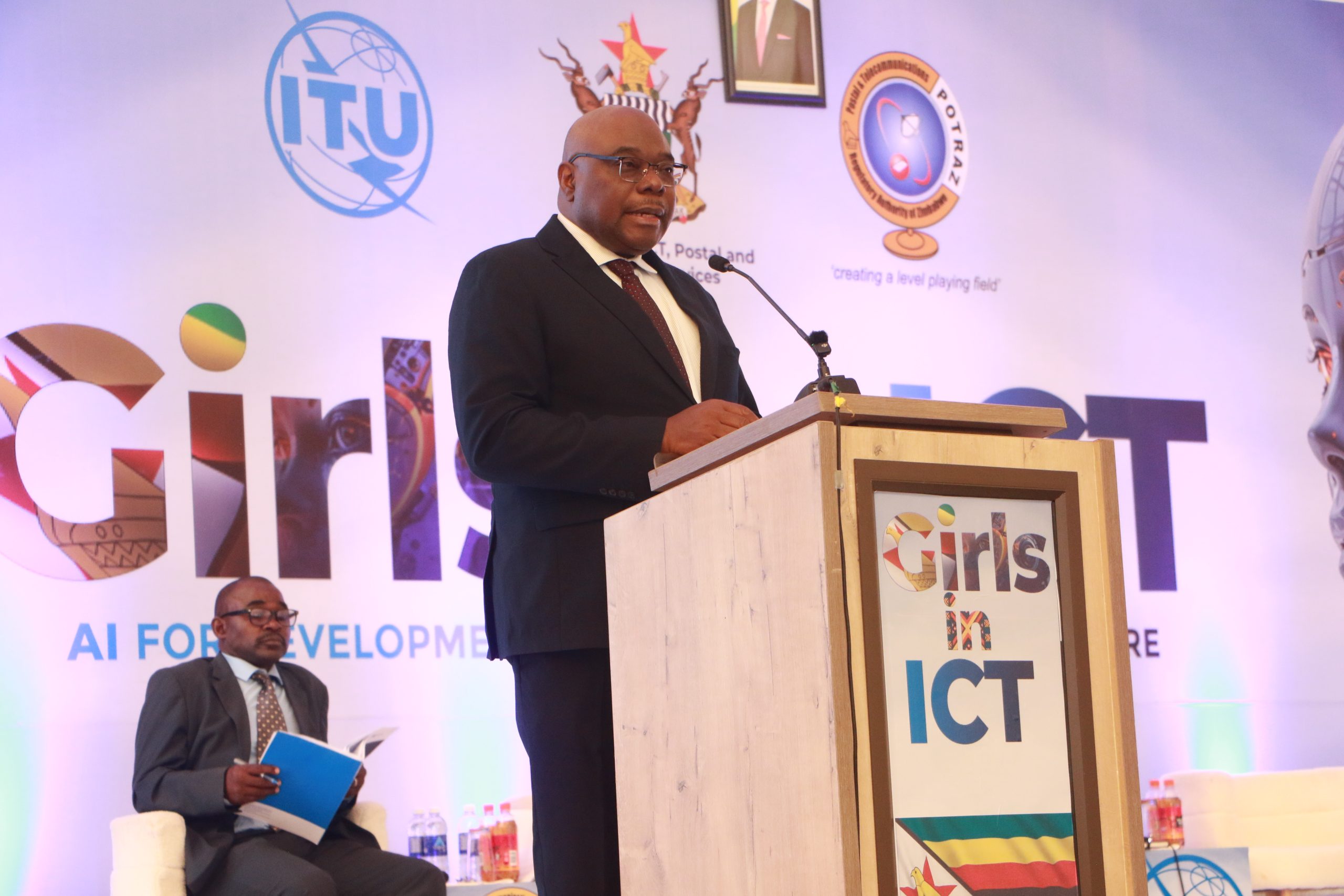
In a speech delivered on his behalf by Deputy Director General, Alfred Marisa, POTRAZ Director General Gift Machengete challenged young girls to become active participants in the rapidly evolving world of artificial intelligence rather than passive observers.
“Artificial intelligence is often compared to fire,” Machengete said.
“In the right hands, fire cooks our food, warms our homes and powers industries. But in the wrong hands, the same fire can destroy homes, families and entire communities. AI is no different.”
He warned that while artificial intelligence presents enormous opportunities for development and innovation, it also carries serious ethical and social risks if not guided by human values.
Machengete drew attention to what he described as the growing global phenomenon of “AI companions” or “AI boyfriends,” where some young people increasingly turn to artificial intelligence for emotional companionship.
“Some say these AI boyfriends do not cheat, they are not stingy, they are not abusive, and they always know exactly what to say,” he said.
“To some, this may sound modern and exciting. But it also raises a very important question for us as a society: Is this the kind of artificial intelligence we want shaping the future of the African girl child?”
His answer was emphatic.
“My answer is No!”
Machengete warned against allowing technology to erode African values, weaken human relationships, or replace genuine human interaction with artificial substitutes.
“We do not want an AI future that weakens our humanity, destroys our culture, isolates our young people, or replaces genuine human relationships with artificial ones,” he said.
Instead, he urged young girls to shape artificial intelligence into a force that strengthens families, communities, education and innovation.
“We want AI that uplifts humanity. We want AI that strengthens families and communities. We want AI that helps girls learn, innovate and become leaders.”
The POTRAZ boss also acknowledged the barriers many girls continue to face in accessing digital opportunities, including stereotypes, online safety concerns, limited access to technology, and gender inequality within the ICT sector.
He cited findings by UN Women showing that girls often access digital technology later than boys and are more likely to face restrictions in how they use technology.
“These inequalities not only limit opportunities for girls today, but also risk excluding them from the industries and innovations that will define the future,” he said.
Machengete stressed that digital inclusion must be accompanied by digital protection, warning that increased internet access also exposes children to online risks including cyberbullying, exploitation and abuse.
“As the regulatory authority, POTRAZ firmly believes that digital tools must not only be accessible, but also safe, ethical and empowering for every child,” he said.
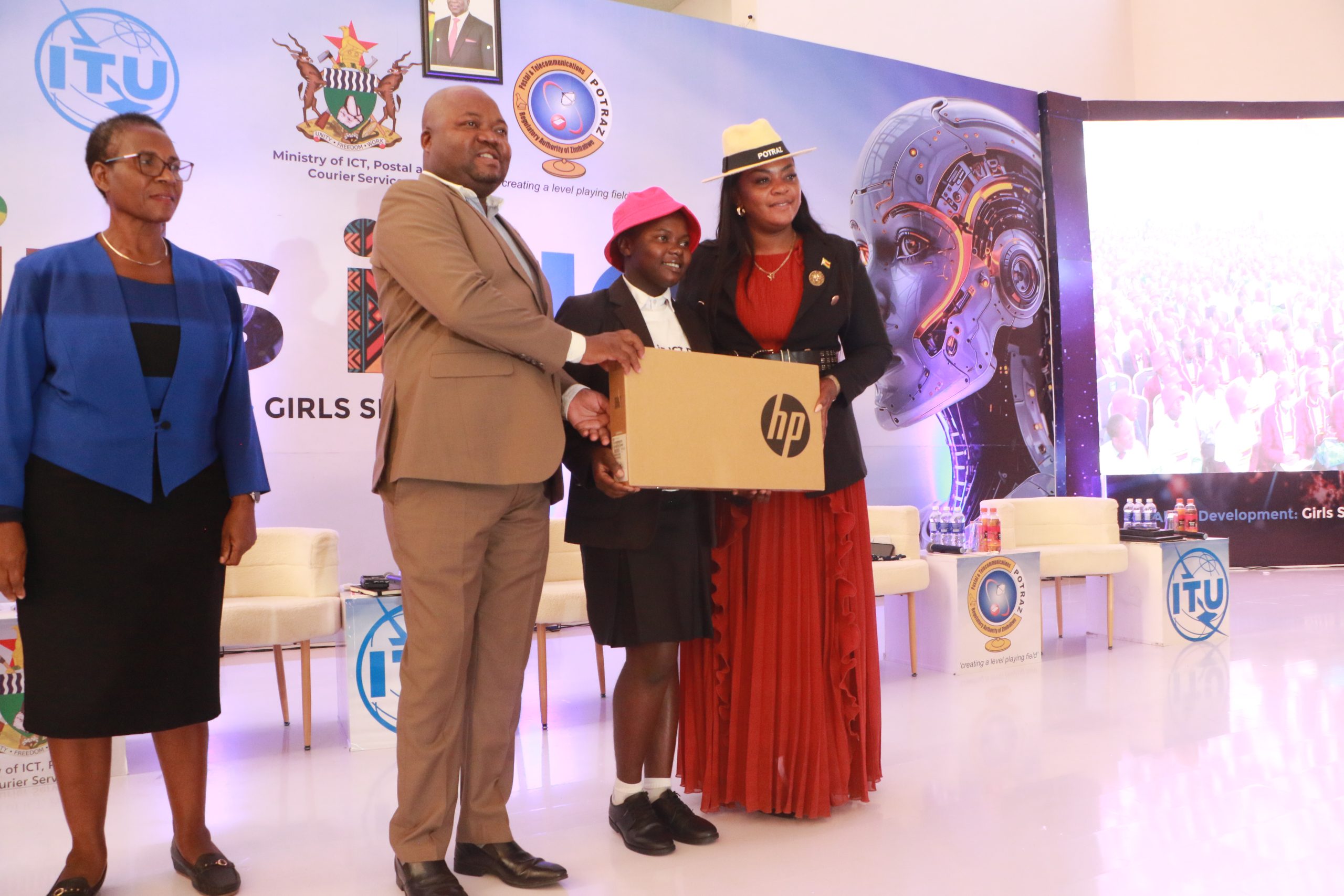
The commemorations were officially opened by Tatenda Mavetera, the Minister of ICT, Postal and Courier Services, who delivered an emotional and passionate keynote address encouraging girls to see themselves as future leaders in artificial intelligence, robotics, cybersecurity, data science and digital entrepreneurship.
Standing before hundreds of students packed into the auditorium, Mavetera described the event as more than a ceremonial gathering.
“Today is more than a commemorative event. It is a national call to action,” she declared.
She told the audience that the future of innovation and technology was being shaped now, and Zimbabwe could not afford to exclude girls from that future.
“The future is being coded today. The critical question is: who is writing that code? Who is building those systems? Who is shaping the future of innovation?” she asked.
“Our answer as Zimbabwe must be unequivocal: our girls must be at the centre of that transformation.”
Mavetera linked the event to President Emmerson Mnangagwa’s vision of building an upper-middle-income economy driven by science, technology and innovation.
She highlighted government efforts to expand digital infrastructure, innovation hubs, e-learning systems and ICT literacy programmes across the country.
The minister also praised the role being played by First Lady Auxillia Mnangagwa through the She Tech Initiative, which seeks to encourage girls and women to pursue careers in STEM fields.
Significantly, Mavetera spoke extensively about Zimbabwe’s newly launched National Artificial Intelligence Strategy 2026–2030, describing it as a historic roadmap positioning young girls at the centre of Zimbabwe’s digital industrialisation agenda.
“Artificial Intelligence is no longer science fiction,” she said.
“It is already transforming agriculture through smart farming, healthcare through predictive diagnostics, education through adaptive learning systems, mining through automation, banking through digital financial services and government through smart public service delivery.”
She urged girls to take advantage of government-supported initiatives including the 1.5 Million Coders Programme, the Digital Skills Ambassadors Programme, and the CyberUS Cybersecurity Training Programme.
“These programmes are not reserved for a privileged few,” she said.
“They are for you. They are opportunities designed to unlock your potential and prepare you for the jobs and industries of the future.”
At several moments during her address, Mavetera departed from formal policy language and spoke directly to the emotions and aspirations of the girls seated before her.
“I stand before you not just as your Minister of ICT, but as a woman who knows what it means to walk into a room and be underestimated,” she said.
“Girls, let me speak to your hearts now, mother to daughter. There is a voice the world will try to plant inside you, a whisper that says you must be small, that you must wait, that technology belongs to someone else. Do not let that voice take root.”
Her remarks drew loud applause from the audience.
“You were not created to shrink. You were created to shine,” she told the girls.
The minister also warned about the dangers of cyberbullying, online exploitation, misinformation and digital fraud, urging girls to protect their personal information and use digital platforms responsibly.
“Technology should empower you, not endanger you,” she said.
As the event continued with exhibitions, mentorship sessions, innovation showcases and panel discussions, the atmosphere inside the auditorium reflected a generation increasingly comfortable within the digital world.
For girls like Sukuluhle Ncube, the day represented far more than just a school trip.
It was exposure to possibility.
A glimpse into a future where girls from Bulawayo, Lupane, Binga, Nkayi Tsholotsho or any corner of Zimbabwe could one day design software, build artificial intelligence systems, lead global technology companies, or create digital solutions for African challenges.
And as hundreds of phones flashed through selfies, videos and pictures across the auditorium, one message echoed repeatedly throughout the commemorations, the future of Zimbabwe’s digital transformation may very well rest in the hands of the young girls seated quietly in those winter coats, tablets and smartphones in hand, already preparing themselves to shape a world increasingly defined by technology.
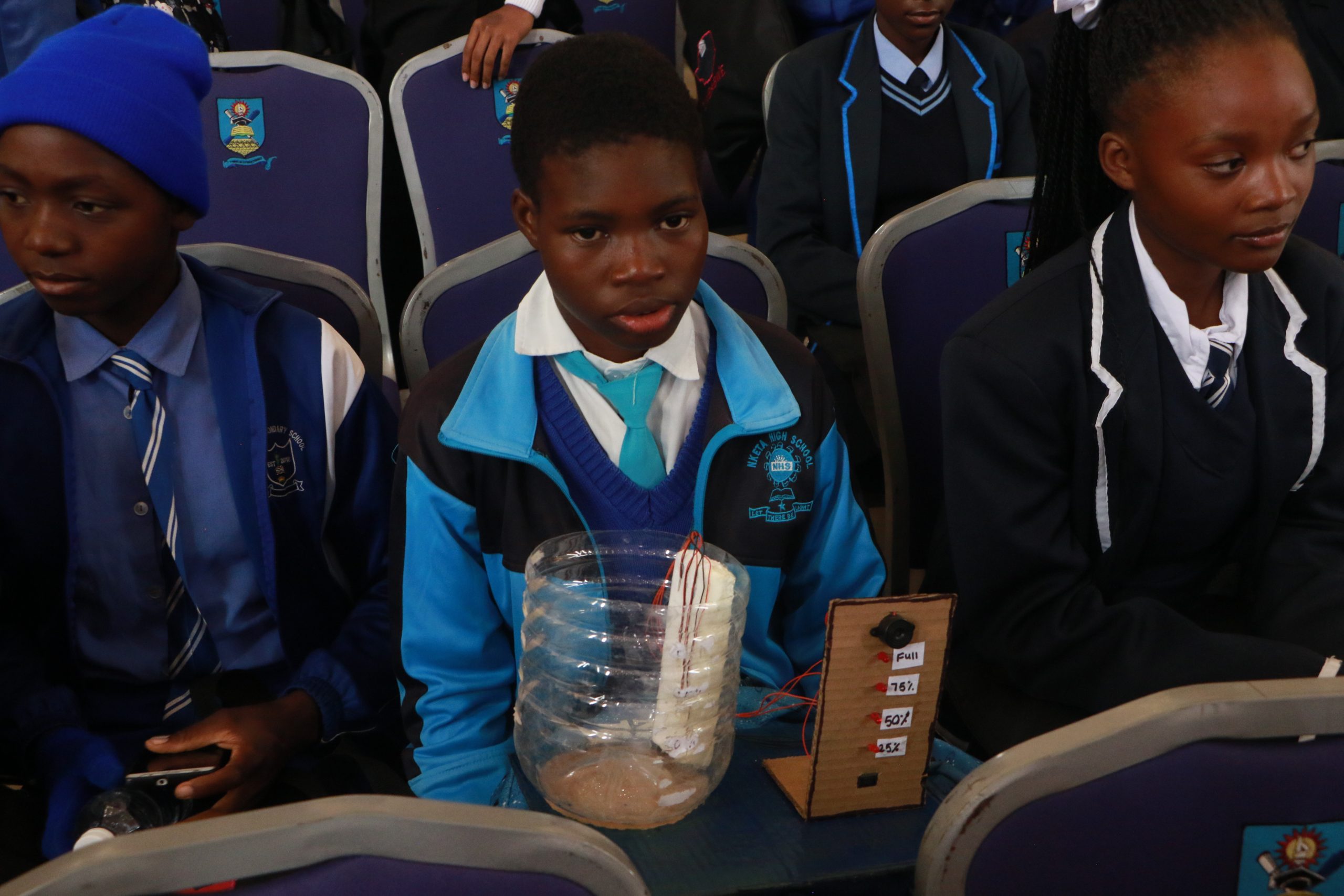
Among the most striking moments of the commemorations was the exhibition segment, where young girls from primary schools across the province showcased innovative technology projects that left government officials, delegates and industry leaders visibly impressed.
Mesmerized Mavetera, her deputy Dingumuzi Phuti, Permanent Secretary Dr Beullah Chirume, POTRAZ officials, telecommunications executives and invited delegates spent considerable time moving from one exhibition stand to another, engaging with the young innovators and listening to explanations behind their inventions.
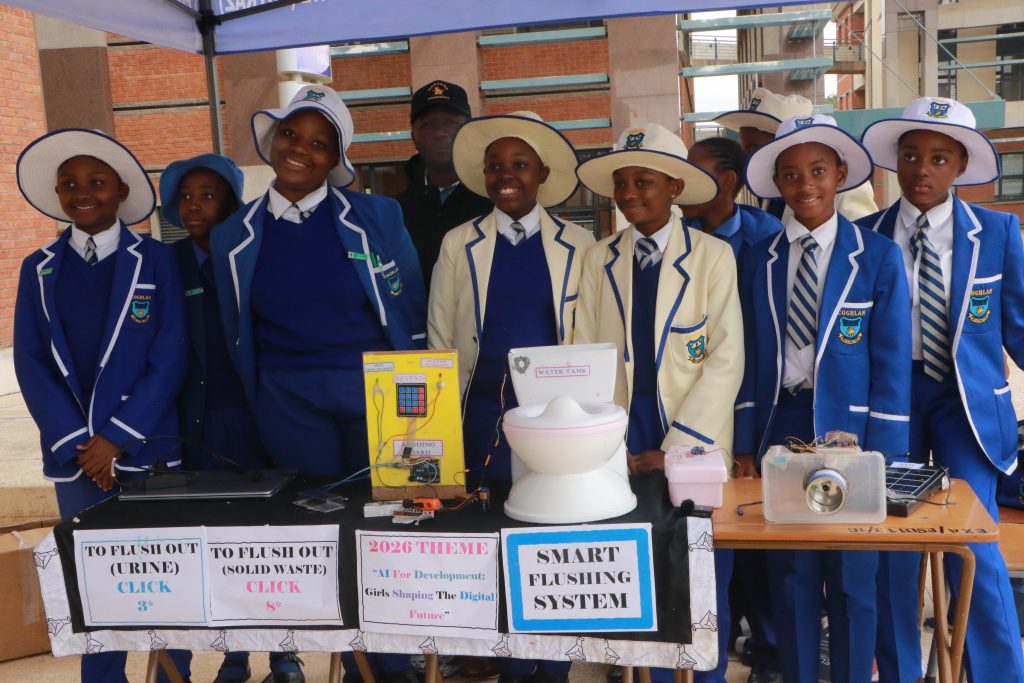
One particular project captured the attention of almost everyone at the exhibition hall, an electronic flushing system designed by young primary school girls to help conserve water and improve sanitation efficiency.
The innovation, which combines basic automation and sensor technology, was specifically developed to regulate water usage in toilets by differentiating between liquid and solid waste. According to the young inventors, the system uses significantly less water when flushing liquid waste while releasing a larger volume only when necessary for solid waste disposal.
For many delegates, the invention represented more than just a school project. It became a symbol of the untapped innovation potential that exists among Zimbabwe’s young girls when given access to technology, mentorship and opportunity.
As the girls confidently demonstrated how the system worked, ministers and industry leaders gathered around the stand taking notes, asking technical questions and applauding the creativity behind the idea.
Speaking on the sidelines of the event, Deputy Minister Phuti said the country could no longer afford to treat such innovations as ordinary classroom assignments, stressing the need to protect, commercialize and scale young people’s inventions.
“These projects must be protected as intellectual property, expanded and implemented at national level,” Phuti told The Post On Sunday.

“This will promote innovation, it will motivate thinkers and inventors, and it will also demonstrate that Zimbabwean children are capable of producing solutions for national challenges using technology.”
Phuti said Zimbabwe’s digital transformation agenda would only succeed if young innovators, particularly girls, were supported beyond competitions and exhibitions.
He noted that many brilliant ideas often disappear after school events because of lack of funding, mentorship, intellectual property protection and institutional support.
The deputy minister added that the government wanted to see a future where schools become innovation hubs capable of producing practical technologies that can be adopted by industries, communities and public institutions.
Delegates at the event described the exhibitions as one of the clearest demonstrations yet that the country’s push toward artificial intelligence, coding, robotics and digital skills development was beginning to bear fruit at grassroots level.
For many of the young girls, however, the experience itself was life-changing.
Dressed in school uniforms and winter jackets against Bulawayo’s cold weather, they stood proudly beside their inventions explaining coding concepts, engineering ideas and digital systems to senior government officials, telecommunications executives and university lecturers, an image many said reflected the changing face of Zimbabwe’s technology sector.
What once may have been viewed as spaces reserved for university students and professional engineers had, for a moment, been transformed into a stage where young girls from ordinary schools confidently presented solutions to real-world challenges.




More Stories
Zimbabwe’s Second Bid to Remove Vendors from Harare Streets Triggers Fresh Livelihoods, Law and Order Clash
Worse Before It Gets Better In Zimbabwe
Zimbabwe Mourns Again as Chivhu Road Horror Claims 27 Lives