





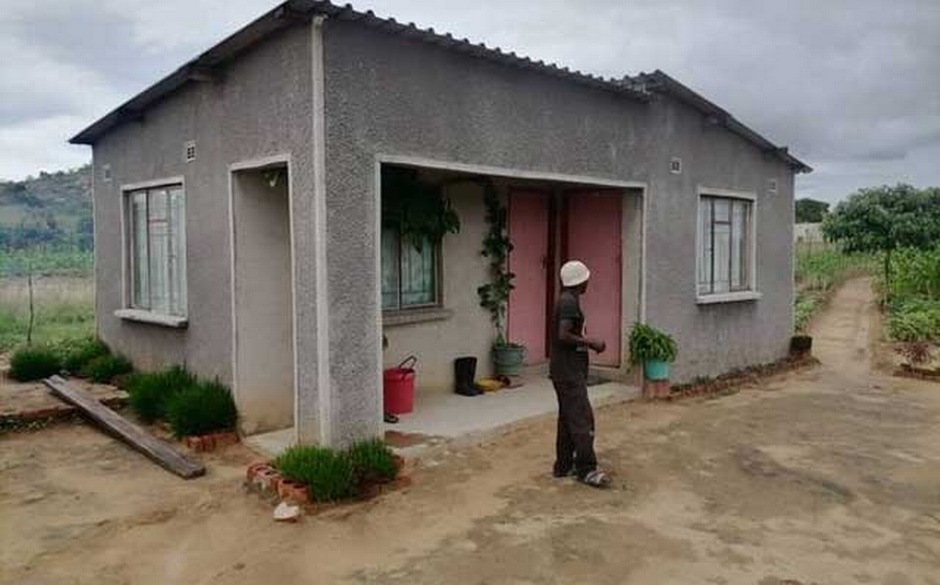
Zimbabwe has once again returned to a familiar battlefield, land…
By Shingirai Vambe
For more than four decades, land has remained one of the country’s most sensitive political, economic and social issues. It has shaped elections, determined political loyalties, enriched elites, created fortunes, destroyed communities, and repeatedly redefined the relationship between citizens and the State.
From the colonial dispossession era, through the fast-track land reform programme, to the emergence of urban housing cooperatives and land barons, land has never simply been about ownership. It has always been about power, control, survival and access to opportunity.
Today, another chapter is unfolding.
This time, however, the struggle is not primarily between white commercial farmers and black Zimbabweans, nor between Government and former landowners. Instead, it is a growing confrontation between the State and ordinary citizens who have increasingly chosen to bypass traditional land allocation systems in search of affordable land, housing and development opportunities.
The recent announcement by Minister of State for Manicaland Provincial Affairs and Devolution, Advocate Misheck Mugadza, that beneficiaries of illegal land allocations, commonly known as “Sabhuku deals”, will be evicted without compensation has reopened a national debate about land governance, planning, development and the role of local authorities.
The declaration follows President Emmerson Mnangagwa’s strong condemnation of illegal land allocations across the country and signals a renewed effort by Government to reassert authority over land administration.

Yet behind the official statements lies a deeper and more uncomfortable reality. The mushrooming of informal settlements, peri-urban communities and rural residential developments did not happen overnight. nor did it emerge by accident. It is largely the consequence of decades of institutional failure, urban decay, rising poverty, population growth and a growing loss of public confidence in local authorities.
For years, ordinary Zimbabweans seeking residential stands have had little choice but to approach local authorities, housing cooperatives, private developers or Government departments.
The process has often been expensive, slow and frustrating. Many have been on council’s waiting lists for years, while other have built houses and demolished after full processes and council inspections have been done.
Citizens have paid substantial amounts for residential stands under promises that roads would be constructed, water reticulation systems installed, sewer infrastructure completed, schools built and communities properly serviced. Yet across Zimbabwe, countless residents continue to live in areas where such promises remain unfulfilled years, and sometimes decades, later. Roads remain gravel tracks, street lights do not exist, water supplies are erratic, sewer systems are either incomplete or entirely absent, public amenities promised during land sales never materialise, residents continue paying rates and development levies while watching little development take place.
As councils increasingly struggled to fulfil their obligations, frustration among citizens steadily grew, the result was a gradual shift in thinking, many Zimbabweans began asking a simple but important question, if local authorities cannot provide services in existing towns and cities, why should citizens continue paying premium prices for land and waiting endlessly for development that may never come?
Across the country, thousands of people began moving away from congested urban centres, some moved into communal areas, others settled in peri-urban zones and many sought land through traditional leaders, village heads and local community arrangements.
What initially appeared to be isolated settlements gradually evolved into thriving communities, in many cases, citizens took development into their own hands, they drilled their own boreholes, installed solar power systems, pooled resources to construct roads, established schools and community facilities while some communities achieved levels of development that rivalled or even exceeded nearby council-administered settlements.
Ironically, while local authorities struggled to maintain infrastructure in established urban centres, citizens operating outside formal systems were creating entirely new settlements through self-financing and community mobilisation.
The expansion of mobile telecommunications, internet access, satellite connectivity and renewable energy systems reduced dependence on traditional urban infrastructure. People no longer needed to live close to municipal services to participate in the economy. Solar systems reduced dependence on ZESA and boreholes reduced reliance on council water at the very same time, mobile banking reduced dependence on physical banking infrastructure. all being initiated through internet connectivity which allowed business, education and communication to take place from virtually anywhere.
As populations increased, these settlements attracted shops, schools, transport operators, health facilities and small businesses. What started as a search for affordable land gradually evolved into a grassroots development movement. However, while residents viewed these developments as practical solutions to a housing crisis, Government increasingly viewed them as a growing governance problem.
Officials argue that many of these settlements lack proper planning approval.
Some have been established on wetlands, riverbanks, grazing lands and environmentally sensitive areas. Others have emerged without approved layouts, drainage systems, road reserves, sewer reticulation or water infrastructure.
The result, authorities warn, is a proliferation of settlements that may create future environmental disasters and development challenges. According to provincial authorities, illegal land allocations have spread across numerous districts in Manicaland, including Buhera, Makoni, Mutare, Mutasa, Nyanga and Chimanimani.
Entire communities have reportedly emerged through arrangements facilitated by traditional leaders, middlemen and unauthorised land dealers. In some instances, settlements have extended into commercial plantations, protected areas and agricultural land.
Government officials argue that failure to act now would create even greater problems in future. This explains the hardline stance adopted by Minister Mugadza. His directive leaves little room for ambiguity, beneficiaries of illegal land allocations face eviction, traditional leaders involved in land sales face prosecution and Councillors and local authority officials implicated in unlawful allocations face disciplinary action and legal consequences.
Law enforcement agencies have been instructed to intensify arrests and prosecutions, environmental authorities have been ordered to protect wetlands, forests and riverbanks from encroachment and Local authorities have been directed to implement master plans and enforce development regulations.
From a legal standpoint, Government’s position is clear.

Under Zimbabwean law, traditional leaders do not own communal land, they are custodians. The Communal Land Act vests authority over communal land in the State through rural district councils, the Regional, Town and Country Planning Act governs development planning and any settlement established outside these frameworks is technically illegal.
However, legality alone does not fully explain why these settlements continue to grow. The persistence of so-called Sabhuku deals points to a larger governance failure, the reality is that many citizens have lost faith in existing land delivery systems. Local authorities demand money without delivering services, see endless waiting lists and endless corruption allegations.
While politically connected individuals are accessing prime land, ordinary citizens struggle. They see private developers succeeding where councils have failed, increasingly, citizens choose alternative routes. This is where the current crackdown becomes politically and economically significant. The battle is not simply about illegal land sales, it is about competing visions of development.
“Government seeks order, regulation and planned settlements while Citizens seek affordability, accessibility and immediate solutions,” said Dzivarasekwa Memeber of Parliament, Edwin Mushoriwa.
He further added that local authorities seek to retain control over planning and revenue generation, yet traditional leaders seek to maintain influence within their communities at the same time private developers are seeking commercial opportunities and all these interests now collide on the same piece of land.
“There is little doubt that some settlements require intervention,” added Mushoriwa
“No responsible government can allow uncontrolled construction in wetlands, flood-prone areas, forests or strategic environmental zones. Road networks, drainage systems, schools and health facilities must be planned, and environmental sustainability cannot be ignored, thus planning remains necessary. Yet, there is also little doubt that many informal settlements emerged because formal systems failed to meet public demand, “said Mushoriwa.
Former Manicaland legislator, Innocent Gonese told the Post On Sunday that, “the State must address the reasons why citizens increasingly bypass official channels, it must explain why local authorities have failed to provide services despite collecting rates and development levies for years and it must explain why obtaining land through formal systems remains prohibitively expensive for many families.
“The Government must explain why infrastructure development continues to lag behind population growth, without addressing these questions, demolitions and prosecutions may treat the symptoms while leaving the underlying disease untouched.
The current land crisis ultimately reflects a broader struggle over the future of development in Zimbabwe.
Hon Sibusisiwe Bhudha Masara told this publication that, Zimbabweans are not merely searching for land, they are searching for opportunity, security, dignity and a place to call home.
“Until formal systems can provide those things effectively, the demand for alternative solutions will continue to grow, regardless of how many arrests are made or how many settlements are declared illegal,” she said.
“The latest crackdown may restore legal order in some areas, but unless it is accompanied by meaningful reforms in land governance, service delivery and development planning, Zimbabwe’s long-running land question will once again remain unresolved, waiting for the next chapter in a story that has shaped the nation since independence,” added Masara.




More Stories
AHF calls for African countries to unite against debt crisis
Pensioners Left Waiting As Billions Sit In Zimbabwe’s Pension Funds
Tax, Trust and Financial Literacy- Zimbabwe’s Long Struggle With the Obligations of a Modern Economy