


By Shingirai Vambe
The passing of veteran nationalist and senior government administrator, Cosmas Chiringa, has triggered an outpouring of tributes from former liberation fighters, civil servants and ordinary citizens who remember him as a humble yet resolute servant of the people.
For many in Makoni District, Chiringa was not simply a decorated liberation war fighter or a senior government official. He was a quiet architect of opportunity, a man who rarely boasted about his achievements, yet left an indelible mark on communities through service and sacrifice.
Former combatants in the district this week shared memories of a leader who, despite occupying powerful positions in Government and the ruling party, remained grounded and deeply committed to the welfare of those who had fought in Zimbabwe’s liberation struggle.
His death, confirmed by his son Nkosana Chiringa, came as a profound shock to many who had interacted with him only days earlier. This publication had spoken to him barely 48 hours before his passing, making the news of his death all the more unexpected.
Survived by his wife, Mrs Sherry Chiringa, with whom he shared 41 years of marriage, His distinguished public service career spanned 39 years of uninterrupted service, during which he rose through the ranks as, Administrative Officer – Mutasa District
Principal Administrative Officer – Rusape (1994), instrumental in the relocation of communities displaced by Osborne Dam to farms in Makoni and District Administrator – Makoni (2002)
During the historic land redistribution programme that began around 2000, Chiringa served as District Administrator in Makoni, one of the prime farming districts in Manicaland Province. Former combatants say his leadership during this period ensured that the land reform programme benefited many who had fought in the liberation war.
He spearheaded the Fast Track Land Reform Programme, benefiting over 500 A1 and 3,000 A2 beneficiaries and established Makoni as a hub of land redistribution in Manicaland
War veterans recall that he was instrumental in facilitating access to land and resolving disputes that inevitably arose during the redistribution process. His style of leadership, they say, combined firmness with diplomacy.
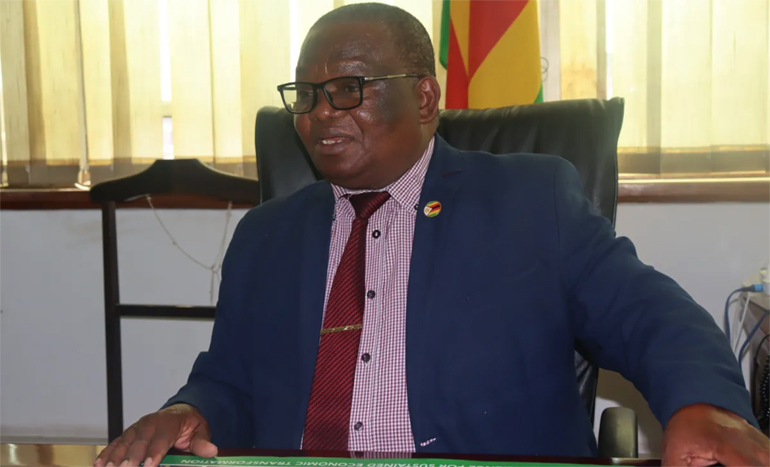
Speaking to this reporter a week before his death, Chiringa confirmed that the war veterans’ office currently being used by the ruling ZANU-PF in Rusape was secured through his own efforts.
He explained that he spearheaded the development of the office to ensure that war veterans in the area had a permanent base where they could organise and advance their welfare issues. He was among the founders of the War Veterans Association and served in several leadership roles, first District Chairman – Makoni, Vice Provincial Chairman – Manicaland (1995) and Substantive Provincial Chairman – Manicaland (1997)
Chiringa’s story mirrors the journey of many young Zimbabweans who sacrificed their youth in pursuit of independence.
Born on December 10 1960 in Nyanga District, at the tender age of 16, the late Cde Chiringa joined the armed struggle on September 16 1976, answering the call to liberate Zimbabwe from colonial rule. He arrived at Doroi Camp soon after the Nyadzonya attack, later in 1976, he proceeded to Chimoio, where he trained at Takawira Base 2 and was subsequently deployed to Nachingweya Camp in Tanzania, where he trained under Regiment 7 (Fanyaharaka)
It was there that he began his journey as a political commissar, a role that required not only courage on the battlefield but also the ability to inspire, educate and mobilise fellow fighters around the political objectives of the liberation struggle.
Chiringa rose through the ranks and part of his role was to provide ideological guidance and ensure that the fighters understood the political vision behind the armed struggle.
Further military and political training followed in Tanzania, where young guerrillas were groomed not only as soldiers but also as future leaders of an independent Zimbabwe.
Chiringa narrated his experience and journey, in bit and pieces, and along with his life story, he was among other combatants at the pass-out parade attended by several prominent leaders of the liberation movement, including the founding president of Tanzania, Julius Nyerere, the late ZANLA commander Josiah Magama Tongogara and former President, Robert Mugabe and in 1981 he was selected to undergo further military training in Romania, where he studied battalion and brigade command.
He was a proud recipient of a Silver Medal, awarded in the 1990s, in recognition of his service during the liberation struggle.
However, upon returning home in 1982, he encountered the complexities of integrating various armed groups into a unified national army under a process led largely by British military advisers.
Nevertheless, he eventually moved into the civil service, joining the Ministry of Local Government which had been established under the late nationalist politician Eddison Zvobgo.
He joined the Ministry of Local Government and Public Works, having been recruited by the current Minister, Cde J.G. Moyo, and deployed to Mutasa District where he began building a reputation as a capable administrator. His career also saw him play an influential role within the ruling ZANU-PF party structures, serving as Manicaland provincial secretary for administration.
Through correspondence studies and late-night learning sessions, he completed his Ordinary and Advanced Level examinations before later enrolling at the University of Zimbabwe, graduating with a degree in 2002 and later obtained a Master’s degree in Public Administration.
He served as District Administrator in both Makoni and Mutare before becoming Provincial Administrator for Manicaland and later Mashonaland Central, in Bindura where he held the position of the Provincial Developement Coordinator (PDA) known as Provincial Administrator.
During his tenure in Mutare, Cde Cosmas Chiringa worked closely with the late Minister of state for provincial affairs, (known as Governor), Christopher Mushowe, who at the time oversaw the Presidential Scholarship Programme under the government of former President Robert Mugabe.
In August 2015, he was promoted to Provincial Administrator and posted to Mashonaland Central Province.
Those who worked with Chiringa during that period recall that he played a crucial role in identifying and facilitating opportunities for deserving children from disadvantaged backgrounds, particularly in communities across Mutare and nearby Makoni District. Many families in the region credit him with helping their children access the prestigious scholarship programme, which enabled beneficiaries to pursue education both locally and abroad.
Residents say what distinguished Chiringa was his selflessness. Despite operating close to the corridors of power, he rarely used his influence for personal gain. Instead, his proximity to authority became a bridge for ordinary citizens who approached him seeking assistance.
He led the sensitive relocation of nearly 1,000 families from Chiadzwa to Odzi to pave the way for mining operations (Mbada, Anjin, Marange Resources). Successfully negotiated both community acceptance and mining company commitments to build proper housing.
Former colleagues and community members describe him as a man whose office door was always open, a leader who listened patiently and treated everyone with dignity, regardless of social or economic background.
Even in Bindura, where he served for less than five years, his reputation for humility and accessibility left a lasting impression. Residents remember him as a leader who engaged freely with people from all walks of life and handled public matters with fairness and respect.
Ernest Jinjika, a neighbour at Chiringa’s farm in Rusape and a close friend, described him as a man whose character was shaped by the values of the liberation struggle.
“Cde Chiringa was a man of character, a true comrade,” Jinjika told this publication. “The spirit he carried from the liberation struggle was never about himself. It was always about the citizens and the people of Zimbabwe. He served to serve.”
In 2015 he was appointed Permanent Secretary for Harare Metropolitan Provincial Affairs and Devolution, one of the most senior administrative positions within government, as board member of the REA Board meeting from November 2017 as well as the Chaiperson of the Manpower and Remuneration Committee which he held until the time of his death.
His exceptional coordination skills earned him repeated commendations, and the province enjoyed harmonious stakeholder relations throughout his tenure, working closely with the Vice President, C.G.D.N Chiwenga, he trained and politically instructed several senior figures who later rose to high office, including Brigadier Generals, senior civil servants, and political leaders, many of whom can testify to his contribution.
Nkosana told this publication that his father (SHUMBA) his totem, meaning a lion, remained a firm pillar of the family, calm and measured in dealing with life’s challenges very supportive and widely respected within the extended family for his guidance and support.
From the battlefields of Mozambique to the administrative offices of government, Chiringa’s life journey reflected a generation that sacrificed much in pursuit of freedom and later dedicated itself to building the country.
Died at the age of 66, Cosmas Chiringa survived by his wife, Sherry and four children, Kudakwashe, Onicah, Nkosanah and Ephraim and several grandchildren.

More Stories
Marital Feud Escalates Into Gun Drama in Rusape
AHF calls for African countries to unite against debt crisis
Pensioners Left Waiting As Billions Sit In Zimbabwe’s Pension Funds