






Government Orders ZiG Acceptance, Schools Resist…
By Shingirai Vambe
Zimbabwe’s economic journey over the past decade and a half has been shaped by cycles of hope, recovery, instability, and renewed debate over the country’s monetary direction. For many citizens, memories of the post-2009 period remain vivid, a time when the adoption of the United States dollar under the Government of National Unity (GNU) brought rare economic relief after years of hyperinflation, collapsing public confidence, and the near-worthlessness of bearer cheques that had once defined Zimbabwe’s financial crisis.
The unity government forged between former President Robert Mugabe and the late opposition leader Morgan Tsvangirai is still widely remembered as one of the few periods of relative economic stability in recent history. Between 2009 and around 2015–2016, civil servants, particularly those at the lower end of the salary scale, could reportedly earn salaries averaging around US$700 per month, a figure many workers now view with nostalgia.
Today, however, the economic landscape tells a very different story. The lowest-paid government employees now reportedly take home approximately US$250 together with about ZiG$5,000, which on the parallel market translates to nearly US$150. While the government officially pegs the Zimbabwe Gold (ZiG) currency at around ZiG26.9 to the US dollar, ordinary citizens continue to navigate a dual-economy reality where the US dollar dominates major transactions and the local currency is largely relegated to smaller obligations and groceries.
For many Zimbabweans, the US dollar has become synonymous with survival and access to essential services, while the ZiG is often treated as a secondary currency used for day-to-day local payments. This disconnect between policy and public confidence has once again come sharply into focus as schools reopen across the country.
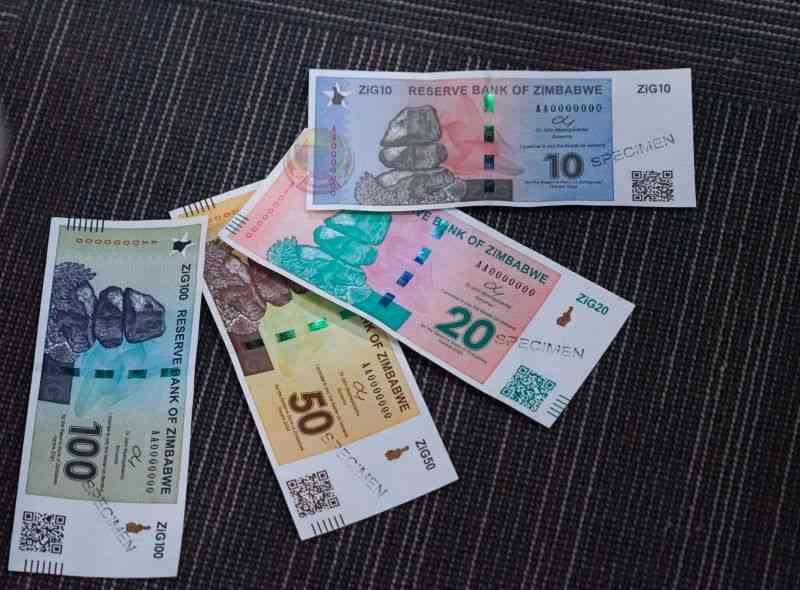
Parents preparing for the new school term have found themselves caught in a familiar and frustrating dilemma, despite government policy affirming the legality of ZiG, many schools under the Ministry of Primary and Secondary Education are reportedly refusing to accept school fees in the local currency, insisting instead on payment in US dollars.
Investigations by The Post On Sunday revealed troubling inconsistencies between official government policy and practices on the ground.
Several schools in Makoni District allegedly discouraged or outright refused ZiG payments, with some institutions reportedly removing local currency account numbers from notice boards and directing parents seeking to pay in ZiG to school heads or bursars.
At one school contacted by this publication, a secretary reportedly claimed the institution did not possess ZiG receipt books.
At two other schools in the same district, parents were allegedly told to consult headmasters directly for local currency banking details.
The explanations varied, but the message remained largely the same.
“There has been a challenge with the account number and necessary work is being done,” one school representative reportedly said. “In the meantime, we are encouraging parents to pay in USD.”
Another headmaster, speaking on condition of anonymity, argued that suppliers and service providers demanded payment in US dollars, making it difficult for schools to operate using ZiG alone.
Yet this position appears increasingly difficult to reconcile with the broader national framework, particularly when many government departments and public services continue to accept local currency payments. Vehicle licensing, local authority bills, electricity charges, toll gate payments, insurance, and even building materials can all still be paid for in ZiG.
In response to growing public concern, the Ministry’s Communications Director, Taungana Ndoro, issued a strongly worded statement reaffirming the government’s position without qualification.
“The Ministry of Primary and Secondary Education affirms, without ambiguity, that no school in Zimbabwe, whether government, mission, trust, or private, is permitted to refuse payment of school fees in Zimbabwe Gold (ZiG) for any reason whatsoever,” Ndoro stated.
The Ministry stressed that ZiG remains the country’s official legal tender and that all domestic transactions, including school fees, examination charges, and levies, must legally be accepted in local currency.
According to the Ministry, no school authority, School Development Committee, or individual administrator has the power to override national monetary policy.
Authorities also dismissed several justifications being used by schools, including the absence of dedicated ZiG bank accounts, shortages of receipt books, operational inconveniences, or preference for foreign currency. Schools were instructed to establish ZiG-denominated accounts immediately, issue interim acknowledgements where receipt books are unavailable, and ensure no learner is disadvantaged due to payment disputes.
The Ministry warned that institutions refusing ZiG payments could face disciplinary and legal consequences, including formal compliance notices and possible referral to law enforcement agencies for violations of legal tender statutes.

Parents were encouraged to report non-compliant schools through District Schools Inspectors, the Ministry hotline, or the Ministry’s WhatsApp reporting platforms. Authorities further stated that any school found guilty of unlawfully refusing ZiG payments would be compelled to accept the payments immediately and waive any penalties incurred because of the refusal.
“No learner may be sent home or denied access to classes or examinations on the basis of a school’s refusal to accept ZiG,” the Ministry said firmly.
To reinforce compliance, the Ministry has introduced enhanced monitoring mechanisms, including unannounced inspections, audits of school financial records, and mandatory display of ZiG account details at administration blocks and payment offices.
The dispute emerges at a sensitive moment for Zimbabwe’s monetary authorities. The Reserve Bank of Zimbabwe has recently indicated that the dominance of the US dollar is expected to gradually decline, with plans underway to introduce higher denomination ZiG notes, including ZiG100 and ZiG200 bills, into circulation.
However, public skepticism remains high.
This has however been a situation with Primary and Secondary education, while Higher and Tertiary including universities have been accepting fees payments in local ZiG currency.
Many citizens argue that confidence in the local currency cannot simply be legislated into existence. Instead, they contend that the government must first demonstrate practical commitment by ensuring critical sectors, including fuel purchases, airline tickets, and major commercial services, fully embrace the local currency before ordinary citizens can be expected to trust it.
For parents already struggling under the weight of school fees, transport costs, food prices, and stagnant wages, the issue goes beyond currency preference. It has become a reflection of a deeper national conversation about confidence, affordability, and the lived realities of Zimbabwe’s evolving economy.



More Stories
Retrenchment Axe Hangs Over TelOne
Marital Feud Escalates Into Gun Drama in Rusape
Zimbabwe’s Export Engine Fires Up