





Energy Security Achieved, Affordability Still Elusive..
By Shingirai Vambe
Zimbabwe has made notable strides in addressing one of the country’s most persistent economic challenges, energy security. Over the past few years, Government has rolled out a cocktail of programmes, policy interventions and infrastructure projects aimed at improving electricity generation, expanding access to power, and stabilising energy supply for both domestic consumers and industry.
From renewable energy investments and independent power producer (IPP) projects to transmission upgrades and rural electrification programmes, the country’s energy sector has undergone significant transformation. These efforts have helped reduce the severity of power shortages that for years crippled industrial production, disrupted mining operations, and constrained economic growth.
The improved availability of electricity has provided much-needed relief to businesses and households alike. Manufacturing output has shown signs of recovery, mining operations have expanded production capacity, and investors have increasingly expressed confidence in sectors that were once hamstrung by unreliable power supplies.
Yet while energy availability has improved, a different challenge continues to weigh heavily on businesses and ordinary citizens, affordability.
Economic analysts argue that Zimbabwe remains far from resolving the broader cost-of-doing-business crisis, with electricity tariffs, taxation, compliance costs and inflationary pressures continuing to erode competitiveness across sectors.
The situation has been compounded by global geopolitical tensions that have driven energy costs upward worldwide. The prolonged Russia-Ukraine conflict, alongside tensions and military confrontations involving the United States, Israel and Iran, have contributed to volatility in global fuel markets, increasing the cost of imported energy inputs and placing additional pressure on domestic electricity pricing structures.
As a result, many of Zimbabwe’s largest electricity consumers have sought alternatives to reduce operational costs and secure uninterrupted power supplies.
Large mining houses, manufacturing firms and commercial enterprises have increasingly invested in captive solar plants, private generation facilities and dedicated energy infrastructure, effectively reducing their reliance on the national grid. While this trend has helped ease pressure on Zimbabwe’s limited generation capacity, it has also highlighted concerns about the affordability and sustainability of electricity for smaller businesses and ordinary consumers who lack the resources to develop alternative energy solutions.
For many observers, the central question is no longer whether Zimbabwe can generate enough power, but whether the country can provide affordable energy that stimulates industrial growth, attracts investment and improves household welfare.
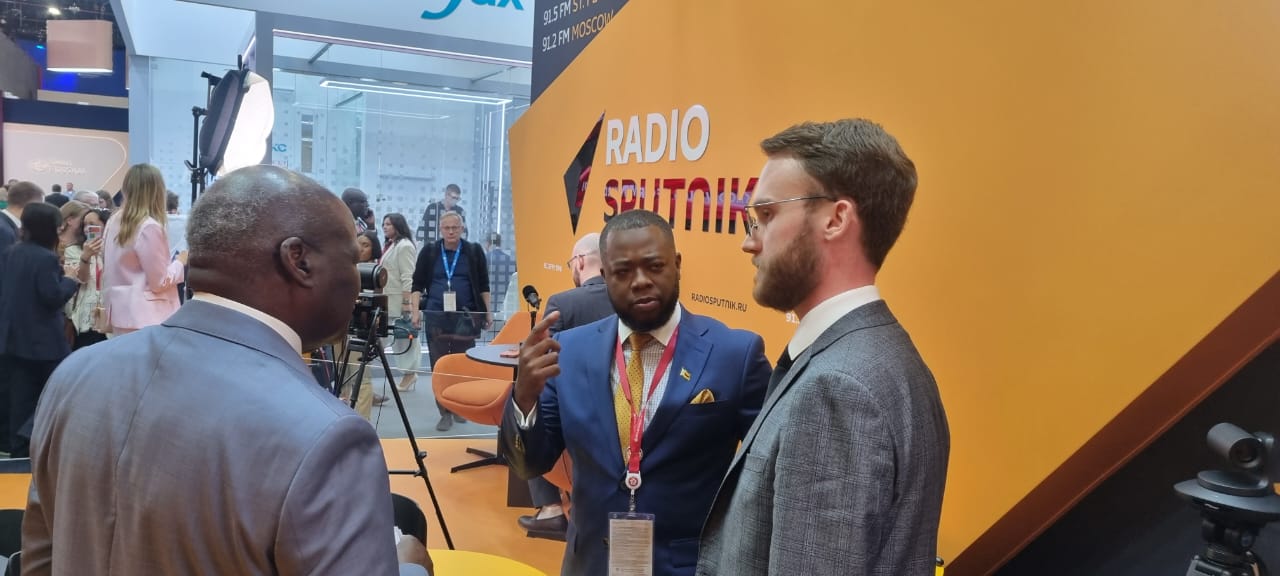
It is against this backdrop that Zimbabwe’s Minister of Energy and Power Development, July Moyo, together with Deputy Minister of Finance, Kudakwashe Mnangagwa, used the international platform of the St. Petersburg International Economic Forum (SPIEF) to articulate Zimbabwe’s long-term energy and development vision.
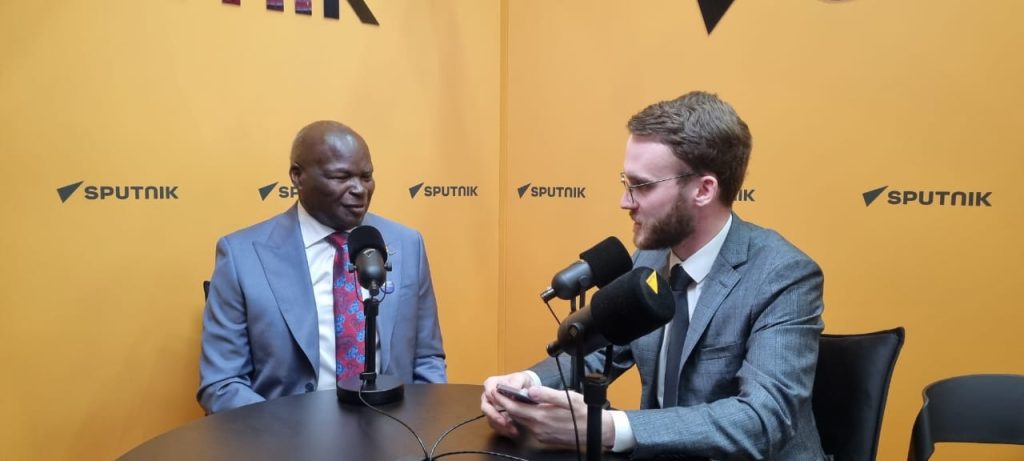
Speaking in an interview with Sputnik Media Africa on the sidelines of the forum, Minister Moyo outlined Government’s belief that national development must be driven primarily by domestic effort and strategic partnerships.
“The thrust by the Zimbabwean Government, and His Excellency President Emmerson Mnangagwa himself, is that a country can only be built by its own people,” Minister Moyo said.
He argued that despite the challenges posed by Western sanctions, Zimbabwe remains firmly on a development trajectory supported by partnerships with countries such as Russia, which Government describes as a longstanding ally.
At the centre of Zimbabwe’s strategy is a growing energy partnership with Russia, formalized through agreements signed in 2025 that seek to strengthen cooperation in power generation, technology transfer, financing and industrial development.
According to Minister Moyo, Russian expertise is already playing a role in supporting Zimbabwe’s ambitions to modernize its electricity transmission infrastructure, develop advanced energy systems and prepare for the energy-intensive demands associated with mineral beneficiation and industrialization.
Government believes that alternative financing arrangements and the increasing use of local-currency settlement mechanisms could unlock large-scale energy projects that have traditionally struggled to secure international funding.
One of the most ambitious aspects of the partnership is Zimbabwe’s long-term nuclear energy programme.
Minister Moyo confirmed that Zimbabwe is working closely with Rosatom and the International Atomic Energy Agency to develop the country’s first nuclear power station, with a target of commissioning the first unit by 2038.
As part of that process, Zimbabwe intends to establish a National Energy Programme Implementing Organization (NEPIO), which will oversee feasibility studies, technical assessments and preparatory work required before the project enters implementation stages.
Government views nuclear power as a strategic long-term solution capable of providing stable baseload electricity needed to support industrial expansion and economic transformation.
Zimbabwe’s energy ambitions also extend beyond its national borders.
As host nation of the Southern African Power Pool, Zimbabwe is positioning itself as a key player in regional energy integration. The country is working to strengthen electricity interconnections among the 13 member states of the Southern African Development Community (SADC), with the objective of reducing dependence on external energy sources and fostering regional industrialization.
Officials argue that a more integrated regional power market will improve energy security, encourage investment and create opportunities for cross-border electricity trading.
At the same time, energy demand is expected to rise sharply as Zimbabwe intensifies efforts to beneficiate its mineral resources.
Government estimates that more than US$1 billion has already been invested in lithium processing facilities, with additional investments expected in smelting, refining and downstream manufacturing.
Minister Moyo stressed that mineral beneficiation and energy development are inseparable.
“Beneficiation demands electricity. Every smelter and refinery increases grid demand,” he said, describing energy and mineral development as “two sides of the same coin.”
To support rising demand, Government has set ambitious electrification targets, aiming to connect approximately 320,000 new households annually through to 2030.
Officials believe that ongoing investments by Independent Power Producers, combined with grid expansion projects and generation upgrades, will significantly reduce Zimbabwe’s dependence on electricity imports.
By 2027, Government expects imported electricity to become “the exception rather than the rule.”
Looking ahead to the Third Russia–Africa Summit scheduled for Moscow later this year, Minister Moyo said Zimbabwe will advocate for five key priorities.
These include expanded investment partnerships across hydroelectric, solar, thermal, nuclear and waste-to-energy projects; accelerated grid modernization and regional interconnection initiatives; increased local value addition in energy minerals; wider use of the New Development Bank and local-currency settlement systems; and a comprehensive roadmap for Zimbabwe’s nuclear power programme supported by Russian financing, technology transfer and safety expertise.
“Our proposition is simple,” Minister Moyo said.
“Partner with Zimbabwe to add value to our minerals, to power that value addition, and to finance and trade it on fair, sovereign terms. That is how we will convert our mineral wealth into prosperity for our people.”
While the vision is ambitious and potentially transformative, economists caution that the ultimate measure of success will not be megawatts generated, agreements signed, or infrastructure constructed. Rather, it will be whether ordinary Zimbabweans, small businesses and productive sectors experience tangible reductions in electricity costs, improved competitiveness and meaningful economic opportunities.



More Stories
Retrenchment Axe Hangs Over TelOne
Marital Feud Escalates Into Gun Drama in Rusape
Zimbabwe’s Export Engine Fires Up