


The Post On Sunday
The release of Chad’s main opposition leader, Succès Masra, has once again brought the country’s political tensions into sharp focus, exposing the continuing struggles faced by opposition movements across Africa, where political competition is often accompanied by arrests, prolonged detention, restrictions on political activity and increasingly difficult conditions for mobilisation.
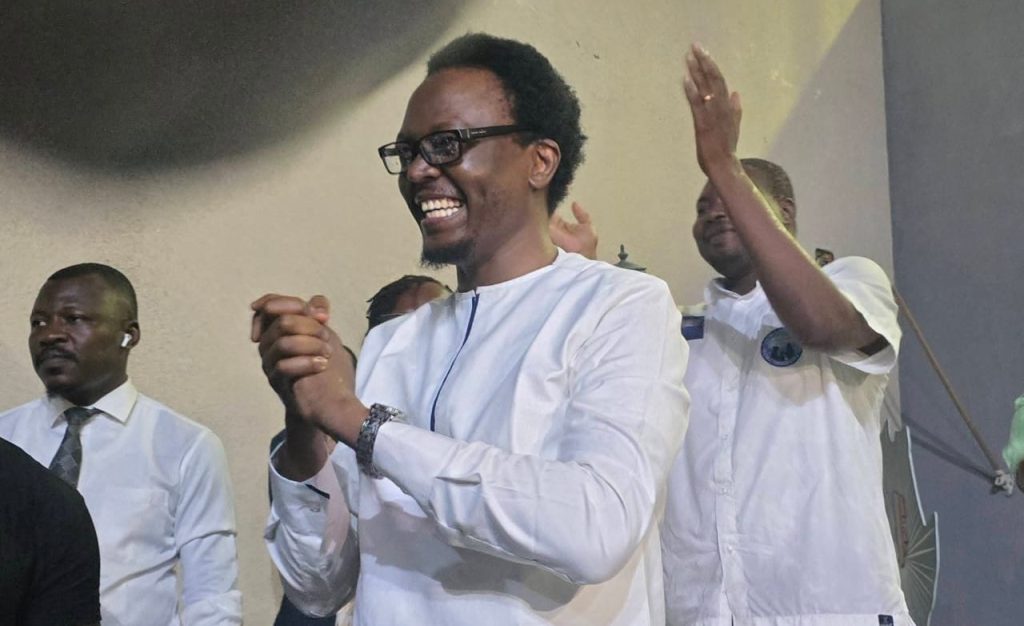
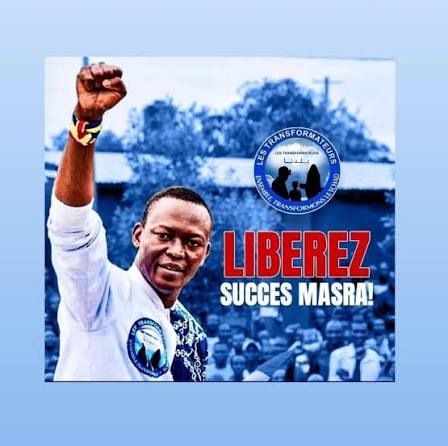
Masra, leader of the opposition Transformers party and a former prime minister, was released from prison late Friday following a presidential pardon after spending more than a year behind bars. His release has been greeted by supporters as an important political moment, particularly because of the strength of the support base that has continued to surround him despite his incarceration.
Rather than using his first public appearance after release to launch another confrontation with the government, however, Masra struck a conciliatory tone, calling for forgiveness, unity and reconciliation with President Mahamat Idriss Déby.
Addressing hundreds of supporters gathered at his party headquarters in the capital, N’Djamena, Masra said the country needed to move beyond political divisions and work towards rebuilding national cohesion.
“We need forgiveness, unity and peace. Gathered here today, we reaffirm to the entire nation our determination to build a reconciled Chad,” Masra said.
His message marked a significant shift from the bitter political confrontation that has characterised much of Chad’s recent political history. But beneath the call for reconciliation lies a much deeper question: whether Chad’s political system is prepared to accommodate a genuinely competitive opposition and allow political differences to be resolved through democratic institutions rather than imprisonment and political exclusion.
Masra’s release came through a presidential decree granting pardons to him and eight other imprisoned opposition figures. While the measure cancelled their prison sentences, it did not erase their convictions. As a result, the pardoned opposition figures continue to carry criminal records and remain barred from seeking public office.
The distinction is important because, although Masra is now free, his political future remains constrained.
For an opposition leader who finished second in Chad’s 2024 presidential election, the pardon therefore represents both freedom and limitation. He can once again speak publicly, organise politically and engage with his supporters, but his ability to directly contest for political office remains restricted.
Masra nevertheless told his supporters that he was prepared to work with the authorities.
“My conviction is that we must work together. We are ready to start tomorrow morning,” he said.
He also made it clear that his movement believes it remains a significant force within Chadian politics.
“They know that outside the government, we are the main political force. Nothing can be built in the future without us.”
That assertion highlights the central political reality facing the Chadian government: opposition movements may be weakened through arrests, legal restrictions and institutional barriers, but political support cannot necessarily be eliminated through incarceration.
Masra’s political journey has been marked by confrontation, exile and attempts at political accommodation.
The 42-year-old economist fled to neighbouring Cameroon in late 2022 after security forces violently suppressed a protest in Chad, an episode that resulted in numerous deaths and intensified international concern over the country’s democratic transition.
He returned to Chad the following year under an agreement reached with the government and was subsequently appointed prime minister.
The political accommodation, however, did not permanently end the rivalry between Masra and President Déby.
Five months after becoming prime minister, Masra contested the May 2024 presidential election against Déby. He finished second with almost 20 percent of the vote, while Déby was declared the winner with about 60 percent.
The election was disputed by sections of the opposition, with significant parts of the opposition movement boycotting the poll.
Masra’s subsequent imprisonment has therefore been viewed by his supporters as part of a wider pattern in which political opponents of incumbent governments struggle to operate on an equal footing with ruling parties.
His case has also attracted criticism from international human rights organisations. Human Rights Watch described the trial that resulted in his 20-year prison sentence for incitement to hatred and complicity in murder as politically motivated.
The accusations and the prosecution have consequently raised broader questions about the use of criminal law in politically sensitive cases and the extent to which opposition leaders can rely on independent institutions to protect their political rights.
Chad’s experience is not isolated.
Across parts of Africa, opposition politicians frequently operate in environments where access to media, campaign financing, public venues and political platforms is significantly more restricted than that enjoyed by ruling parties.
In some countries, opposition figures face arrest or prosecution, while others have been forced into exile. Others remain politically active but operate under surveillance, intimidation or restrictive legislation.
The result is a political environment in which elections may take place, but the conditions surrounding those elections remain contested.
Chad’s own political transition has been particularly complicated.
President Mahamat Idriss Déby came to power in 2021 following the death of his father, longtime ruler Idriss Déby Itno, who had governed the country for decades.
His succession occurred through a military-led transition rather than an immediate conventional transfer of power through an election, placing questions about constitutional order, military influence and democratic legitimacy at the centre of Chad’s political debate.
The country, which has a population of about 20 million people, has subsequently attempted to move towards a more permanent political settlement.
However, constitutional changes adopted in October 2025 introduced a renewable seven-year presidential term without a limit on the number of times a president can be re-elected.
Human Rights Watch argued that the changes further weakened the prospects for meaningful democratic change.
For the opposition, such constitutional arrangements raise concerns about whether political competition can realistically result in a change of government.
For the government and its supporters, however, the reforms are presented as part of the country’s attempt to establish stability following years of political and security uncertainty.
It is precisely this tension between stability and democratic competition that continues to define Chad’s political trajectory.
Masra’s release now presents an opportunity for both sides to reconsider their approach.
His call for reconciliation could potentially open space for dialogue between the government and opposition, particularly if both sides are prepared to address the grievances that have accumulated over years of political confrontation.
But reconciliation cannot be sustained by rhetoric alone.
For opposition parties, reconciliation must be accompanied by political space, equal access to democratic institutions, protection of political freedoms and credible guarantees that political disagreements will not automatically become criminal matters.
For the government, the challenge is to demonstrate that stability does not require the permanent weakening of political opponents.
The release of Masra may therefore be more than the freeing of one opposition leader. It could become a test of whether Chad is capable of moving from a politics of confrontation towards a politics of accommodation.
The events surrounding Masra’s imprisonment, trial, conviction and eventual pardon have already exposed the fragility of that transition.
His return to political life will now test whether the government can accommodate a powerful opposition voice and whether the opposition can use its influence constructively without returning the country to confrontation.
Masra’s message of forgiveness and unity provides an opening.
Whether that opening develops into genuine political reconciliation, however, will depend on what happens after the celebrations have ended and political negotiations begin.
For a country emerging from military rule, contested elections and constitutional changes that have concentrated political power, the real measure of Chad’s democratic progress will not simply be whether opposition leaders are released from prison.
It will be whether they are allowed to participate meaningfully in shaping the country’s future.
Masra has served notice that he is ready to engage.


More Stories
Zimbabwe’s Export Engine Fires Up
Southern Africa Rethinks Energy Security as Zimbabwe Pushes Regional Power Integration
AHF calls for African countries to unite against debt crisis