





By Shingirai Vambe
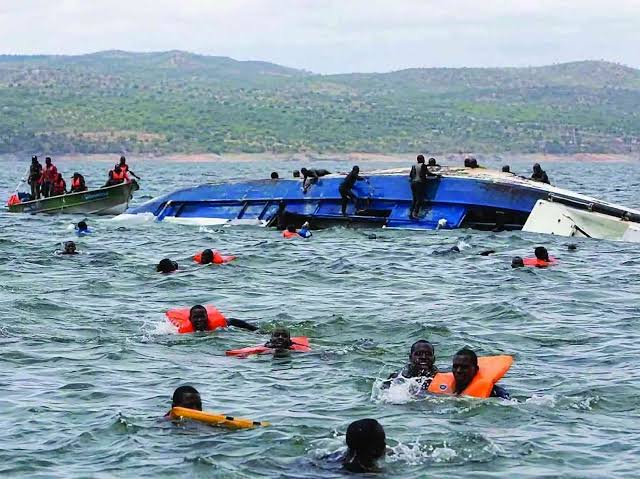
Zimbabwe has been plunged into mourning following one of the country’s deadliest water transport disasters, after the government-owned ferry Mbuya Nehanda capsized on Lake Kariba, killing at least 84 people, including 18 children, and triggering widespread public anger over safety standards, government preparedness and the tone of official communication following the tragedy.
The disaster has not only raised questions about the condition and management of vessels operating on one of Africa’s largest inland lakes, but has also opened a broader debate over whether warnings about ageing and potentially unsafe vessels were ignored long before the tragedy unfolded.
As rescue teams continued searching the vast waters of Lake Kariba, Zimbabweans took to social media to express grief, anger and frustration, with some questioning whether the disaster could have been prevented had earlier warnings been acted upon.
The Zimbabwe Republic Police confirmed that additional bodies had been recovered, pushing the known death toll to at least 84, while search and recovery operations remained underway.
The ferry, which authorities said had a capacity of about 90 passengers, was reportedly carrying as many as 153 people when it overturned during strong winds near the Zambian border.
The vessel was travelling from Kariba town towards rural and fishing communities in north-western Zimbabwe when disaster struck.
The scale of the tragedy has shocked the nation, with reports indicating that at least 18 children were among those who died.
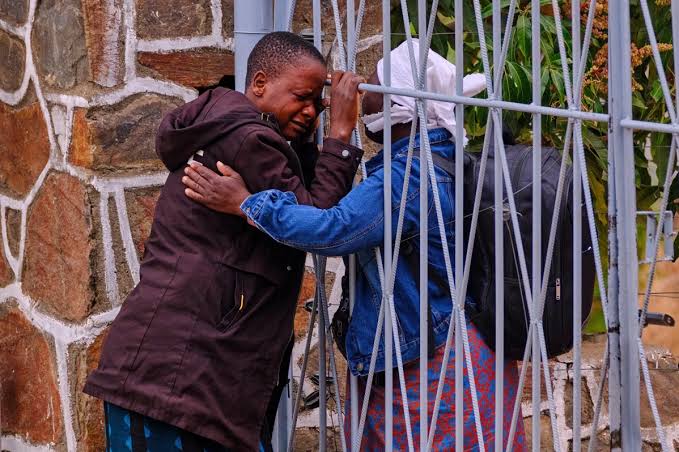
For families gathered at local health facilities and identification centres, the disaster has become a deeply personal tragedy, as relatives continue to search for loved ones and confront the painful task of identifying bodies recovered from the lake.
Images and videos circulating on social media showed large crowds gathered outside local hospitals as families waited anxiously for information about relatives who had been travelling aboard the ferry.
President Emmerson Mnangagwa described the incident as tragic and acknowledged that it had exposed serious deficiencies requiring urgent attention.
But even as the country mourned, the tragedy quickly developed into a wider political and governance debate, particularly over the manner in which senior government officials communicated about the disaster.
Government spokesperson Nick Mangwana became the subject of intense criticism from sections of the public and commentators following posts and statements perceived by critics as insensitive or lacking sufficient recognition of the magnitude of the loss of life.
The controversy was further fuelled by veteran journalist and government critic Hopewell Chin’ono, who accused Mangwana of failing to appreciate the gravity of the disaster and called for greater emotional intelligence from those occupying senior public communication positions.
Chin’ono argued that the tragedy was not merely another political or communications event requiring government messaging, but a national catastrophe in which dozens of families had lost relatives and hundreds of people had been directly affected.
He questioned whether government officials should have been focusing on political messaging at a time when the country was mourning.
According to Chin’ono, there had also been an earlier warning about the condition of vessels operating under government agencies.
He cited a public warning allegedly made by Norman Sianjeme on February 15, 2025, concerning the age and condition of vessels, with the vessels described as a potential disaster waiting to happen.
That warning, according to Chin’ono, was made more than a year before the Lake Kariba tragedy.
The revelation has now raised questions about what happened after the warning was issued.
Was the warning communicated to the relevant authorities?
Was it investigated?
Were inspections conducted?
Were any vessels withdrawn from service?
Were repairs or replacements considered?
And, most importantly, if authorities were aware of concerns surrounding the condition of the vessels, why did they continue operating?
These questions have become increasingly important as the search for survivors and victims continues.
The tragedy has also exposed the vulnerability of communities living around Lake Kariba and other remote areas where water transport remains an essential component of everyday life.
For many communities in northern Zimbabwe, travelling by water is not a luxury but a necessity.
Poorly maintained roads, limited public transport and the geographical isolation of fishing and rural communities have made boats and ferries an important part of the local transport network.
That dependence, however, places an enormous responsibility on the government and operators to ensure that vessels are properly maintained, regularly inspected and never overloaded.
The reported passenger numbers aboard Mbuya Nehanda have therefore become another major area of concern.
If the vessel was designed to carry approximately 90 people but was carrying significantly more at the time of the accident, questions will inevitably arise about who authorised the voyage, whether passenger numbers were checked before departure, whether safety regulations were being enforced and whether the vessel had adequate emergency equipment.
The weather conditions at the time of the accident are also expected to form part of the investigation.
Authorities have indicated that strong winds contributed to the ferry overturning.
But adverse weather alone cannot settle the broader question of accountability.
A properly maintained vessel, operating within its certified capacity, with appropriate safety equipment, trained personnel and effective monitoring systems, should be subjected to rigorous scrutiny whenever it operates under potentially hazardous conditions.
The disaster therefore raises a fundamental question about the country’s approach to public safety: how many warnings must be issued before action is taken?
The concerns extend beyond the Mbuya Nehanda itself.
Zimbabwe has numerous public institutions and government-linked entities responsible for transport, infrastructure and public services. Where equipment is ageing, maintenance is delayed and replacement programmes are repeatedly postponed, the consequences can eventually become fatal.
The Kariba tragedy has consequently become a test of government accountability.
It is no longer enough to establish how the ferry capsized. The public will also want to know why it was operating in the condition and circumstances that preceded the disaster.
There are questions about maintenance records, inspection certificates, passenger manifests, crew qualifications, weather assessments, emergency preparedness and the regulatory framework governing vessels operating on Lake Kariba.
There are also questions about the role of the relevant government agencies, including the Rural Infrastructure Development Agency and other institutions responsible for transport infrastructure and public assets.
The allegations raised by Chin’ono regarding an earlier warning make the issue even more serious.
If an identifiable warning about ageing vessels was indeed placed before government officials more than a year before the accident, investigators will need to establish what happened to that warning.
Public institutions cannot afford to treat safety warnings as ordinary complaints, particularly where the potential consequences involve loss of life.
The controversy surrounding government communication has therefore become part of a much larger conversation about public accountability.
Government spokespersons occupy an important position during national emergencies. Their responsibility is not simply to defend government policy or communicate official positions, but also to provide accurate, compassionate and credible information to a grieving public.
At moments of national tragedy, communication can either help calm a traumatised population or deepen public anger.
For many Zimbabweans, the immediate concern is not political rhetoric but answers.
They want to know who was responsible for the vessel.
They want to know whether the vessel was certified as seaworthy.
They want to know how many people were on board.
They want to know whether the vessel was overloaded.
They want to know whether safety equipment was available and functional.
They want to know whether the crew had received adequate training.
They want to know whether authorities knew about the condition of the vessel.
And they want to know whether warnings about ageing vessels were ignored.
Above all, families who have lost loved ones deserve an independent, transparent and credible investigation.
The Lake Kariba disaster should not become another tragedy remembered only through condolence messages and official statements.
It should become a turning point in Zimbabwe’s approach to public safety.
The government must establish what went wrong, who failed in their responsibilities and what measures will be implemented to ensure that such a catastrophe does not happen again.
For the families waiting for answers, accountability is not a political demand.
It is part of the mourning process.


More Stories
Retrenchment Axe Hangs Over TelOne
Marital Feud Escalates Into Gun Drama in Rusape
AHF calls for African countries to unite against debt crisis