



By Staff Reporter
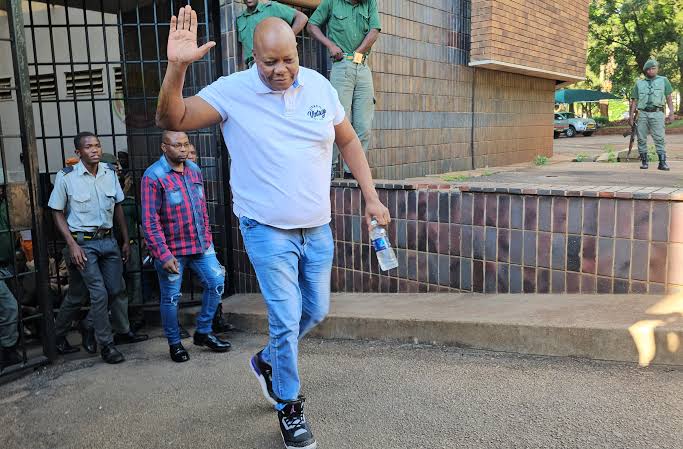
The criminal prosecution of former Zengeza West legislator Job Sikhala and his uncle, Alexander Ferrowst Thema, has entered a critical phase after South African prosecutors were granted additional time to determine whether the matter can proceed to trial following forensic findings that reportedly fail to link either accused to the explosives at the centre of the case.
The matter, which has attracted significant public and political attention in both Zimbabwe and South Africa since the pair’s arrest in November 2025, was postponed to 28 August 2026 after the court was informed that the investigation docket has now been completed and forwarded to South Africa’s National Prosecuting Authority (NPA) for legal assessment.
Sikhala told this publication that, NPA will decide.
“The DNA and fingerprint analysis reportedly shows that neither of the accused has any forensic connection to the explosives. This is further compounded by CCTV footage which, according to the defence, clearly depicts a state security operative planting the explosives inside the vehicle. In light of this evidence, the National Prosecuting Authority now has to determine whether it is legally prudent to proceed with a criminal trial.”
The postponement is understood to have been sought to allow prosecutors sufficient time to evaluate whether the remaining evidence is capable of sustaining criminal charges in light of the forensic results.
According to information presented before the court on Monday, forensic examinations, including DNA profiling and fingerprint analysis conducted on the explosives allegedly recovered from the vehicle in which Sikhala and Thema were travelling, reportedly failed to establish any physical connection between the accused and the explosive devices.
The reported forensic findings have significantly altered the complexion of the prosecution, raising fundamental questions about whether the State possesses sufficient admissible evidence to secure a conviction should the matter proceed to trial.
Investigators are understood to have concluded their inquiries and compiled the complete docket, which now awaits prosecutorial direction from the National Prosecuting Authority.
The NPA is expected to determine whether the available evidence satisfies the legal threshold required to continue with the prosecution or whether the charges should be withdrawn altogether.
The latest developments have further strengthened arguments consistently advanced by Sikhala’s legal team, which has maintained from the onset that the prosecution is politically motivated and unsupported by credible evidence.
Adding another layer of complexity to the matter are claims by the defence that investigators have also obtained CCTV footage which allegedly captures a state security operative placing the explosives inside the vehicle shortly before the arrests.
While the authenticity and admissibility of the footage are yet to be tested in court, Sikhala’s lawyers argue that the recordings fundamentally undermine the prosecution’s case and support their longstanding contention that the explosives were planted without the knowledge of either accused.
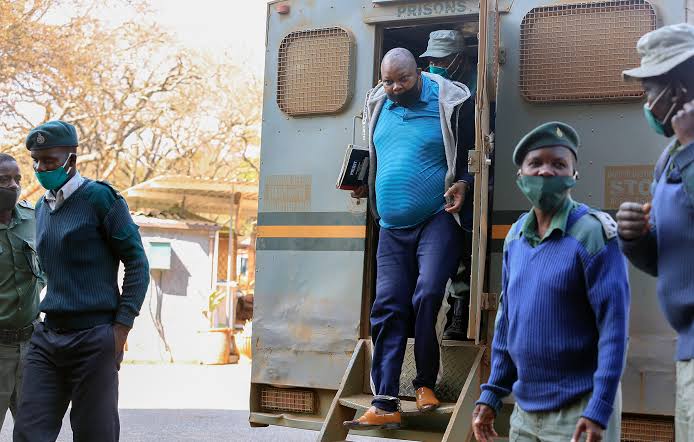
According to the defence, Sikhala had travelled to Pretoria to attend what was described as a meeting with individuals allegedly connected to the Zimbabwean government.
During those engagements, the defence alleges that one of the individuals briefly took possession of the vehicle keys before returning them, creating what lawyers describe as an opportunity for the explosives to have been secretly placed inside the vehicle.
Those close to the former opposition lawmaker have for months alleged that the entire operation was orchestrated by rogue Zimbabwean state security operatives allegedly working in collaboration with corrupt officials in South Africa with the objective of implicating Sikhala in a serious criminal offence.
The defence argues that the alleged operation formed part of a broader campaign to neutralise one of Zimbabwe’s most outspoken opposition figures through criminal prosecution rather than legitimate law enforcement.
Sikhala and his uncle were arrested in November last year after South African police allegedly discovered explosive materials inside the vehicle they were travelling in.
The vehicle belonged to Alexander Ferrowst Thema, who was behind the wheel at the time of the arrest, while Sikhala was travelling as a passenger.
The circumstances surrounding the arrests have themselves become a point of contention.
According to the defence, Sikhala was immediately handcuffed despite neither owning nor driving the vehicle, while Thema, the registered owner and driver, was reportedly not initially restrained.
Lawyers argue that the manner in which the arrests were executed raises serious questions regarding the conduct of law enforcement officers and reinforces claims that Sikhala, rather than the vehicle owner, was the primary target of the operation.
Since his arrest, Sikhala has remained in South Africa under strict bail conditions that prohibit him from leaving the country pending the finalisation of the matter.
The travel restrictions have effectively prevented him from returning to Zimbabwe while the criminal proceedings remain unresolved.
Throughout the proceedings, the prosecution has repeatedly sought postponements on the basis that investigations were still underway, with prosecutors indicating they required additional time to complete forensic examinations and gather further evidence.
Now that investigators have reportedly finalised the case docket and forensic examinations have failed to establish any direct physical link between the accused and the explosives, attention shifts squarely to the National Prosecuting Authority.
When the matter returns to court on 28 August 2026, prosecutors are expected to advise the court whether they intend to proceed with the prosecution, request further investigations, or withdraw the charges altogether.
The outcome of that decision is likely to determine not only the future of one of the region’s most closely watched criminal prosecutions, but also whether the allegations of political persecution advanced by the defence will receive greater judicial scrutiny as the case moves forward.


More Stories
Marital Feud Escalates Into Gun Drama in Rusape
Zimbabwe’s Export Engine Fires Up
Southern Africa Rethinks Energy Security as Zimbabwe Pushes Regional Power Integration