





By Shingirai Vambe
Zimbabwe has once again entered a familiar and deeply contested chapter in its political history, one in which constitutional reform is increasingly viewed not as a tool for strengthening democracy and expanding citizens’ rights, but as an instrument for consolidating political power.
Since President Emmerson Dambudzo Mnangagwa assumed office following the military-assisted removal of Robert Mugabe in November 2017, Parliament has presided over a series of constitutional changes that critics argue have steadily shifted the balance of power away from ordinary citizens and toward the Executive.
The latest development comes barely years after the passage of the controversial Constitution Amendment No. 2, which significantly altered key governance provisions relating to judicial appointments, the extension of judges’ retirement ages, and the increased powers of the President in appointing senior public officials.
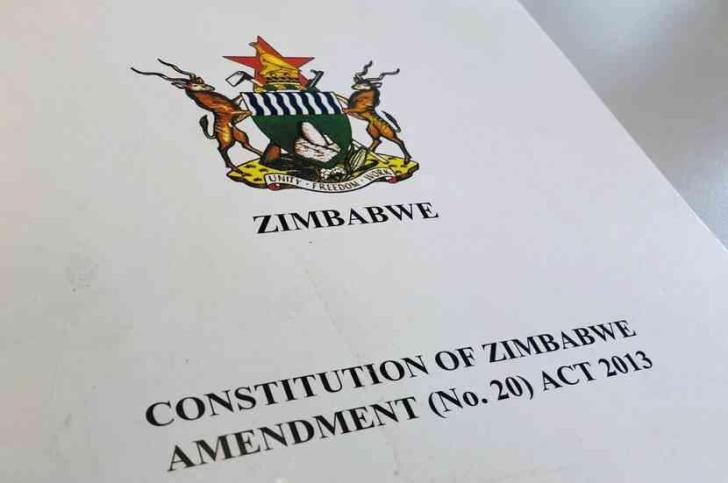
Now, Parliament has approved yet another far-reaching constitutional reform package, the Constitution of Zimbabwe Amendment Bill No. 3 of 2026, a piece of legislation that supporters describe as modernizing governance structures while opponents see it as one of the most consequential political changes since the adoption of the 2013 Constitution.
At the heart of the controversy lies a proposal that would fundamentally alter how political power is exercised and transferred in Zimbabwe.
The Bill seeks to extend presidential and parliamentary terms from five years to seven years, while simultaneously introducing provisions that would allow the President to be elected by Parliament rather than directly by the electorate.
To many observers, the proposed changes represent a dramatic departure from the democratic aspirations that informed the drafting of the 2013 Constitution following years of political negotiations and public consultations.
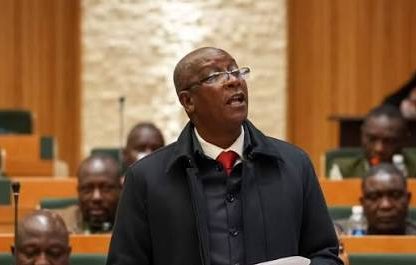
The Senate overwhelmingly endorsed the Bill, with 75 senators voting in favour and only four opposing it, comfortably surpassing the two-thirds majority required for constitutional amendments.
The legislation had earlier sailed through the National Assembly, where 216 legislators supported the Bill while only 42 voted against it.
For critics, however, the outcome was never in doubt.
The numbers had effectively been secured long before the Bill reached either chamber.
Political analysts point to the prolonged instability within the opposition ranks, particularly following the controversial recalls orchestrated by self-proclaimed Citizens Coalition for Change (CCC) Secretary-General Sengezo Tshabangu. The recalls led to the removal of dozens of opposition legislators and councillors, fundamentally reshaping the composition of Parliament.
The process, which many opposition supporters described as politically engineered, enabled the ruling ZANU-PF to strengthen its parliamentary dominance and secure the numerical advantage necessary to pursue constitutional changes requiring a supermajority.
Critics argue that what unfolded in Parliament was therefore not merely a legislative exercise but the culmination of a carefully managed political process that began with the fragmentation of the opposition itself.
While a small group of opposition legislators aligned with former CCC leader Nelson Chamisa voted against the Bill, their numbers were insufficient to halt its progress.
The proposed constitutional changes extend beyond term limits.
One of the most controversial provisions transfers responsibility for voter registration and maintenance of the voters’ roll from the Zimbabwe Electoral Commission to the Registrar-General’s Office.
Government argues that the change will improve administrative efficiency because the Registrar-General already serves as custodian of vital national records.
Opponents, however, fear the move could weaken the independence of electoral processes by reducing the responsibilities of an institution specifically created to manage elections.
The Bill also introduces a parliamentary method for electing future presidents. Under the proposal, members of Parliament would elect the President through a voting process overseen by ZEC. If no candidate obtains an outright majority, a runoff election would be conducted within Parliament.
Supporters claim the model will strengthen accountability and reduce the tensions often associated with national elections.
Critics view it differently.
They argue that removing direct presidential elections would effectively transfer the people’s most important democratic right to political elites sitting in Parliament, weakening the principle that political authority derives directly from the electorate.
The proposed extension of presidential terms from five to seven years has generated perhaps the greatest public attention.
Government through the Minister of Justice, Ziyambi Ziyambi justifies the change as a mechanism for promoting policy continuity, reducing election-related tensions and providing sufficient time for long-term development projects to be implemented.
The memorandum accompanying the Bill argues that the amendment seeks to “eliminate election mode toxicity” and enhance political stability.
Yet many Zimbabweans see the proposal through a different lens.
Evidence suggesting an effort to prolong President Mnangagwa’s stay in office first emerged nearly two years ago when ruling party supporters began openly chanting slogans calling for the President to remain in power beyond the expiry of his second and constitutionally final term in 2028.
Those calls eventually evolved into formal resolutions within ZANU-PF, with the ruling party endorsing constitutional changes that would extend presidential tenure.
Cabinet approval followed in early 2026, paving the way for the legislative process that has now culminated in parliamentary approval.
The Bill also expands the President’s appointment powers by allowing the Head of State to appoint ten additional senators, increasing the total size of the Senate to ninety members.
Government says the measure will broaden technical expertise, strengthen parliamentary oversight and promote national cohesion.
Opponents counter that it simply increases executive influence over the legislature by creating additional positions filled through presidential discretion rather than public election.
Another significant provision establishes an independent Delimitation Commission tasked with drawing electoral boundaries, thereby removing this responsibility from ZEC.
Government presents the reform as a step toward improving institutional integrity and separating electoral management functions.
Beyond the legal language and technical provisions lies a broader political question that has dominated national debate, who ultimately benefits from these constitutional changes?
Supporters insist the amendments are designed to strengthen governance, enhance stability and align Zimbabwe with constitutional models used elsewhere on the African continent.
Critics, however, describe the package as a “constitutional coup”, a gradual restructuring of democratic institutions aimed at entrenching political power while maintaining the appearance of constitutional legality.
For many observers, the proposed reforms revive memories of Zimbabwe’s long history of constitutional engineering, where amendments have frequently coincided with the political interests of those in power.
The country’s 2013 Constitution was celebrated as a landmark democratic achievement after years of negotiation, compromise and public consultation.
Many fear that repeated amendments risk eroding the very safeguards and democratic principles that document was designed to protect.
As the Bill now awaits Presidential assent, Zimbabwe finds itself confronting fundamental questions about the future of its democracy. Should political stability take precedence over regular electoral accountability?
Can Parliament legitimately replace direct presidential elections without weakening citizen participation?
And where is the line between constitutional reform and constitutional manipulation?
The answers to those questions will likely shape Zimbabwe’s political trajectory for years to come.



More Stories
Marital Feud Escalates Into Gun Drama in Rusape
AHF calls for African countries to unite against debt crisis
Pensioners Left Waiting As Billions Sit In Zimbabwe’s Pension Funds